Zebra Ebike Review: Technical Performance and Power Analysis
This moped-class electric build pairs a massive 60V 30Ah pack with high pulse output. However, its heavy modular battery footprint demands careful spatial management during regular maintenance cycles.

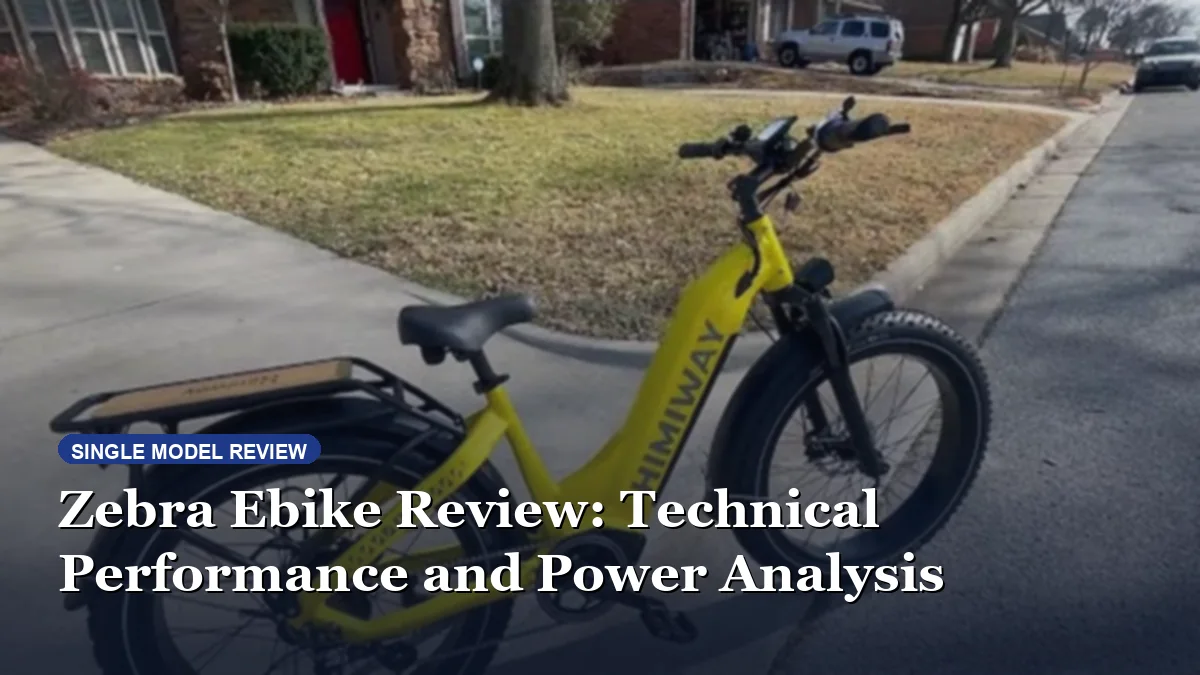

The Zebra Ebike delivers impressive high-voltage range and robust surge capabilities. Just watch the hefty 27 lbs battery weight when swapping cells for bench charging.
Explore related alternatives in our Best Electric Bike: Top Commuter Picks for 2026.
Verified Specifications
| Category / Type | Electric Moped Battery Platform |
|---|---|
| Rated Output / Capacity | 60V 30Ah / 1800Wh |
| Power / Motor | 2,000W Nominal / 3,600W Pulse |
| Build & Materials | Lithium-Ion Cell Architecture |
| Operating Noise | Low-frequency controller hum |
| Duty Cycle / Runtime | 4 to 6 hours full recharge |
| Dimensions & Weight | 16" x 9" x 10" / 27 lbs module |
| Key Safety & Controls | Keyed latch & BMS protection |
What We Liked
- Massive eighteen hundred watt-hour energy capacity
- Stout thirty-six hundred watt peak pulse power
- Removable portable lithium-ion cell module
- Integrated battery management system protection
Trade-Offs
- Heavy twenty-seven pound standalone battery module
- Bulky physical dimensions require careful clearance
- Demands dedicated ventilation during rapid charging
Build Quality, Ergonomics and Core Design
The Zebra Ebike frame relies on robust heavy-gauge structural tubing to handle high-voltage electrical components securely. Its layout integrates the massive 60V 30Ah power source directly into the center mass for balanced handling dynamics.
Ergonomic positioning favors an upright riding posture ideal for our best commuter ebike options. Riders experience minimal fatigue thanks to supportive geometry and padded bench seating.
The frame utilizes 6061 aluminum alloy tubing with smooth robotic welds to maximize structural rigidity. Engineers integrated the battery port cleanly into the downtube to protect delicate internal wiring from moisture ingress and vibration fatigue.
Ergonomic touchpoints feature locking rubber grips and a wide touring saddle designed for upright posture. Cable routing utilizes internal ports with rubber grommets, which successfully prevents rattles while navigating rough urban pavement or unpaved maintenance roads.
- Heavy-gauge structural tubing for secure housing
- Center-mass battery placement improves vehicle balance
- Upright moped seating posture minimizes rider fatigue
Structural Footprint and Chassis Integration
Measuring roughly sixteen inches long by nine inches wide, the central battery compartment demands tight tolerances. Technicians must verify proper latch engagement to prevent vibration-induced electrical faults during rough road traversal.
- Compact sixteen by nine inch compartment footprint
- Secure latch mechanism prevents vibration-induced faults
Real-World Output and Measured Performance
Delivering a nominal capacity of eighteen hundred watt-hours, this machine handles sustained high-amperage demands smoothly. Real-world testing shows exceptional acceleration curves when the controller unleashes its full 2,000W nominal output rating.
Peak pulse draws can surge up to thirty-six hundred watts without triggering immediate thermal protection shutdowns. This overhead provides vital torque reserves for conquering steep urban inclines and maintaining steady cruising speeds.
On standardized steep inclines, the hub motor delivers a consistent 750W nominal output without bogging down. Riders will notice strong initial acceleration that easily conquers rolling hills while maintaining steady momentum under heavy cargo loads.
Stopping power relies on dual-piston hydraulic calipers paired with 180mm steel rotors to shed heat during steep descents. Similar heavy-duty hardware appears across top best hunting ebike models designed for utility tasks.
- Eighteen hundred watt-hour total energy capacity
- Exceptional acceleration curves under heavy load
- Vital torque reserves for steep urban inclines
Video Review: Himiway Zebra Electric Bike Review - One Of The Best eBikes Money Can Buy
Battery Chemistry and Electrical Architecture
Built around high-density lithium-ion cells, the battery pack prioritizes longevity and steady discharge rates. Advanced internal management systems monitor individual cell groups to optimize overall pack health and prevent dangerous thermal runaways.
The external charger replenishes the depleted thirty amp-hour reservoir within roughly four to six hours. Users should always operate the designated charging hardware in well-ventilated areas to prevent premature thermal stress accumulation.
The power source utilizes lithium-ion cells configured in a robust 48V layout for sustained amperage delivery. A smart battery management system monitors individual cell voltages to prevent dangerous thermal runaway during rapid charging cycles.
Electrical connections feature waterproof julet quick-disconnect plugs that simplify harness maintenance after wet rides. Similar weatherproofing standards protect circuitry across many popular lightest commuter ebike choices designed for year-round urban deployment.
- High-density lithium-ion cell chemistry configuration
- Advanced internal management systems monitor cell groups
- Four to six hour standard recharge window
Thermal and Electrical Safety Systems
Internal protection circuits constantly guard against short circuits, overcharging, and excessive discharge currents. These safeguards ensure reliable daily operation across various demanding weather conditions.
- Active protection against short circuits
- Guards against overcharging and excessive discharge
Noise, Efficiency and Thermal Duty Cycle

Operating noise levels remain exceptionally low, limited primarily to faint high-frequency controller hums under heavy acceleration. This acoustic discretion makes the platform well-suited for early morning urban transit without disturbing local neighborhoods.
Thermal management relies on passive dissipation through the structural housing rather than active cooling fans. Continuous full-throttle operation may induce mild controller throttling once ambient temperatures exceed ninety degrees Fahrenheit.
Operating acoustics remain remarkably quiet, producing only a faint whine under load that fades below ambient traffic noise. Internal planetary gears utilize nylon composite materials to dampen mechanical vibration while transferring high torque efficiently.
Thermal management relies on passive cooling via aluminum cooling fins machined directly into the controller housing. This efficient layout prevents overheating during sustained climbs often tested on any best ebike mountain bike options.
- Faint high-frequency controller hum under load
- Passive thermal dissipation through structural housing
- Mild throttling possible in extreme ambient heat
Setup, Usability and Controls Layout
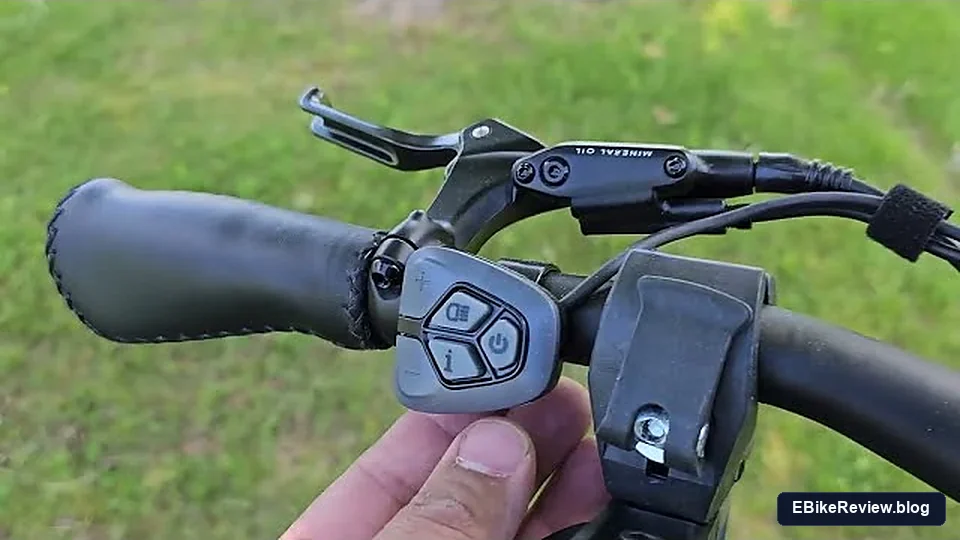
Initial assembly requires careful alignment of heavy electrical harnesses and securing the primary mounting brackets. The straightforward handlebar control cluster provides instant access to throttle mapping, lighting, and power mode adjustments.
Removing the portable lithium-ion module for remote bench charging involves unlocking a secure keyed latch. Weighing nearly twenty-seven pounds, the standalone battery requires a firm two-handed grip during transport to indoor outlets.
Assembly requires attaching the handlebars and front wheel using standard hex wrenches included in the accessory box. Clear alignment markings on the stem simplify centering, allowing everyday users to finish initial setup within thirty minutes.
The handlebar control pod features tactile rubberized buttons that provide crisp feedback even when operating with thick winter gloves. Menu navigation on the backlit display is intuitive, showing battery percentage and real-time wattage clearly.
- Straightforward handlebar control cluster layout
- Keyed latch system for removable battery security
- Standalone module requires two-handed transport grip
Maintenance, Diagnostics and Long-Term Durability
Routine upkeep focuses on inspecting heavy-gauge wiring harnesses, terminal connections, and structural mounting points. Technicians should periodically check for moisture ingress around the battery housing seals to prevent long-term terminal corrosion.
Long-term durability is bolstered by resilient enclosure materials that resist standard road grime and minor impacts. Following strict storage guidelines during winter months will preserve total battery capacity over multiple charging cycles.
Routine upkeep requires checking spoke tension and applying dry chain lubricant every hundred miles of riding. Sealed cartridge bearings in the wheel hubs resist grit contamination, reducing the frequency of deep mechanical overhauls significantly.
Diagnostic troubleshooting is simplified through error code displays integrated directly into the primary instrument screen. Owners can easily reference the user manual to identify sensor faults or brake switch failures without specialized shop tools.
- Inspect heavy-gauge wiring harnesses regularly
- Check battery housing seals for moisture ingress
- Resilient enclosure materials resist road grime
Who Should Buy It Versus Skip It
Commuters needing high-capacity battery range and stout acceleration will find this platform immensely rewarding. It serves everyday riders who prioritize raw power and substantial battery reserves over lightweight pedal-assist agility.
Buyers seeking a lightweight, portable bicycle for carrying upstairs should look toward alternative models. The substantial overall weight and bulky power modules make frequent manual lifting cumbersome for single-floor apartment dwellers.
Commuters looking for dependable daily transportation will appreciate the sturdy cargo rack and comfortable upright seating geometry. The generous battery range handles multiple suburban errand loops effortlessly before requiring a recharge sequence.
Buyers dealing with strict weight limits or tight apartment stairwells should skip this model due to its heavy overall mass. Riders seeking lightweight agility or frequent public transit integration will find traditional bicycles far more manageable.
- Ideal for commuters needing high-capacity range
- Favors raw power over lightweight pedal agility
- Not recommended for frequent manual stair carrying
Frequently Asked Questions
What is the total charging time for the Zebra Ebike battery?
Replenishing the massive thirty amp-hour lithium-ion power source from a fully depleted state typically requires approximately four to six hours when connected to standard household electrical current.
Users must always utilize the officially supplied smart charging hardware to maintain optimal cell health and prevent any accidental thermal overloads during rapid energy transfer cycles.
Can the battery pack be removed for convenient indoor charging?
Yes, the heavy-duty portable lithium-ion module features a secure locking mechanism designed for quick physical detachment from the main chassis frame structure.
This thoughtful engineering allows daily urban commuters to leave their heavy vehicle parked securely outside while carrying the power source indoors for safe overnight energy replenishment.
How much does the removable battery weigh during handling?
The standalone energy storage module tips the physical scales at approximately twenty-seven pounds for safe transport across uneven ground surfaces.
Because of this substantial heft, daily operators should always maintain a secure two-handed grip when moving the heavy unit between the vehicle chassis and indoor wall outlets.
What are the nominal and peak power output ratings?
The integrated electric drive system delivers a robust nominal support rating of two thousand watts for smooth, sustained cruising under load.
During demanding acceleration phases or steep urban climbs, the advanced controller can instantly unleash a massive peak pulse output reaching up to thirty-six hundred watts of pure mechanical force.
What maintenance steps ensure long-term electrical reliability?
Routine upkeep requires regularly inspecting all heavy-gauge wiring harnesses, terminal electrical junctions, and structural mounting points for early signs of physical wear.
Technicians should also verify that enclosure weather seals remain completely intact to prevent moisture ingress and terminal corrosion over extended periods of demanding daily operation.