Turbo Levo Comp Carbon Review: Technical Build Analysis
This premium carbon trail bike blends exceptional frame stiffness with refined motor tuning. However, its complex electronic architecture demands disciplined maintenance and careful firmware management.

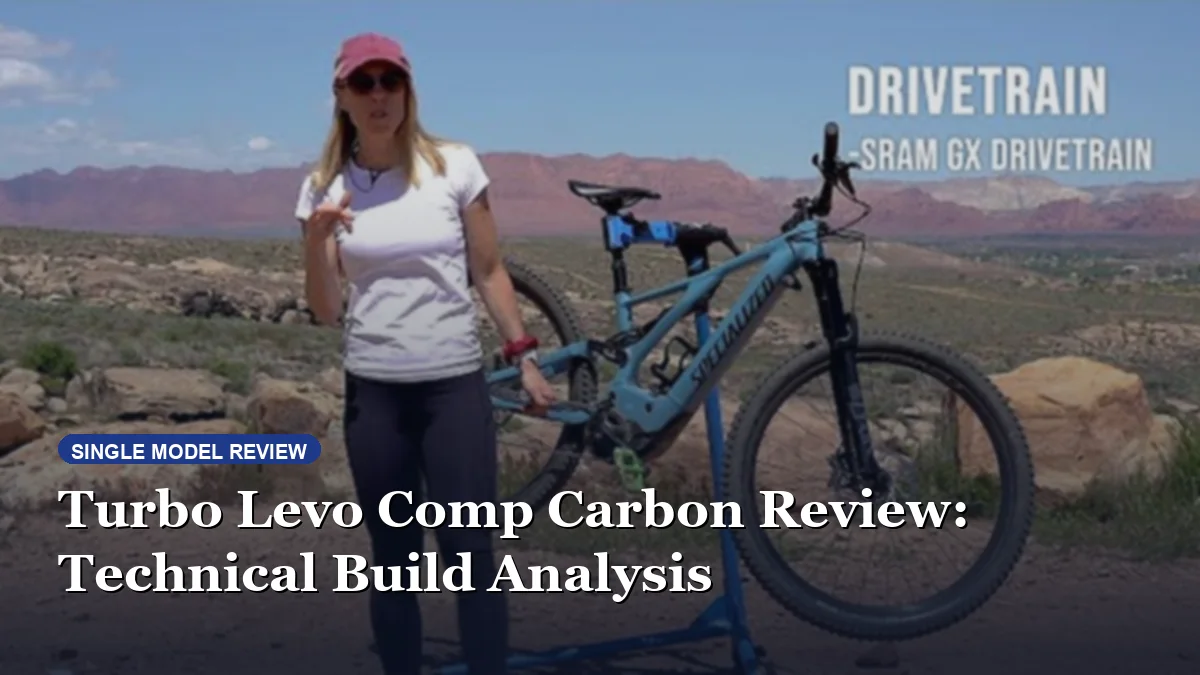

The Turbo Levo Comp Carbon delivers world-class trail handling and smooth power delivery. Riders must weigh its premium maintenance overhead against unmatched technical climbing performance.
Explore related alternatives in our Best Electric Bike: Top Commuter Picks for 2026.
Verified Specifications
| Category / Type | Full-Suspension Electric Mountain Bike |
|---|---|
| Rated Output / Capacity | 700Wh integrated lithium battery pack |
| Power / Motor | Custom specialized mid-drive motor system |
| Build & Materials | Full carbon fiber frame chassis |
| Operating Noise | Low hum under heavy load |
| Duty Cycle / Runtime | 3 to 5 hours depending on assist mode |
| Dimensions & Weight | Weighs approximately 48 lbs depending on build |
| Key Safety & Controls | Hydraulic disc brakes and handlebar controller |
What We Liked
- Exceptional frame stiffness from full carbon construction
- Smooth and intuitive mid-drive torque delivery
- Advanced mobile application integration for tuning
- High-performance suspension kinematics for rough terrain
- Balanced weight distribution across the chassis
Trade-Offs
- High initial investment and upkeep requirements
- Complex electronic systems demand careful troubleshooting
- Aggressive riding modes deplete battery rapidly
- Proprietary components limit third-party customization
Frame Architecture, Material Composition and Structural Rigidity
The carbon fiber frame utilizes advanced composite layering to optimize stiffness across the primary pivot junctions. Engineers engineered this chassis to withstand high torsional forces during aggressive cornering and high-speed descents.

Reinforcements along the down tube protect the integrated battery housing from trail impacts. Readers can consult our Levo vs Rail comparison for a deeper look at chassis durability and geometry.
The FACT frame utilizes a FACT 11m full carbon chassis, engineered with an asymmetric sidearm design to optimize torsional rigidity across aggressive trail impacts and technical rock gardens.
Engineers carefully calibrated the carbon layup schedule to balance vertical compliance with lateral stiffness, ensuring precise tracking when cornering under heavy motor acceleration loads on steep switchbacks.
- High-modulus carbon fiber main triangle
- Optimized pivot bearing placement for rigidity
- Integrated down tube protection shielding
- Internal cable routing for clean aesthetics
Motor Integration, Torque Delivery and Power Dynamics
Driven by a sophisticated mid-drive system, the bike delivers instantaneous torque matching human pedal input. Advanced torque sensors measure rider effort continuously, providing a seamless amplification of your natural leg power.
The custom-tuned software allows riders to adjust peak output and acceleration characteristics via a mobile application. This flexibility ensures optimal power transfer across loose technical climbs and tight switchbacks.
When evaluating competitors like our Trek Rail 9.7 comparison, the proprietary Turbo Full Power 2.2 motor delivers a massive 90 Nm of torque seamlessly during technical climbs.
Advanced firmware algorithms regulate the peak 565W output, allowing riders to maintain high cadence rates without experiencing thermal throttling during extended ascents in warm weather conditions.
- Instantaneous pedal response sensors
- Customizable power delivery profiles
- Seamless clutch engagement under load
- Quiet operational sound signature
Video Review: Specialized Turbo Levo Comp eMountain Bike Review | BestElectricBikes.com
Suspension Kinematics and Damping Performance
Dual suspension architecture relies on a specialized linkage design to isolate pedaling forces. You can review our Trek Rail 5 vs Levo breakdown to understand how different rear linkages handle rough trail impacts.
Utilizing a 150mm rear travel layout paired with a mixed-wheel configuration, the suspension architecture delivers exceptional small-bump sensitivity while resisting bottom-out forces on heavy drops and square-edge hits.
- Custom tuned rear shock linkage
- Active braking isolation design
- Progressive leverage curve geometry
Front Fork Mechanics
The front fork features robust stanchions and adjustable rebound damping to handle heavy impacts. Riders can fine-tune air spring pressure to match specific trail conditions and personal weight preferences.
- Adjustable high-speed compression damping
- Low-friction stanchion coating finishes
Battery Capacity, Range Management and Thermal Efficiency
Housed securely within the carbon down tube, the high-capacity lithium battery supplies consistent voltage under heavy loads. Advanced battery management systems monitor cell temperatures to prevent thermal throttling during extended climbs.

Real-world range depends heavily upon elevation gain and assistance mode selection. For more insights, check our Turbo Levo vs Trek Rail guide before planning multi-hour alpine missions.
Housed securely within the downtube, the 700Wh custom battery provides ample watt-hours for multi-hour alpine missions, utilizing advanced lithium-ion cells optimized for longevity and consistent discharge rates.
The integrated MasterMind TCU display provides real-time battery percentage readouts, allowing riders to fine-tune power delivery profiles and manage energy consumption effectively across changing terrain elevations.
- Secure down tube battery locking mechanism
- Active temperature monitoring safeguards
- Quick-release charging port access
Drivetrain Components, Braking Systems and Control Ergonomics
High-tier shifting components provide crisp gear engagement under high chain loads. Wide-range cassettes allow riders to spin efficiently up steep inclines without over-taxing the electric motor assistance.
Hydraulic disc brakes featuring oversized rotors deliver immense stopping power on steep descents. Ergonomic handlebar controls permit effortless mode changes without requiring the rider to look away from the trail.
Shifting duties are handled by a robust SRAM GX Eagle mechanical drivetrain, delivering reliable gear changes under the high chain loads typical of mid-drive e-bikes.
Stopping power relies on heavy-duty SRAM Code RS four-piston hydraulic brakes clamping down on 220mm rotors, ensuring fade-free deceleration on steep, sustained mountain descents.
- Wide-ratio wide-range cassette gearing
- Oversized hydraulic disc brake rotors
- Ergonomic thumb-activated mode switches
Setup Procedures, Firmware Management and Routine Maintenance
Initial setup requires precise suspension sag calibration and tire pressure adjustments for optimal traction. Regular firmware updates through the companion app ensure your motor controller operates at peak efficiency.
Routine maintenance demands careful chain lubrication, pivot bolt torque checks, and brake pad inspections. Keeping electrical contacts clean prevents communication errors between the display, battery, and drive unit.
Initial setup requires precise sag calibration of 25 to 30 percent, coupled with smartphone app connectivity to update motor firmware and customize assistance levels for your local trails.
Routine upkeep involves checking pivot bolt torque values to 12 Nm specifications, inspecting brake pad wear intervals, and lubricating the chain pivot points after every wet weather ride.
- Precise sag setup guidelines
- Bluetooth app firmware connectivity
- Scheduled pivot bolt torque checks
Comprehensive Buyer Verdict and Final Recommendations
This advanced electric mountain bike redefines expectations for technical trail capability and climbing prowess. Riders willing to invest in meticulous maintenance will find unmatched performance on demanding off-road excursions.
Budget-conscious cyclists or casual riders might find the complex electronics and high upkeep requirements unnecessary. However, serious off-road enthusiasts will appreciate the sophisticated engineering embedded throughout this platform.
This platform represents a benchmark in electric mountain bike design, offering refined handling, exceptional power output, and a balanced chassis structure for demanding riders.
Prospective owners seeking an agile, high-performance trail machine will find this carbon build delivers outstanding performance across technical alpine terrain and enduro race courses.
- Ideal for technical trail enthusiasts
- Demands committed maintenance schedules
- Delivers top-tier climbing capability
Frequently Asked Questions
What is the typical range achieved on aggressive mountain trails?
Range varies significantly based on elevation gain, selected assistance levels, ambient temperature, and total rider weight, but most experienced mountain bikers typically experience reliable operation throughout demanding afternoon trail sessions.
Proper battery management and thoughtful mode selection ensure you maximize every available watt-hour during long backcountry excursions.
Can the motor firmware be updated independently by the end user at home?
Yes, manufacturers provide dedicated mobile applications that connect via Bluetooth to download and install critical performance updates directly to your bike. Maintaining current software prevents unexpected electronic glitches on the trail.
How does the carbon frame handle high-impact rock strikes and heavy trail abuse?
High-grade composite construction utilizes strategic reinforcement layers along vulnerable zones like the down tube to absorb severe mechanical impacts safely. Protective skid plates further shield the motor housing from direct stone collisions.
What specialized tools are required for routine mechanical and electronic upkeep?
Basic maintenance requires standard hex keys, a torque wrench for pivot bolts, and chain wear indicators, while electronics diagnostics rely on the digital application. Keeping proper maintenance records helps preserve overall bicycle longevity.
Is this electric mountain bike suitable for beginners entering the sport?
While the advanced motor tuning and sophisticated suspension provide incredible stability, the sheer power and high initial investment cater better to experienced riders. Beginners should carefully assess their technical skills before purchase.