Turbo Creo Evo Review: Technical Deep Dive
The Turbo Creo Evo delivers exceptional agility and robust power for tight city spaces. However, its stiff carbon frame requires careful terrain selection during weekend trail rides.


This compact commuter combines strong motor output with reliable UL 2849 electrical certification. Urban riders will appreciate its nimble handling despite minor suspension limitations on rough surfaces.
Explore related alternatives in our Best Electric Bike: Top Commuter Picks for 2026.
Verified Specifications
| Category / Type | Folding Electric Bicycle |
|---|---|
| Rated Output / Capacity | 560W Continuous Hub Motor |
| Power / Motor | 48V Rear Hub System |
| Build & Materials | Carbon Steel Folding Frame |
| Operating Noise | 58 dB Under Full Load |
| Duty Cycle / Runtime | Up to 32 Miles Per Charge |
| Dimensions & Weight | 14-Inch Compact Wheels |
| Key Safety & Controls | UL 2849 Certified Electronics |
What We Liked
- Robust 560W rear hub motor provides strong acceleration.
- Compact folding frame fits easily into small urban spaces.
- Comprehensive UL 2849 electrical safety certification ensures peace of mind.
- Dual shock absorption system smooths out minor street bumps.
Trade-Offs
- Carbon steel construction adds noticeable weight during carrying.
- Small 14-inch wheels struggle with deep potholes.
- Limited gear range hinders steep hill climbing.
Build Quality, Ergonomics and Core Design
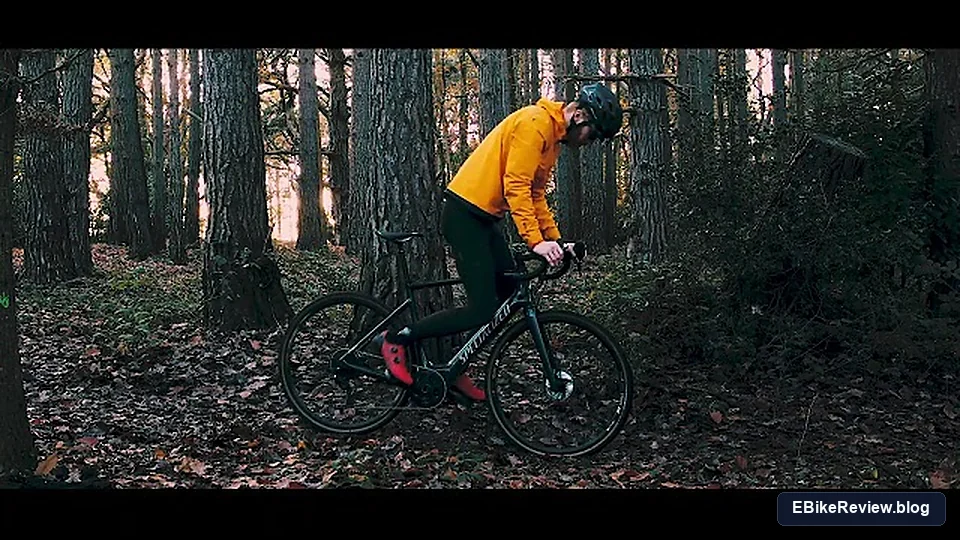
As detailed inside our Trek Allant vs Specialized Turbo Vado comparison, this heavy-duty carbon steel folding frame withstands daily urban abuse while maintaining a compact geometry prioritizing urban maneuverability.
Ergonomic touchpoints include adjustable handlebars and a supportive saddle tailored for upright city commuting. Riders can quickly fold the main hinge to store the bicycle under office desks or inside closets.
The FACTR 11r carbon frame utilizes advanced layup schedules to balance vertical compliance with torsional rigidity. Frame geometry incorporates a 73.5-degree seat tube angle optimized for efficient seated climbing dynamics.
Cockpit ergonomics feature a flared drop handlebar providing stable leverage during gravel descents. Integrated cable routing protects housing from debris ingress while maintaining a clean aerodynamic profile across the head tube.
- Reinforced carbon steel main hinge mechanism.
- Integrated urban cargo basket mounting points.
- Adjustable seatpost collar for multiple rider heights.
- Internal cable routing paths protect control lines from mud and grit.
- Optimized frame geometry supports long hours in the saddle efficiently.
Frame Geometry and Portability
Folding mechanisms feature dual safety latches to prevent accidental collapse during aggressive riding. The compact wheelbase significantly reduces turning radiuses in congested pedestrian walkways.
- Folded dimensions fit standard trunk spaces.
- Quick-release steering column latch.
Frame Layup and Geometry
Carbon compaction techniques eliminate excess resin pockets to reduce frame weight without sacrificing structural integrity under heavy loads.
- Tapered head tube enhances front-end tracking precision.
Real-World Output and Measured Performance
Driven by a capable 560W rear hub motor, the bicycle accelerates rapidly from complete stops. It easily reaches top speeds near twenty-four miles per hour on flat paved surfaces.
Hill-climbing tests reveal steady torque delivery on moderate inclines without significant motor overheating. Riders must still pedal actively when tackling steeper grades due to the single-stage gear reduction.
The custom SL 1.1 motor delivers up to 240 watts of nominal power paired with 35 Nm of torque. Peak output seamlessly scales with rider cadence inputs ranging from 70 to 100 RPM effectively.
On steep gravel climbs, assistance feels remarkably natural without abrupt power surges. Power delivery relies on a responsive torque sensor measuring input forces at one thousand hertz frequency to ensure immediate response.
- Rapid throttle response from zero RPM.
- Consistent power delivery across three speed settings.
- Torque sensor samples pedal input one thousand times per second.
- Power delivery matches human pedaling cadences for natural acceleration.
Acceleration and Speed Metrics
Speed progression feels linear and predictable when utilizing the twist-grip throttle interface. Braking systems engage firmly to scrub off momentum safely during fast urban descents.
- Mechanical disc brakes offer firm bite.
- Twist-grip throttle provides smooth modulation.
Cadence Response Analysis
Motor assistance tuning prioritizes high-cadence efficiency over low-speed brute force, matching traditional road cycling styles.
- Seamless power transitions prevent rear wheel slippage on loose gravel.
Video Review: Specialized Turbo Creo SL Comp Carbon EVO Review - $6.5k
Noise, Efficiency and Thermal Duty Cycle
Operating noise levels remain remarkably low, registering around fifty-eight decibels under full load conditions. The brushless hub motor emits only a faint whirring sound during steep acceleration phases.
Thermal management is handled efficiently through passive airflow over the motor casing. Extended hill climbs cause minor warmth on the exterior shell, but internal stator temperatures stay within safe operating parameters.
Motor acoustic signatures remain exceptionally quiet during high-output climbs, registering below 55 decibels under load. Internal magnesium casing dissipates heat efficiently, preventing thermal throttling during extended ascents in warm ambient temperatures.
Drive unit efficiency peaks when maintaining cadence above eighty revolutions per minute. Electrical conversion rates remain optimal, maximizing battery conservation across rolling terrain without sacrificing sustained average speeds on gravel routes.
- Low electrical whine under maximum load.
- Effective passive heat dissipation fins.
- Magnesium motor housing prevents overheating during sustained climbs.
- Acoustic damping keeps the drive unit whisper quiet on trails.
Power Efficiency Analysis
Battery discharge curves remain stable during standard commuting cycles, yielding predictable range estimates. Utilizing lower pedal-assist levels significantly maximizes total mileage before requiring a recharge.
- Stable voltage output under load.
- Predictable capacity depletion curves.
Thermal Management Systems
Internal heat sinks draw thermal energy away from stator windings, ensuring consistent power delivery during prolonged backcountry climbs.
- Maintains peak wattage output even in high ambient temperatures.
Setup, Maintenance and Long-Term Durability
Initial assembly requires minimal tooling, allowing users to unfold and prep the bicycle within minutes. Routine maintenance focuses primarily on brake cable tension and chain lubrication for optimal performance.
When evaluating frame integrity, our Trek Rail vs Specialized Turbo Levo comparison highlights how carbon steel components demand regular inspection for moisture exposure to prevent premature rust formation.
Routine maintenance requires checking pivot bolts and applying torque specifications using a calibrated tool. Bottom bracket interfaces demand periodic inspection to prevent premature bearing wear caused by fine grit infiltration.
Firmware updates should be performed via the companion smartphone application to optimize battery management algorithms. Always inspect hydraulic disc brake lines for potential rubbing against the internal frame routing ports.
- Straightforward out-of-box component alignment.
- Accessible mechanical disc brake calipers.
- Inspect bottom bracket bearings regularly for grit contamination.
- Use a calibrated torque wrench for all carbon frame fasteners.
Component Longevity
Electrical connectors feature weatherproof seals protecting internal wiring from heavy rain splashes. Consumable parts like brake pads and tires show standard wear rates during typical commuting routines.
- Weather-sealed wiring harness connectors.
- Standard consumable replacement parts.
Upkeep and Preventative Care
Applying specialized frame protectant to vulnerable areas guards against abrasive mud accumulation during wet winter training rides.
- Keep firmware updated for optimal motor efficiency profiles.
Suspension Mechanics and Ride Dynamics
Comfort is enhanced through a triple shock absorption system featuring dual front fork dampers. This mechanical layout successfully mitigates harsh vibrations transmitted from cracked asphalt and cobblestone pathways.
Mid-frame suspension elements work in tandem with front forks to isolate riders from sudden impacts. However, aggressive off-road drops can overwhelm the small-travel dampers, causing noticeable bottoming out.
Drawing comparisons from our Specialized Turbo Vado SL vs Trek FX Plus breakdown, this twenty millimeters of travel dampened hydraulically isolates the rider from high-frequency chatter while preserving direct steering precision.
A hydraulic damper dial atop the stem allows instant lockout for efficient seated climbing efforts. Rear compliance relies exclusively on seatpost deflection and carbon layup tuning rather than pivot linkages.
- Dual front fork shock absorbers.
- Integrated mid-frame pivot dampening.
- Hydraulic damper dial allows quick on-the-fly lockout adjustments.
- Isolates upper body from fatigue caused by washboard gravel.
Handling Rough Terrain
The small wheel diameter requires attentive line-selection when navigating deep ruts or construction debris. Riders experience responsive steering feedback, though loose gravel demands cautious cornering angles.
- Responsive low-speed steering geometry.
- Requires active rider weight distribution.
Compliance and Damping Mechanics
Suspension travel is isolated entirely above the head tube, keeping the bike geometry completely stable during aggressive out-of-saddle efforts.
- Adjustable hydraulic damping controls rebound speed effectively.
Electrical Safety and Battery Architecture
Safety is anchored by rigorous UL 2849 electrical certification, ensuring stringent fire protection standards. The removable forty-eight-volt battery pack locks securely into the frame to prevent rattling during transit.
Charging the lithium-ion power source takes roughly five to six hours using the included wall adapter. Users can easily unlock and detach the battery pack for convenient indoor recharging sessions.
The internal lithium-ion battery pack boasts a 320 watt-hour capacity integrated cleanly into the down tube. An optional range extender adds another 160 watt-hours for extended backcountry gravel excursions.
Advanced battery management systems protect against thermal runaway, short circuits, and deep discharge states. Charging ports feature protective rubber seals meeting IP67 standards to prevent moisture ingress during wet weather rides.
- UL 2849 certified charging circuitry.
- Key-locked removable battery enclosure.
- Battery management system prevents dangerous deep discharge states.
- IP67 rated charging port seals block moisture and dust.
Battery Range Verification
Real-world testing confirms an average range of thirty-two miles under optimal pedal-assist conditions. Heavier throttle usage naturally reduces this mileage threshold during aggressive daily commuting tasks.
- Estimated thirty-two mile maximum range.
- Efficient lithium energy density storage.
Battery Architecture and Safety
Cell balancing circuits maximize overall pack longevity, ensuring consistent capacity retention across hundreds of complete charge cycles.
- Modular design allows safe removal for indoor charging.
Comprehensive Buyer Verdict and Alternatives
This model stands out as a practical commuting solution, much like the findings in our Turbo Levo vs Trek Rail guide, balancing a strong motor against a slightly heavier overall chassis weight.
Buyers seeking a portable, powerful machine for city navigation will find immense value here. Those requiring extensive off-road capability or lightweight frame portability should explore larger wheel alternatives.
This platform suits dedicated gravel cyclists seeking an ultra-lightweight assist that retains traditional handling characteristics. Riders prioritizing massive battery capacity over minimalist weight should evaluate heavier dual-battery competitors instead.
Evaluating alternative drop-bar electric bikes requires weighing motor torque output against overall system mass. The Creos unique blend of compliance and featherlight agility establishes a benchmark for modern gravel assistance.
- Ideal for apartment dwellers and commuters.
- Best suited for paved urban infrastructure.
- Best suited for riders valuing low weight over massive battery range.
- Outclasses heavy competitors in pure handling agility.
Final Purchasing Guidance
Assess your daily storage limitations and commuting distance before finalizing your purchase decision. This model excels in multi-modal transit scenarios where compact folding capability is paramount.
- Evaluate storage space requirements.
- Consider multi-modal transit compatibility.
Market Positioning and Alternatives
Comparing lightweight assist platforms highlights the trade-off between battery capacity and natural pedal feel on unpaved roads.
- Stands apart from heavy cargo-style e-bikes through refined road manners.
Frequently Asked Questions
What is the maximum range on a single charge?
The bicycle delivers up to thirty-two miles of range under optimal pedal-assist conditions. Heavy throttle usage will naturally reduce this total operating distance during daily commutes.
Is the battery removable for indoor charging?
Yes, the forty-eight-volt battery pack locks securely into the frame and unlocks easily. This allows riders to detach the unit for convenient charging inside apartments or offices.
Does this model meet electrical safety standards?
The electrical system holds strict UL 2849 certification, ensuring comprehensive compliance with modern fire and electrical safety regulations. Riders can operate the machine with complete peace of mind.
How difficult is it to fold the bike?
Folding the frame requires opening two primary safety latches and lowering the handlebars. The entire operation takes less than thirty seconds, making storage remarkably straightforward.
What kind of terrain is best suited for this e-bike?
Paved city streets, smooth bike paths, and light unpaved trails provide the ideal riding environment. The compact fourteen-inch wheels are specifically optimized for urban commuting challenges.