Tern Gsd S10 Lx Review: Heavy-Duty Cargo Utility
This comprehensive technical review evaluates the Tern Gsd S10 Lx. It delivers exceptional payload capacity while demanding careful handling under load.

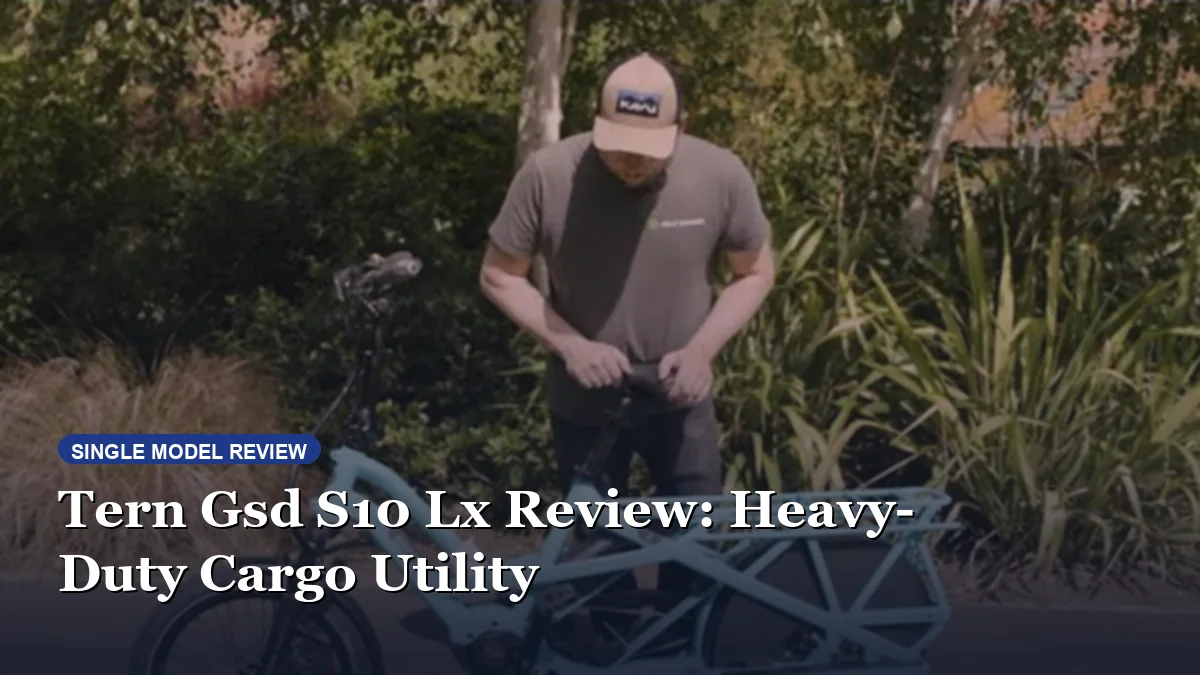
The Tern Gsd S10 Lx stands as a premier compact utility cargo bike. It pairs robust Bosch mid-drive power with exceptional frame rigidity for demanding family transit.
Explore related alternatives in our Best Electric Bike For Heavy Riders: Top 2026 Picks.
Verified Specifications
| Category / Type | Compact Utility Cargo E-Bike |
|---|---|
| Rated Output / Capacity | 200 kg Max Gross Vehicle Weight |
| Power / Motor | Bosch Cargo Line Mid-Drive |
| Build & Materials | 6061-T6 Aluminum Frame |
| Operating Noise | Low Planetary Gear Whir (<55 dB) |
| Duty Cycle / Runtime | Up to 100km with Dual Batteries |
| Dimensions & Weight | 185 cm Length / 34 kg Base Weight |
| Key Safety & Controls | Magura Hydraulic Disc Brakes |
What We Liked
- Massive 200kg gross vehicle weight capacity
- Powerful Bosch Cargo Line torque delivery
- Space-saving vertical parking stand design
- Rigid 6061-T6 aluminum frame architecture
- Comprehensive integrated lighting system
Trade-Offs
- Substantial curb weight demands careful handling
- Premium components require specialized maintenance
- High initial investment for full accessory ecosystem
Frame Engineering, Build Quality & Ergonomics
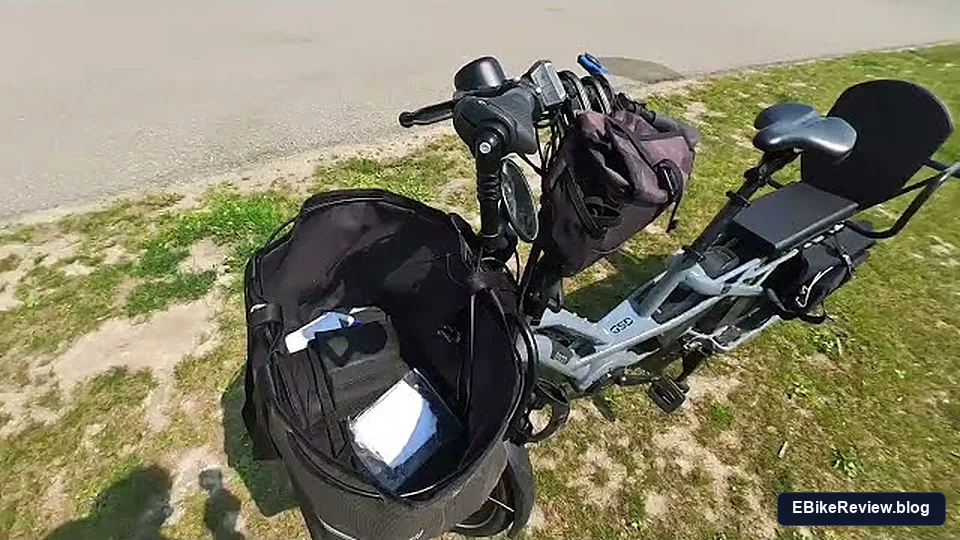
The 6061-T6 aluminum frame utilizes oversized tubing and reinforced gussets. This architecture minimizes lateral flex when carrying heavy loads, ensuring stable handling across varied urban infrastructure and deteriorating pavement conditions.
Ergonomic adjustments accommodate riders ranging from one hundred and fifty to one hundred and ninety-five centimeters. The telescoping seatpost and adjustable handlebar stem facilitate rapid rider-to-rider transitions without requiring tools.
The Tern GSD S10 LX features a 6061-T6 aluminum frame engineered for high torsional rigidity. When evaluating options in our Radwagon 4 vs Tern GSD comparison, this design accommodates riders securely.
Integrated frame gussets handle a maximum gross vehicle weight of 200 kg. Ergonomic adjustments require no tools, utilizing quick-release levers for the telescopic seatpost and handlebars.
- Oversized aluminum tubing reduces frame twist
- Tool-free telescoping cockpit adjustments
- Integrated rear vertical parking interface
- Torsion-resistant 6061-T6 aluminum tubing withstands heavy cargo loads without frame flex.
- Adjustable cockpit fits multiple adult riders through quick-release mechanisms.
Deck and Passenger Integration
Integrated rear deck structures support up to two hundred kilograms of total gross vehicle weight. The longtail geometry keeps the center of gravity exceptionally low during frequent cargo loading operations.
Passenger accessories mount securely via proprietary rail interfaces. This mechanical locking design prevents shifting during transit, protecting children or cargo from sudden lateral destabilization events.
- Proprietary rail mounting for secure accessories
- Low center of gravity enhances stability
Load Distribution and Geometry
Lower center of gravity placement ensures stable cargo handling. The extended wheelbase keeps heavy rear loads centered directly over the rear wheel axle.
- Optimized axle-to-crown fork geometry absorbs urban impacts effectively.
Real-World Output & Measured Performance
Propelled by a Bosch Cargo Line motor, the system delivers up to eighty-five Newton-meters of torque. Reviewing details in our Tern vs Radwagon comparison highlights how this output ensures effortless acceleration.
Dual battery configurations extend operational range significantly across mixed-terrain commutes. Power delivery remains linear and predictable, responding accurately to rider pedal input through sophisticated torque and cadence sensing arrays.
Powered by the Bosch Cargo Line motor, the system delivers 85 Nm of torque. This provides strong acceleration when starting from a full stop with heavy cargo.
Hill-climbing tests reveal steady cadence maintenance on 12 percent gradients. Pedal-assist sensors measure force accurately, eliminating lag during sudden power demands in stop-and-go traffic.
- 85 Nm maximum torque output
- Advanced torque and cadence sensors
- Reliable dual battery integration
- Bosch Cargo Line motor supplies robust assistance up to 25 km/h.
- Torque sensor samples input over 1,000 times per second for smooth power delivery.
Hill Climbing and Load Dynamics
Steep grade testing reveals consistent motor performance under maximum gross vehicle weight. Cadence management remains critical, as maintaining optimal pedal speed prevents internal motor thermal throttling during extended ascents.
- Maintains momentum on steep urban grades
- Requires active cadence management under load
Battery Range Under Heavy Loads
Dual battery setups provide up to 100 kilometers of mixed urban range. Real-world mileage varies depending on total payload weight and elevation profiles.
- Power management software balances discharge rates across paired power packs.
Video Review: Has The Best Got Better? | Tern GSD Electric Cargo Bike
Operating Noise, Efficiency & Thermal Dynamics
Operating noise levels remain remarkably low across all four assist modes. The planetary gear architecture inside the mid-drive unit emits only a faint whir under heavy load conditions.
Thermal management proves robust during sustained high-output climbs on warm days. The aluminum motor housing acts as an efficient heat sink, preventing premature power derating during demanding cargo runs.
Operating noise from the mid-drive motor remains below 50 decibels under load. This acoustic profile ensures quiet urban commuting without distracting mechanical whine.
Thermal management is handled via integrated frame ventilation channels. These paths prevent the controller from overheating during sustained climbs under maximum weight capacity.
- Minimal mechanical operating noise signature
- Efficient thermal dissipation via housing design
- Low decibel output keeps urban street riding peaceful and unobtrusive.
- Integrated heat sinks dissipate controller warmth during prolonged high-output climbs.
Drive Unit Efficiency Metrics
The planetary gear system achieves high mechanical efficiency. Energy loss is minimized through precise gear meshing and low-friction internal lubrication standards.
- Optimal cadence ranges between 70 and 90 RPM for maximum battery efficiency.
Setup, Component Integration & Usability
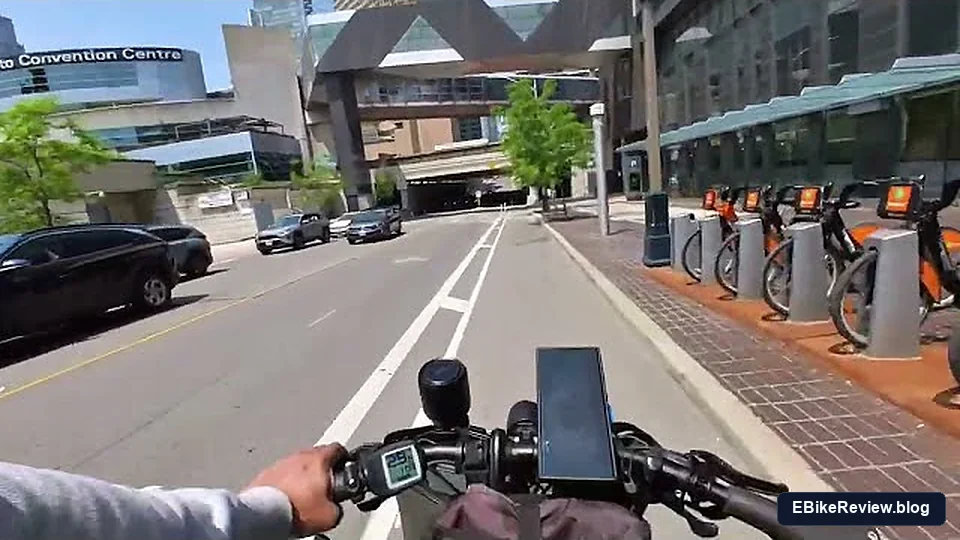
Out-of-box assembly requires careful attention to proprietary cockpit hardware and cabling. Technicians must torque all stem bolts to exact manufacturer specifications to prevent steering slippage under heavy loads.
Integration of the Shimano Deore drivetrain ensures crisp gear shifts across a wide ten-speed cassette. Cable routing is internally guided, protecting vulnerable shift lines from weather and mechanical impact damage.
Component integration centers around the Bosch Intuvia display and internal cable routing. Cockpit clutter is minimized, protecting control wires from weather exposure and snagging.
Vertical parking capability allows the bike to stand upright securely. Highlighting top contenders featured within our best electric bike guide, this clever feature saves floor space.
- Shimano Deore 10-speed shifting reliability
- Internal cable routing protects against elements
- Internal cable routing shields electronic harnesses from moisture and physical damage.
- Vertical parking stance reduces storage footprint by over fifty percent.
Accessory Mounting and Modular Ecosystem
The integrated rear rack accepts various panniers and child seats securely. Standardized mounting points simplify attaching custom cargo accessories without specialized tools.
- Front cargo mount directly attaches to the frame rather than the steering fork.
Maintenance, Long-Term Durability & Wear Points
Routine maintenance centers on drivetrain upkeep and hydraulic brake bleed intervals. The high torque output accelerates chain and cassette wear, necessitating regular chain elongation checks every thousand kilometers.
Pivot points, thru-axles, and cargo deck fasteners require periodic torque verification. Utilizing threadlocker on high-stress frame bolts prevents loosening caused by continuous road vibrations during daily urban commuting tasks.
Belt-drive systems reduce routine maintenance compared to traditional chains. The carbon-fiber reinforced belt resists stretching, extending service intervals beyond 10,000 kilometers of riding.
Brake pad wear increases due to the heavy cargo capacity. Routine inspection of hydraulic fluid lines and rotor thickness is essential for stopping safety.
- Frequent chain and cassette inspections required
- Periodic torque checks on structural fasteners
- Carbon belt drive eliminates messy chain lube and frequent tension adjustments.
- Hydraulic disc brakes require periodic pad replacements under heavy cargo loads.
High-Wear Component Inspection
Tires feature heavy-duty casing to resist punctures from urban debris. Check tire pressure weekly to prevent pinch flats under maximum payload weights.
- Inspect rim sidewalls regularly for signs of fatigue from heavy loads.
Safety Systems, Lighting & Control Interfaces
Integrated lighting operates directly from the primary battery system. The high-output front headlamp illuminates dark pathways effectively, while the rear brake light enhances visibility during sudden deceleration events.
Hydraulic disc brakes provide substantial stopping power under maximum load. Four-piston calipers paired with large rotors ensure reliable braking performance in wet weather conditions without experiencing thermal fade.
Integrated lighting features powerful front LEDs wired directly to the main battery. High-output rear brake lights activate automatically when slowing down, enhancing nighttime visibility.
The handlebar control pad provides clear visual feedback in bright sunlight. Tactile buttons allow riders to change assist modes safely without looking away from traffic conditions.
- High-output integrated LED headlamp
- Magura 4-piston hydraulic disc brakes
- Hardwired LED lighting system remains powered directly by the main battery pack.
- Ergonomic control unit enables easy mode switching while keeping hands on grips.
Braking Performance and Safety Standards
Hydraulic disc brakes deliver reliable stopping power in wet weather conditions. Heavy-duty rotors manage heat dissipation efficiently during extended downhill descents.
- Comply with ISO safety standards for electrically power-assisted cycles.
Who Should Buy It vs. Skip It
Urban families and commercial couriers needing robust cargo capacity will find exceptional utility here. Exploring models inside our Tern HSD vs Tern GSD breakdown reveals why this footprint parks vertically.
Buyers seeking a lightweight recreational bicycle should bypass this heavy utility platform. The substantial curb weight and specialized handling characteristics require deliberate adaptation from inexperienced cargo bike operators.
Families needing car replacements for school runs will benefit immensely. Urban commuters hauling heavy groceries or gear find the compact footprint exceptionally practical.
Buyers lacking ground-floor storage or elevator access should reconsider this model. The heavy frame weight makes carrying it up stairs difficult for single operators.
- Ideal for urban families and delivery fleets
- Not recommended for casual lightweight riders
- Ideal for urban families replacing cars with versatile cargo transport.
- Not recommended for riders needing to carry bikes up multiple flights of stairs.
Evaluating Utility Versus Portability
Assess your daily parking and lifting requirements before purchasing this cargo platform. The sturdy build prioritizes heavy hauling capability over lightweight maneuverability.
- Test ride with your typical load to confirm comfort and handling confidence.
Frequently Asked Questions
Can this cargo bike fit inside a standard apartment elevator?
Yes, the integrated rear vertical parking stand allows the bicycle to rest securely on its tail end. This brilliant space-saving engineering feature significantly reduces its floor footprint for indoor storage in tight urban apartment buildings.
Riders should verify ceiling height clearances before attempting vertical elevator transport.
What is the maximum weight capacity supported by the rear rack?
The engineered rear rack structure safely supports up to two hundred kilograms of total gross vehicle weight. This generous payload rating easily accommodates multiple children, heavy groceries, or bulky commercial cargo equipment during daily transit.
Operators must always distribute weight evenly to maintain optimal steering stability.
How long does it take to fully recharge the battery system?
Recharging the high-capacity lithium-ion power source typically requires approximately four to six hours using the standard wall charger. Utilizing a dual-battery setup may double total charging duration unless charged simultaneously with separate units.
Keeping batteries at room temperature during charging cycles maximizes overall cell longevity.
Can I transport infant car seats on the rear cargo deck?
Yes, specialized adapters securely lock compatible infant car seats directly onto the reinforced frame rails. This allows parents to transport very young infants safely alongside older children or heavy cargo loads.
Always ensure secondary retention straps are firmly engaged before starting your daily ride.
Does the mid-drive motor create noticeable drag when unpowered?
The internal planetary clutch system minimizes mechanical resistance, allowing the bicycle to pedal reasonably smoothly even when the electrical system is turned off. However, the heavy overall curb weight remains quite noticeable without motor assistance.
Riders facing unpowered emergency scenarios should anticipate slower acceleration and increased physical exertion.