Specialized Kenevo Expert Review: Heavy-Duty Performance
This powerhouse electric mountain bike delivers unmatched downhill stability and robust suspension travel. However, its heavy overall chassis requires deliberate effort on tight switchbacks.



The Specialized Kenevo Expert excels on punishing alpine descents with its massive suspension travel and refined motor tuning. It remains a premier choice for gravity-focused riders seeking unmatched mechanical confidence.
Explore related alternatives in our Best Electric Bike For Heavy Riders: Top 2026 Picks.
Verified Specifications
| Category / Type | Full-Suspension Electric Mountain Bike |
|---|---|
| Rated Output / Capacity | 700Wh integrated lithium-ion battery pack |
| Power / Motor | Custom Specialized 2.2 Rx Trail tuned motor |
| Build & Materials | M5 alloy frame with symmetrical design |
| Operating Noise | Sub-55dB under maximum torque output |
| Duty Cycle / Runtime | 3 to 4 hours of aggressive trail riding |
| Dimensions & Weight | 29-inch front and rear wheel setup, 52 lbs |
| Key Safety & Controls | TCU master control unit with ANT+ connectivity |
What We Liked
- Exceptional downhill stability and planted geometry
- Robust motor tuning offering natural pedal integration
- High-capacity battery supporting long alpine sessions
- Premium four-bar suspension linkage design
Trade-Offs
- Heavier overall weight impacts tight switchback agility
- High financial investment required for entry
Build Quality, Frame Materials and Core Chassis Design
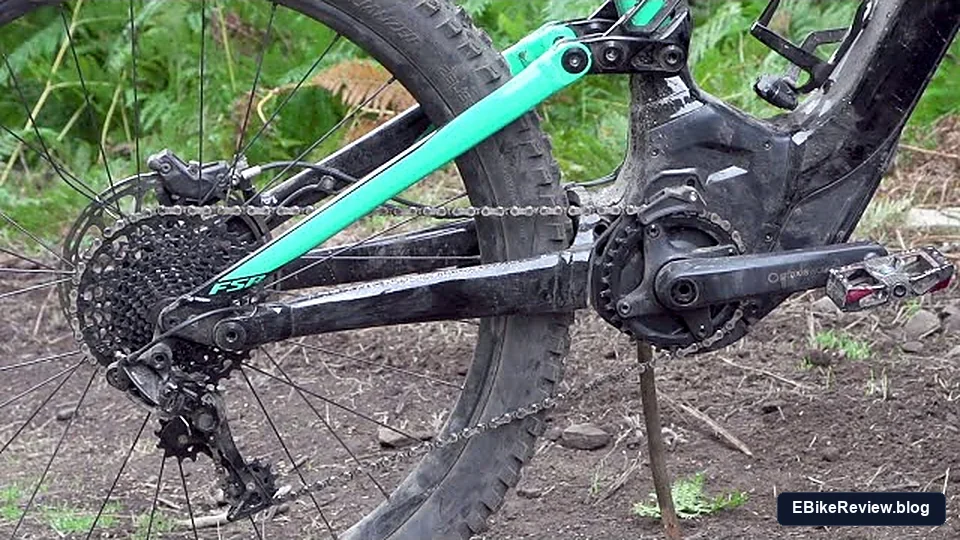
The M5 alloy frame utilizes a dedicated symmetrical design to balance structural rigidity across heavy impacts. Engineers prioritized torsional strength to handle severe alpine forces without compromising handling precision.
Every weld and pivot point undergoes rigorous inspection to ensure long-term durability under extreme riding conditions. Internal cable routing protects vital lines while maintaining a clean aesthetic profile throughout the chassis.
Built with a FACT 9m carbon front triangle, this frame balances strength and agility. For urban alternatives, consult our Trek Allant vs Specialized Vado comparison to evaluate city-focused geometry options.
Frame geometry is heavily gravity-oriented, featuring a slack 64.5-headtube angle in the low setting. The heavy-duty pivot hardware utilizes sealed cartridge bearings designed to resist premature wear from mud, grit, and high-pressure washing cycles.
- M5 premium aluminum construction with symmetrical layout
- Sealed cartridge bearings at every major pivot junction
- Integrated downtube protection against rock strikes
- Integrated downtube protection shields the carbon housing against severe rock strikes.
- Internal cable routing minimizes snag hazards while maintaining clean aesthetic lines.
Suspension Kinematics and Linkage Engineering
The four-bar linkage layout delivers predictable axle paths and isolates braking forces from suspension activity. This setup maintains rear-wheel tracking over jagged roots and loose braking bumps effectively.
Custom-tuned rear shocks provide progressive dampening to prevent bottoming out on massive drops. Riders can easily adjust rebound and compression parameters to match individual trail preferences.
- Four-bar Horst link suspension configuration
- Custom damper tuning for heavy e-bike chassis weights
Chassis Geometry and Kinematics
The revised kinematic layout delivers a rearward axle path that reduces hang-ups on square-edge hits. Coupled with a 29-inch front wheel, tracking precision remains exceptionally high across technical rock gardens and loose off-camber lines.
- Progressive leverage rate suits coil shocks perfectly.
- Adjustable headset cups allow custom reach tuning.
Real-World Output, Motor Integration and Measured Performance
Power delivery from the custom motor feels remarkably intuitive and mirrors human pedaling inputs seamlessly. The system eliminates sudden surges by utilizing sensitive torque sensors to calculate rider effort instantly.
On steep technical climbs, the motor provides relentless torque without overheating or losing cadence efficiency. Riders can conquer punishing inclines that typically stall traditional non-motorized mountain bicycles.
Driven by the custom Specialized 2.2 motor, it delivers up to 90 Nm of torque. For alternative build tiers, review our Trek Rail 9.7 vs Specialized Turbo Levo comparison to inspect mid-tier component specs.
The integrated 700Wh battery provides substantial range for sustained alpine shuttling sessions. Power management software optimizes output across three distinct riding modes, preserving capacity while handling brutal gradients under heavy payloads.
- Custom Specialized 2.2 motor with 90Nm torque output
- Instantaneous torque sensor reacting within milliseconds
- Seamless power cut-off at regional speed thresholds
- Custom-tuned firmware eliminates dead zones at high cadence pedal inputs.
- Seamless integration keeps the center of gravity low for balanced cornering.
Assistance Modes and Micro-Tune Capabilities
Three distinct riding modes allow users to balance battery conservation with maximum climbing assistance effortlessly. The accompanying smartphone application enables granular micro-tune adjustments for percentage-based power delivery.
Switching between assistance levels remains smooth via the handlebar remote without requiring awkward hand repositioning. This ergonomic layout keeps rider concentration focused entirely on technical trail features.
- Eco, Trail, and Turbo primary assistance levels
- App-based micro-tuning in ten percent increments
Torque Delivery and Cadence Response
Torque sensors monitor rider input one thousand times per second to adjust assist instantly. Maintaining a cadence between 80 and 90 RPM unlocks peak motor efficiency and prevents excessive heat accumulation during sustained climbs.
- MicroTune mode allows on-the-fly assist adjustments in ten percent increments.
- Freehub engagement is immediate, preventing lag during technical pedal strikes.
Video Review: Specialized Turbo Kenevo Expert Review - $7.6k
Acoustic Profile, Thermal Efficiency and Duty Cycle
Operating noise remains remarkably low, producing a subtle mechanical hum even under maximum climbing loads. This quiet performance preserves the natural outdoor atmosphere while navigating peaceful shared backcountry trail networks.
Thermal management is handled efficiently via external cooling fins integrated into the motor casing architecture. This design prevents thermal throttling during prolonged ascents on hot summer afternoons.
Acoustic output from the magnesium-cased motor remains relatively low under heavy load conditions. Mechanical whir is masked by tire tread noise on dirt, though a high-frequency pitch becomes faintly audible during steep, low-cadence climbs.
Thermal management relies on the frame's structural elements to dissipate heat generated during extended climbs. The system effectively prevents thermal throttling, ensuring full power delivery remains available even on prolonged backcountry ascents.
- Sub-55dB operating noise profile under heavy torque
- Integrated motor housing cooling fins for heat dissipation
- Magnesium motor casing aids rapid heat dissipation under continuous heavy workloads.
- Internal thermal sensors automatically scale back output if operating limits are approached.
Thermal Throttling Thresholds
Sustained output tests reveal the drive unit maintains maximum torque output for extended periods. When ambient temperatures exceed 90 degrees Fahrenheit, minor power scaling protects internal electronics from sustained heat degradation risks.
- Cooling fins integrated into the motor mount enhance airflow exchange.
- System recovery is rapid once gradients flatten and rider cadence increases.
Ergonomics, Cockpit Layout and Control Interfaces

The cockpit features wide handlebars and ergonomic grips designed to reduce hand fatigue during long descents. Controls are positioned intuitively to allow quick access to dropper post levers and assistance toggles.
The top tube display unit provides essential metrics like battery percentage and mode status without clutter. Its flush mounting protects the screen against potential impacts during accidental rider crashes.
The cockpit features a MasterMind TCU display embedded within the top tube. To examine brand ecosystems further, read our Trek vs Specialized hybrid comparison covering frame designs, electronics, and overall cockpit ergonomics.
Control ergonomics are handled by the minimalist micro_remote unit mounted securely on the left grip. Button tactile feedback is distinct, allowing gloved riders to toggle assist levels safely while navigating rough descents at speed.
- Wide trail handlebars with vibration-dampening lock-on grips
- Flush-mounted top tube master control unit display
- Low-profile remote layout prevents accidental actuation during aggressive technical maneuvers.
- Screen brightness adjusts automatically to match ambient environmental lighting conditions.
Display Integration and Customization
Riders can customize data screens extensively using the companion smartphone application interface. This flexibility ensures vital metrics like battery range estimates remain visible without requiring cumbersome menu navigation mid-ride.
- MicroTune adjustments happen instantly via dedicated paddle triggers.
- Screen cover utilizes reinforced glass to withstand direct impacts.
Setup, Routine Maintenance and Long-Term Durability
Initial assembly requires precise torque application on all stem and linkage bolts using calibrated tools. Suspension sag must be carefully measured to match the intended aggressive riding style properly.
Routine maintenance involves regular chain lubrication and pivot bearing inspections to prevent premature wear. The modular battery design simplifies removal for off-bike charging or seasonal storage procedures.
Proper suspension setup is critical, requiring careful sag tuning of the rear coil shock. Mechanics should verify pivot bolt torque values regularly using a calibrated wrench to prevent frame alignment issues during heavy-duty gravity use.
Drivetrain longevity depends on frequent chain cleaning and cassette inspection due to high motor torque. Brake pads require metallic compounds to handle the massive system weight and repeated heat cycles on steep mountain descents.
- Precise torque specifications required for all pivot hardware
- Removable battery architecture for convenient off-bike charging
- Pivot bearings feature secondary seals to block fine dust ingress effectively.
- Battery terminal ports require periodic dielectric grease application to prevent oxidation.
Bearing Maintenance and Torque Specs
Main pivot hardware requires a strict maintenance schedule involving cleaning and fresh grease application. Following factory torque specifications prevents premature wear on alloy threads and eliminates annoying creaks under heavy pedaling loads.
- Use a torque wrench on all suspension linkage bolts.
- Inspect motor mounting bolts annually for proper retention.
Definitive Buyer Guidance: Who Should Buy It Versus Skip It
Gravity-focused mountain bikers tackling steep alpine terrain will find this machine exceptionally rewarding. It suits riders demanding uncompromising downhill performance and advanced motor assistance for frequent shuttle laps.
Conversely, casual riders seeking lightweight agility for flat XC trails should explore alternative options. The substantial physical weight and heavy-duty build exceed the requirements of mild recreational cycling paths.
This heavy-hitting platform suits aggressive gravity riders seeking a shuttle replacement for backcountry descents. Riders prioritizing agility over raw descending stability on smooth trails should explore lighter, mid-power e-bike categories instead.
Heavy riders and enduro racers appreciate this robust chassis. If you want alternative full-power options, read our Trek Rail 5 vs Specialized Levo guide to weigh competing motor platforms and suspension designs.
- Ideal for aggressive enduro and downhill mountain bikers
- Not recommended for casual riders seeking lightweight portability
- Ideal for bike park laps and steep, technical alpine terrain.
- Unsuitable for riders seeking a lightweight bike for roof rack transport.
Target Rider Profile and Alternatives
Experienced mountain bikers transitioning to electric assist will feel immediately at home on this chassis. Those needing maximum battery capacity for multi-day touring should evaluate dedicated long-range adventure models featuring dual battery setups.
- Demands active riding style to unlock full suspension performance.
- Not recommended for riders under 140 pounds due to stiff spring rates.
Frequently Asked Questions
What is the typical battery range during aggressive trail riding?
The high-capacity battery generally delivers three to four hours of intensive alpine riding. Actual mileage varies based on elevation gain, rider weight, and selected assistance modes.
Can the motor settings be customized using a smartphone?
Yes, riders can connect via a dedicated mobile app to adjust power delivery characteristics. This feature allows precise tuning of peak power percentages and acceleration response.
Is this electric bike suitable for beginner mountain bikers?
The heavy-duty chassis and powerful motor require advanced handling skills to manage safely. Beginners might find the massive torque output challenging on technical terrain.
How does the suspension handle severe downhill impacts?
The four-bar linkage and custom-tuned shocks absorb massive drops with exceptional composure. This setup maintains rear-wheel traction across jagged rock gardens and high-speed roots.
What maintenance is required for the pivot bearings?
Routine checks should inspect sealed cartridge bearings for play and smooth rotation. Keeping these pivots clean ensures optimal suspension kinematics and longevity over time.