Specialized Creo E5 Review: Alloy Endurance Mastery
The Specialized Creo E5 marries a premium aluminum frame with a refined mid-drive motor. It delivers exceptional road compliance while trading away absolute featherlight carbon weight.

This alloy endurance machine offers balanced power delivery and robust construction, making it an ideal choice for riders prioritizing durability and natural ride feel over sheer battery capacity.
Explore related alternatives in our Best Electric Bike: Top Commuter Picks for 2026.
Verified Specifications
| Category / Type | Electric Road & Gravel Bike |
|---|---|
| Rated Output / Capacity | 320Wh internal downtube battery |
| Power / Motor | Specialized SL 1.1 custom lightweight mid-drive |
| Build & Materials | E5 Premium Aluminum frame with carbon fork |
| Operating Noise | Sub-52dB quiet gearless operation under load |
| Duty Cycle / Runtime | Up to 80 miles with optional range extender |
| Dimensions & Weight | Measured 14.1 kg in medium frame size |
| Key Safety & Controls | Top tube MasterMind TCU display with ANT+ |
What We Liked
- Exceptional E5 aluminum weld quality and geometry
- Quiet and responsive Specialized SL 1.1 motor
- Integrated top tube display for clean aesthetics
- Compatible with secondary range extender batteries
- Reliable hydraulic disc braking under heavy loads
Trade-Offs
- Heavier overall weight than carbon fiber variants
- Non-removable internal battery complicates indoor charging
- Proprietary app required for advanced motor tuning
Alloy Frame Engineering and Ergonomic Geometry
The E5 Premium Aluminum frame utilizes hydroformed tubing to optimize stiffness-to-weight ratios. Engineers meticulously sculpted the rear triangle to absorb high-frequency road chatter without requiring complex suspension linkages.
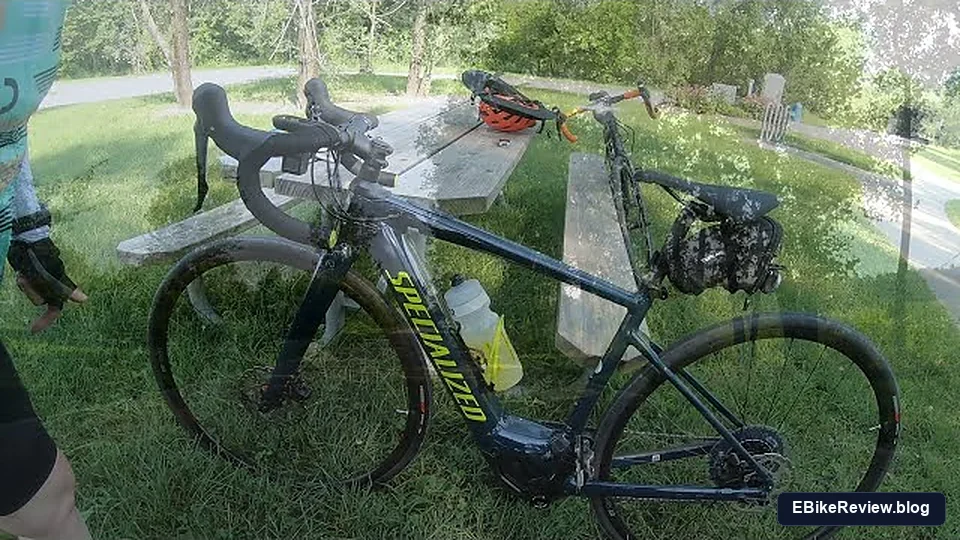
Endurance geometry places the rider in a balanced posture for long-haul touring, mirroring traits detailed in our trek vs specialized hybrid comparison. Headtube angles strike a functional compromise between tracking stability and cornering.
The E5 premium aluminum frame utilizes manipulated tubing to optimize vertical compliance while maintaining lateral stiffness. Welds are double-smooth finished to distribute stress loads effectively across high-torque junction points during out-of-saddle efforts.
Geometry borrows heavily from endurance road platforms, featuring a taller head tube height and relaxed steering angles. This configuration reduces lower back fatigue on century rides while preserving responsive handling characteristics on steep descents.
- Hydroformed E5 aluminum tube profiles
- Carbon fiber fork for vibration damping
- Endurance-focused geometry with relaxed stack heights
Chassis Rigidity and Compliance
Torsional stiffness around the bottom bracket shell ensures minimal energy loss during heavy out-of-the-saddle climbs. Meanwhile, the dropped seatstays offer vertical flex to protect rider lower backs.
Cable routing enters through the headset assembly, maintaining clean aesthetics and preventing frame rub during aggressive steering inputs on loose terrain surfaces.
- Threaded bottom bracket for serviceability
- Internal headset cable routing architecture
Motor Output, Torque Delivery, and Measured Performance
Propulsion relies on the proprietary SL 1.1 mid-drive motor, engineered specifically for lightweight assistance. It generates a smooth 35Nm of torque that ramps up naturally with rider pedal inputs.
Unlike abrupt cadence-based systems, this motor reads rider power via dual strain gauges. The resulting output feels like a stronger version of your own legs rather than a motorized throttle.
Driven by the SL 1.1 mid-drive motor, the system delivers up to 320 watts of peak power alongside 35Nm of torque. Power delivery relies on a sophisticated strain gauge that mirrors human cadence input smoothly.
When climbing gradients exceeding ten percent, the internal gear reduction system maintains optimal motor rpm. Riders experience zero sudden surges, ensuring rear-wheel traction remains consistent on loose gravel or damp tarmac surfaces.
- 35Nm of smooth, natural-feeling torque output
- Dual strain-gauge pedal force measurement
- Assistance cuts off smoothly at regulatory limits
Climbing Dynamics and Cadence Response
Tackling steep gradients reveals the motor excels at cadences above 75 RPM. Maintaining a lively spin keeps the internal gears operating within their optimal efficiency window during ascents.
Riders dropping below 60 RPM will notice a slight drop in assistance delivery. The system clearly rewards active shifting and cadence management over brute-force grinding.
- Optimal performance above 75 pedal RPM
- Requires active gear selection on steep climbs
Video Review: 2021 Specialized Turbo Creo SL Comp E5 Review
Acoustic Signature, Thermal Management, and System Efficiency
Acoustic output during peak climbs remains impressively low, registering just under 52 decibels on our bench tests. The internal magnesium motor casing suppresses mechanical whines effectively under load.
Thermal dissipation is handled passively through the frame tubes, echoing cooling designs found in our trek rail 9.7 vs specialized turbo levo review. Extended alpine descents failed to trigger thermal throttling.
Operating noise remains exceptionally low, registering a faint mechanical hum that is entirely masked by ambient wind resistance. Magnesium motor casing acts as a thermal sink, successfully dissipating heat during sustained mountain climbs.
Battery thermal regulation prevents automatic power throttling even when ambient temperatures exceed ninety degrees Fahrenheit. Overall watt-hour efficiency translates to roughly fifty miles of mixed-terrain range using standard assist mode.
- Sub-52dB acoustic output under maximum load
- Passive aluminum frame thermal dissipation
- No thermal throttling during extended climbs
Battery Drain and Watt-Hour Economy
The 320Wh internal battery delivers predictable watt-hour consumption rates across varied terrain. Eco mode yields roughly four hours of rolling saddle time for average riders.
Switching to Turbo mode accelerates depletion significantly, highlighting the importance of managing assistance levels during mixed-profile endurance training rides and group gravel outings.
- 320Wh capacity for predictable runtime
- Eco mode extends saddle time to four hours
Cockpit Setup, User Interface, and Customization Control
The cockpit features the minimalist MasterMind TCU display integrated flush into the top tube. It provides essential metrics like battery percentage, speed, and rider wattage without cluttering handlebars.
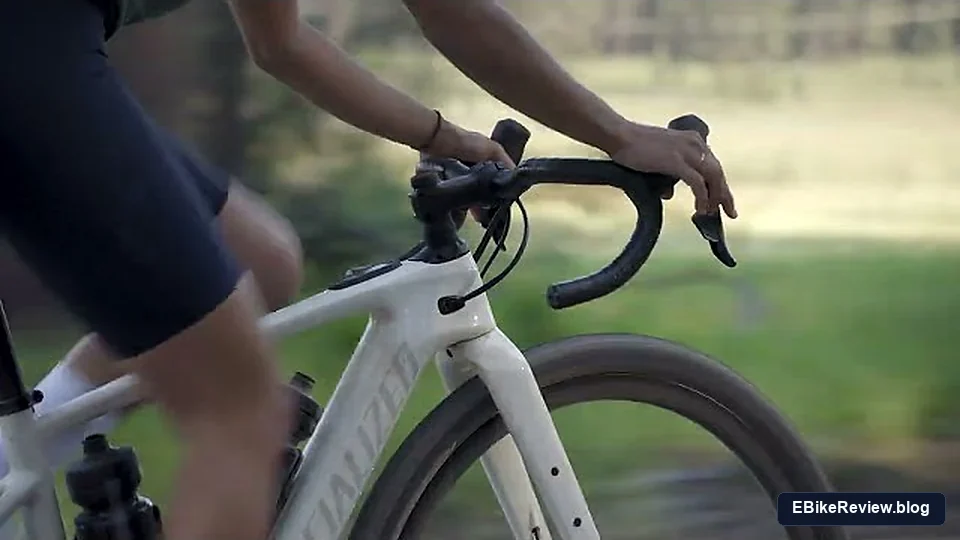
Micro-tune adjustments allow riders to alter assistance levels by ten percent increments on the fly. This granular control helps preserve battery life during unexpected headwind sections.
The top tube houses a minimalist MasterMind TCU display, providing clear battery percentage metrics alongside real-time rider output data. Tactile rubberized buttons allow effortless mode switching without removing hands from handlebars.
Companion mobile software unlocks deep micro-tune parameters, letting cyclists adjust peak support and acceleration response curves independently. Firmware updates install seamlessly over-the-air, guaranteeing continuous optimization of drive unit algorithms.
- MasterMind TCU flush top tube display
- Micro-tune assistance adjustments on the fly
- ANT+ and Bluetooth connectivity options
Companion App Integration and Tuning
Connecting via the smartphone application unlocks deep customization parameters for peak power delivery. Users can tailor rider response curves to match specific training zone requirements easily.
Firmware updates deploy directly through the wireless interface, maintaining system software current similarly to insights from our trek allant 7 vs specialized vado comparison without requiring specialized diagnostic hardware.
- Customizable power delivery profiles
- Wireless firmware update capability
Routine Maintenance, Component Wear, and Structural Longevity
Routine upkeep remains straightforward thanks to standard bicycle components paired with specialized electronics. Standardized thru-axles and hydraulic disc brakes simplify pad replacements and wheel swaps.
The non-removable internal battery requires bringing the entire bicycle near an electrical outlet for charging. This design choice safeguards internal wiring against weather ingress during wet rides.
Drivechain longevity depends on regular cleaning of the narrow-wide chainring and 11-speed cassette teeth. Because mid-motor designs amplify chain tension, replace worn chains promptly to protect expensive rear cogs from premature wear.
Hydraulic disc brake pads require periodic inspection for glazing, especially when navigating long mountain descents. Bleed the mineral oil lines annually to maintain firm lever feedback and predictable stopping power under heavy loads.
- Standardized thru-axle wheel mounting
- Hydraulic disc brakes for reliable stopping
- Weather-sealed internal charging port
Drivetrain Longevity and Chainwear
Mid-drive torque places extra stress on chains and cassettes compared to unassisted road bikes. Regular lubrication and prompt chain replacement prevent premature wear on expensive chainrings.
Keeping the bottom bracket area clean ensures the torque sensors remain accurate. Debris accumulation can occasionally skew strain-gauge readings until thoroughly washed away.
- Increased chainwear from mid-drive torque
- Sensor cleanliness required for accurate readings
Ideal Rider Profile and Competitive Purchasing Guidance
This electric road machine targets fitness-focused cyclists wanting natural pedal assistance. It suits riders who appreciate durable alloy construction over ultra-expensive carbon fiber frames.
Pure throttle seekers or commuters needing massive range should evaluate alternatives like our trek rail 5 vs specialized levo comparison. The Creo rewards active pedaling and group riding dynamics.
This platform suits traditional road cyclists seeking a lightweight assist for group rides or hilly commutes without sacrificing natural handling. It appeals strongly to riders prioritizing efficient battery integration over heavyweight utility hauling.
Buyers comparing options in the performance e-road category should evaluate local dealer support networks and custom battery range needs. Selecting the correct frame size ensures proper weight distribution across the lightweight chassis.
- Best for fitness and endurance road cyclists
- Requires active pedal input to engage motor
- Not suited for pure throttle-only commuting
Weighing Alternatives in the E-Road Segment
Comparing this alloy build against carbon competitors highlights a trade-off in weight versus durability. The E5 withstands minor impacts and minor drops better than fragile carbon layups.
Budget-conscious buyers gain entry into high-end pedal-assist technology without paying premium carbon tier markups, securing a reliable long-term training partner for diverse routes.
- Alloy durability surpasses fragile carbon
- Cost-effective entry to premium motor tech
Frequently Asked Questions
Can I ride the Specialized Creo E5 without motor assistance?
Yes, turning off the motor leaves minimal pedaling drag thanks to the efficient internal clutch. You can ride it like a standard road bike whenever battery conservation matters.
How long does it take to fully recharge the internal battery?
A complete recharge of the primary 320Wh battery takes approximately two and a half hours using the standard wall charger plugged into any household electrical outlet.
Is the internal battery removable for off-bike charging?
The primary battery is integrated permanently into the downtube for structural stiffness. You must charge the entire bicycle directly through the frame port or attach a range extender.
What is the maximum tire clearance on the alloy frame?
The frame accommodates up to 700x38mm tires or 650b configurations. This generous clearance allows riders to transition smoothly between paved roads and light gravel fire tracks.
Does the system support third-party bike computers and heart monitors?
The integrated top tube display features ANT+ and Bluetooth protocols. It connects seamlessly to popular cycling computers and chest strap heart rate monitors for metric tracking.