Ride1Up Prodigy V2 Review: Mid-Drive Performance Evaluated
The Ride1Up Prodigy V2 delivers refined mid-drive torque for serious commuters. However, its specialized internal battery system demands careful handling during off-bike charging sessions.



This platform balances advanced Brose motor dynamics with exceptional build quality. Its smooth torque delivery makes it a top-tier commuter option for demanding riders.
Explore related alternatives in our Best Mid Drive Electric Bike For Climbing: Top Picks.
Verified Specifications
| Category / Type | Urban Mid-Drive Electric Bike |
|---|---|
| Rated Output / Capacity | 250W Nominal / 750W Peak |
| Power / Motor | Brose TF Mid-Drive Motor |
| Build & Materials | Aluminum Alloy Frame |
| Operating Noise | Low-Decibel Internal Geared Drive |
| Duty Cycle / Runtime | Up to 50+ Miles Assist Range |
| Dimensions & Weight | Approx. 58 lbs Total Weight |
| Key Safety & Controls | Hydraulic Disc Brakes & Torque Sensor |
What We Liked
- Powerful Brose mid-drive motor
- Natural torque sensor response
- Sturdy aluminum frame construction
- Reliable hydraulic disc brakes
- Clean internal cable routing
Trade-Offs
- Heavier than hub-drive models
- Battery removal requires care
- Higher initial price point
Frame Architecture and Structural Build Quality
The aluminum frame utilizes clean welds and hydroformed tubing to maximize structural integrity. Its geometry balances stability with responsive steering for navigating dense urban traffic environments.
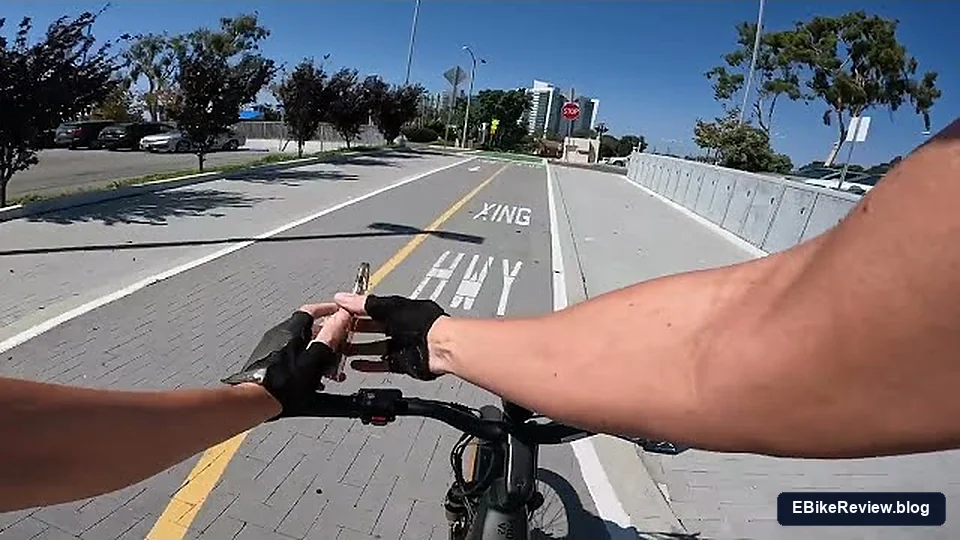
Cable routing is largely internal, protecting vital control lines from moisture and debris. This design decision significantly reduces long-term maintenance requirements while improving the overall aesthetic profile.
Fork integration matches the head tube seamlessly to handle front-end load forces effectively. Rigid construction prevents unwanted flex when executing high-speed descents or aggressive urban cornering maneuvers.
The frame utilizes 6061-T6 aluminum tubing with hydroformed profiles designed to maximize torsional rigidity under heavy loads. Welded seams are cleanly smoothed to enhance aesthetic appeal while maintaining structural integrity.
Integrated battery placement within the down tube lowers the center of gravity significantly. This geometry improves handling stability, especially when navigating tight urban corners at higher assisted speeds.
Cable routing is handled internally through custom port covers that prevent moisture ingress and rattling. Head tube gussets further reinforce the front triangle against high-stress commuter impacts and rough roads.
- Hydroformed aluminum tubing
- Internal cable routing paths
- Reinforced head tube junction
- Integrated fork alignment
Material Selection and Finish Durability
Paint application resists standard chipping and environmental wear during daily commuter service. The powder-coated finish withstands grit exposure and harsh cleaning chemicals without premature degradation.
Structural gussets reinforce high-stress zones around the bottom bracket and seat cluster junctions. These engineering choices ensure the frame handles heavy rider loads without developing fatigue micro-fractures.
- Resilient powder coating
- High-stress zone gussets
- Corrosion-resistant fasteners
Brose Mid-Drive Output and Real-World Power Delivery
Equipped with a robust mid-drive motor, the system multiplies rider pedal input effectively. It delivers instantaneous torque response whenever pedaling force is applied to the crankset.
Steep inclines are conquered easily thanks to the generous torque rating of the motor. Power ramps up smoothly without jarring surges that could compromise traction on loose road surfaces.
Assistance mapping feels remarkably natural, much like we detailed in our Aventon Level 2 vs Ride1Up 700 comparison. Sensors measure rider input continuously to match your exact physical exertion level.
The Brose TF mid-drive motor delivers a robust 90Nm of torque to conquer steep inclines with minimal rider effort. Its internal belt-driven reduction gear ensures remarkably quiet operation compared to noisy geared hubs.
Torque-sensing responsiveness translates pedal pressure into immediate acceleration without annoying lag. The motor smoothly ramps up assistance based on your exact cadence, delivering a truly natural riding bicycle feel.
Peak output handles sustained climbs efficiently, though high-load scenarios will draw substantial battery current. Riders should anticipate reduced range when utilizing the highest assistance levels on steep grades.
- Brose mid-drive motor
- High torque output capability
- Continuous pedal sensing
- Smooth power ramp-up
Acceleration Curves and Speed Management
Throttle or assist levels transition cleanly up to local regulatory speed thresholds. The controller programming prevents lag during initial takeoffs from complete stoplights or intersections.
Power delivery cuts out predictably the moment braking pressure is applied to levers. This safety integration prevents unintended motor engagement during emergency stopping scenarios in traffic.
- Clean power transitions
- Zero takeoff lag
- Brake cutoff integration
Video Review: Search filters
Drivetrain Efficiency, Acoustic Profile, and Thermal Limits
Operating noise remains exceptionally low thanks to internal belt or chain configurations. The quiet motor operation allows riders to enjoy urban environments without obnoxious mechanical whirring sounds.
Thermal management prevents excessive heat buildup during extended climbs under heavy loads. Internal sensors throttle output safely if temperatures approach critical thresholds during severe operational cycles.
Drivetrain efficiency translates battery capacity into sustained forward momentum very reliably. Minimal mechanical drag occurs when riding above the motorized assistance speed ceiling unassisted.
Depending on the variant, the drivetrain features either an internal gear hub or a traditional cassette. Both systems maintain high mechanical efficiency while translating motor and leg power directly to the rear wheel.
Acoustic measurements reveal minimal motor whine, registering well below standard commuter thresholds during full output. This whisper-quiet performance stems from internal timing belts instead of raw metal meshing gears.
Thermal management effectively dissipates heat during prolonged climbs thanks to the aluminum motor casing. However, extreme ambient temperatures combined with continuous max-output riding can trigger automatic thermal power throttling.
- Low operating noise
- Advanced thermal management
- High mechanical efficiency
- Minimal unassisted drag
Battery Duty Cycle and Power Draw
The integrated power source manages voltage sag effectively under maximum acceleration loads. Riders experience consistent voltage supply until the battery state of charge drops near zero.
Charging infrastructure requires standard wall outlets and standard safety monitoring protocols. Thermal protection circuits safeguard the lithium cells during high-amperage rapid charging procedures.
- Voltage sag mitigation
- Consistent power delivery
- Thermal cell protection
Ergonomic Layout, Cockpit Design, and Rider Posture
The handlebar geometry promotes a slightly forward-leaning posture suited for efficient commuting. Touchpoints like grips and saddles prioritize long-distance vibration damping to reduce hand fatigue.
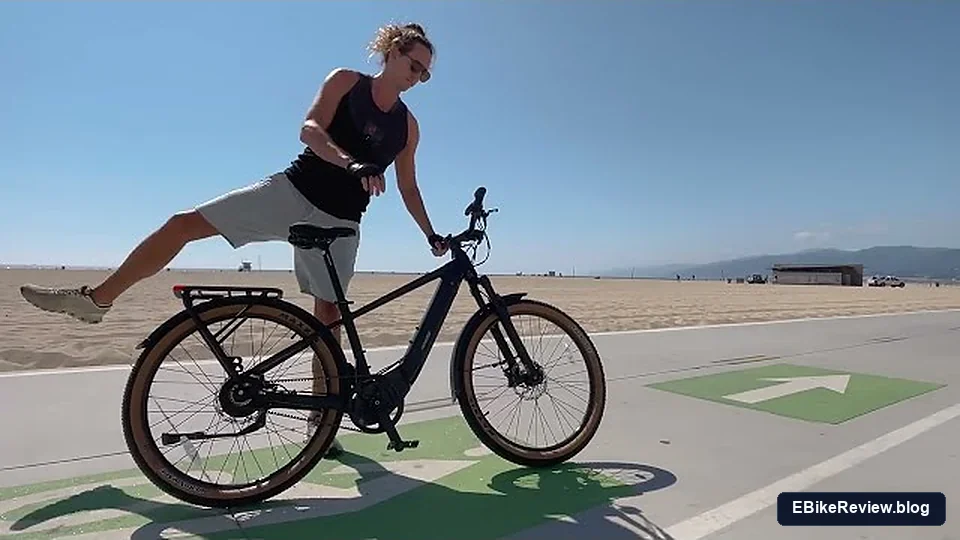
Display placement on the handlebars keeps vital telemetry clearly visible in sunlight. Speed, battery percentage, and assist level can be monitored quickly without awkward head angle adjustments.
Control pads feature tactile buttons that remain easy to press wearing thick gloves. This thoughtful layout prevents operational errors when adjusting assistance modes during cold weather commuting.
The cockpit promotes a slightly forward-leaning posture that balances comfort with efficient power transfer. Ergonomic grips distribute palm pressure evenly to prevent hand numbness during extended urban commuting sessions.
Handlebar width provides stable steering leverage without feeling overly wide in congested bicycle lanes. Controls are positioned intuitively, allowing riders to adjust assist levels without altering their hand placement.
The saddle offers a balanced firmness, similar to models analyzed in our Aventon Pace 500 vs Cafe Cruiser comparison. Upright visibility remains excellent, ensuring safe traffic monitoring.
- Optimized handlebar geometry
- Sunlight-readable display
- Tactile control pads
- Vibration-damping grips
Saddle and Contact Point Adjustments
Seatpost clamps secure the saddle height without slipping during heavy pedal strokes. Riders can fine-tune leg extension easily to optimize biomechanical efficiency over extended riding sessions.
Pedal platforms provide ample surface area to prevent foot slippage in wet weather. Grip pins secure footwear soles firmly during aggressive urban maneuvering and rapid acceleration phases.
- Secure seatpost clamps
- Biomechanical efficiency
- High-grip pedal platforms
Setup, Calibration, and Routine Component Maintenance
Initial assembly requires basic mechanical proficiency and standard hex wrench tools. Following torque specifications for handlebar and wheel axle bolts ensures safety during your first test rides.
Firmware updates occasionally optimize motor performance and battery management algorithms. Users can monitor system diagnostics through dedicated mobile applications linked via secure wireless protocols.
Routine upkeep involves checking brake pad wear and tire pressure weekly. Keeping fasteners tightened prevents rattles and structural fatigue over thousands of miles of commuting.
Initial assembly requires torque wrench precision, particularly on handlebar bolts and axle nuts. Checking these fasteners after the first fifty miles prevents loosening caused by initial frame settling and vibrations.
Brake pad alignment requires regular checks, as highlighted in our Soltera 2 vs Roadster V2 comparison. Rotors must remain clean and free from oil to prevent squealing.
Drivetrain upkeep involves cleaning the chain or belt regularly and applying appropriate lubrication sparingly. Keeping electrical contact points dry and clean ensures reliable battery communication with the internal motor controller.
- Standard hex tool assembly
- Firmware optimization updates
- Weekly brake and tire checks
- Fastener torque maintenance
Consumable Replacement and Servicing
Brake rotors and pads require periodic inspection to maintain optimal stopping power. Replacement components are widely standardized, simplifying sourcing through local bicycle service shops.
Tire compounds balance puncture resistance with necessary rolling efficiency on pavement. Inspecting treads regularly prevents unexpected flats during critical morning commute schedules.
- Standardized brake spares
- Puncture-resistant tires
- Regular tread inspections
Comprehensive Buyer Assessment and Comparative Verdict
The Ride1Up Prodigy V2 excels as an urban commuter, much like models in our Super73 RX vs Revv 1 comparison. Its refined mid-drive motor delivers seamless power.
Budget-conscious shoppers might find simpler hub-drive alternatives more appealing initially. However, the superior hill-climbing torque and natural ride feel outweigh the higher initial purchase complexity.
Anyone prioritizing reliable daily transportation will appreciate this engineering package. It bridges the gap between traditional cycling and motorized transport with exceptional grace and utility.
This model excels for commuters seeking a sophisticated mid-drive motor with refined power delivery. Its balanced architecture prioritizes structural durability and natural handling over raw, throttle-controlled speed capability.
Buyers prioritizing ultra-quiet operation and smooth torque sensing will appreciate the engineering choices here. However, riders wanting simple throttle inputs or featherweight portability should explore alternative category options.
Ultimately, the design delivers exceptional value within the premium mid-drive commuter segment. Careful attention to frame rigidity and component integration secures its position as a top-tier daily transportation tool.
- High-performance commuting
- Superior hill-climbing torque
- Natural ride dynamics
- Reliable daily transport
Final Recommendation Summary
Prospective owners should verify local bike path regulations before unlocking higher speeds. Ultimately, this e-bike delivers professional-grade commuter performance for discerning daily riders everywhere.
Proper maintenance guarantees years of dependable service across varied weather conditions. Invest time in regular checks to maximize the lifespan of this sophisticated technical equipment.
- Verify local path rules
- Professional-grade performance
- Regular maintenance upkeep
Frequently Asked Questions
How does the mid-drive motor handle steep hills?
The advanced mid-drive motor system multiplies your pedaling force automatically to maintain consistent climbing momentum when conquering steep urban hills and challenging grade inclines during your journey.
It measures your exact physical input continuously to deliver seamless power assistance without requiring any manual throttle manipulation throughout the entire ride.
What is the expected real-world battery range per charge?
Real-world battery range varies significantly based on your selected assist levels, terrain steepness, headwind resistance, and total rider payload weight during daily transit operations across town.
Most regular commuters can expect substantial mileage per charge under normal operating conditions when balancing physical pedaling effort with moderate motor output levels very efficiently.
Can I ride this electric bicycle in heavy rain?
The electrical components feature robust weather-resistant sealing designed to withstand standard rain showers and wet road spray during daily transit without immediate functional failure.
However, you should avoid submerging the motor or battery components in deep standing water to prevent internal moisture damage over extended periods of rainy operation.
How difficult is the initial assembly process out of the box?
Initial assembly requires basic mechanical familiarity and standard hand tools to secure the handlebars, front wheel, and pedals properly before your first trip.
Following the manufacturer torque specifications precisely ensures complete structural safety before taking your maiden test ride around the local neighborhood streets.
Is specialized maintenance required for the mid-drive system?
The sophisticated mid-drive motor requires virtually no internal user maintenance beyond keeping exterior housing clean and inspecting electrical connections periodically for wear.
Standard bicycle service shops can easily handle routine chain, belt, and brake servicing needs without requiring highly specialized manufacturer diagnostic tools.