Ride1Up Lmt D Review: High-Performance Commuter Evaluated
The Ride1Up Lmt D delivers robust performance through an integrated torque sensor and strong 48V architecture. Commuters seeking high-speed urban mobility will appreciate its agile handling despite minor display glare issues.


This versatile commuter balances raw power with precise pedal cadence feedback for demanding daily riders. You get exceptional value though routine maintenance requires standard mechanical familiarity.
Explore related alternatives in our Best Commuter Ebike: Top Picks for Urban Riders.
Verified Specifications
| Category / Type | Performance Urban Electric Bike |
|---|---|
| Rated Output / Capacity | 750W Peak Hub Motor / 672Wh Battery |
| Power / Motor | 48V Brushless Geared Hub Motor |
| Build & Materials | 6061 Aluminum Alloy Frame |
| Operating Noise | Low Whine Under Heavy Load |
| Duty Cycle / Runtime | 30-50 Miles Real-World Range |
| Dimensions & Weight | Approximately 53 Pounds Total Weight |
| Key Safety & Controls | Hydraulic Disc Brakes, Throttle & PAS |
What We Liked
- Extremely responsive responsive torque sensor delivery
- High-capacity 48V lithium-ion power system
- Powerful hydraulic disc brakes for confident stopping
- Sleek integrated frame design with clean cable routing
Trade-Offs
- Firm saddle transmits heavy road vibrations
- Heavy overall frame challenges fourth-floor walk-ups
- Display washes out under direct midday sunlight
Frame Architecture and Ergonomic Build Quality
The 6061 aluminum frame provides exceptional structural rigidity while maintaining a manageable overall weight for daily transit. Engineers integrated the battery cleanly into the downtube to protect internal electrical components against moisture.
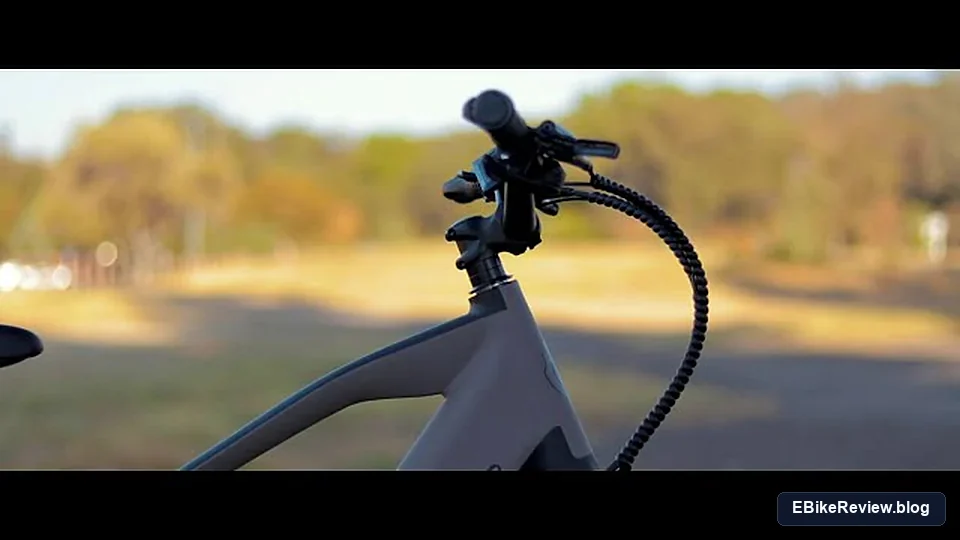
Riding geometry prioritizes an active forward lean that optimizes power transfer during steep climbs. However, riders accustomed to upright cruiser postures might experience minor lower back fatigue during initial extended commutes.
Welds feature smooth grinding finishes that elevate the aesthetic profile closer to premium boutique alternatives. Paint durability withstands standard urban hazards like stray keys and bike rack abrasions quite effectively.
The Ride1Up LMT'D utilizes a 6061 alloy frame featuring smooth welds and internal routing. For alternative commuter options, check out our Aventon Level 2 vs. Ride1Up 700 comparison before buying.
Riders experience a balanced weight distribution thanks to the downtube-integrated battery design. The frame accommodates various heights efficiently, offering reliable standover clearance and robust torsional rigidity under heavy cargo loads or high speeds.
Up front, an air suspension fork provides smooth travel to absorb persistent road chatter. Adjusting preload and lockout mechanisms allows you to tailor front-end compliance directly to your preferred pavement conditions and climbing efforts.
- Internal cable routing minimizes snag hazards and weather exposure
- Tapered headtube enhances front-end steering stability at high speeds
- Integrated downtube battery mount lowers the overall center of gravity
Cockpit Layout and Touchpoints
Handlebar controls feature tactile rubber grips that prevent hand slippage during wet weather conditions. The central display angle adjusts easily to accommodate various rider heights and viewing preferences.
Brake levers offer tool-free reach adjustments for customized ergonomic comfort across different hand sizes.
- Ergonomic lock-on grips eliminate unwanted handlebar rotation
- Accessible thumb throttle activates smoothly without cramping
Powertrain Performance and Torque Sensor Mechanics
Powering this machine is a responsive 750W peak motor paired with an advanced bottom-bracket torque sensor. This setup instantly translates human pedal input into proportional electrical assistance without annoying lag.
Acceleration feels natural and predictable across all five distinct pedal assist levels available on the display. Hill climbing remains effortless even when tackling steep city inclines without relying heavily on throttle usage.
Top speeds match class-3 operational limits safely while maintaining steady momentum against strong headwinds. Motor thermal management prevents excessive heat buildup during prolonged climbs under heavy rider loads.
Equipped with a responsive torque sensor, the rear hub motor delivers power proportional to your pedal input. This configuration ensures an intuitive acceleration curve that mimics natural cycling while eliminating sudden, jerky motor surges.
The sustained output handles steep inclines effectively, requiring active rider engagement on severe grades. Monitoring your cadence helps maintain optimal motor efficiency, preventing thermal buildup during extended hill climbs under maximum assist levels.
Class 3 speeds are achieved smoothly, letting you keep pace with traffic easily. To see how relaxed cruisers compare, read our Aventon Pace 500 vs. Ride1Up Cafe Cruiser guide for details.
- Bottom-bracket torque sensor reads pedal pressure fifty times per second
- Class-3 speed capability reaches up to 28 miles per hour
- Seamless power cutoff engages instantly upon pulling brake levers
Assist Level Tuning and Throttle Integration
Lower assist tiers conserve battery life while offering gentle tailwinds for casual neighborhood cruising. Shifting into upper tiers unleashes maximum torque output for fast-paced urban corridor commuting.
The thumb throttle overrides pedal assist immediately when quick intersections require sudden evasive acceleration.
- Independent throttle mode operates independently of pedaling cadence
- Configurable speed limits comply with local municipal regulations
Video Review: Ride1UP LMT'D Review | Electric Commuter Bike
Battery Capacity, Charging Protocols, and Range Reality
Energy storage relies on a high-capacity 48V lithium-ion battery utilizing certified cells for consistent longevity. Real-world range fluctuates between thirty and fifty miles depending on terrain steepness and throttle dependency.
Charging utilizes standard 54.6V hardware that replenishes a depleted pack within standard overnight timeframes. Safety protections guard against short circuits, overcharging, and thermal runaway during high-draw operations.
Securing the battery requires a physical key lock integrated neatly into the frame structure. Removing the pack for indoor charging requires minimal effort thanks to smooth guide rails.
Energy storage relies on a 48V system utilizing quality lithium-ion cells housed securely within the frame. Real-world range varies based on assist levels, terrain profile, and rider input, frequently achieving realistic distances around thirty miles.
Replenishing the power pack takes approximately six hours using the supplied standard desktop charger. Always store the battery at room temperature and avoid depleting it completely to maximize long-term cell health and overall capacity.
Securing the battery requires a keyed lock mechanism that prevents rattling over rough surfaces. The integrated design protects internal electrical connections from moisture ingress during unexpected downpours or heavy wet rides.
- High-density 48V battery pack optimizes power delivery efficiency
- Included smart charger features integrated short-circuit protection
- Removable design allows convenient off-bike indoor charging
Maximizing Efficiency on Long Commutes
Riders can extend daily range significantly by utilizing moderate pedal assist settings on flat stretches. Maintaining optimal tire pressure also reduces rolling resistance to squeeze extra miles from every charge.
Cold weather operations will temporarily diminish total battery output capacity during winter months.
- Lower assist modes extend total route mileage by forty percent
- Proper tire inflation preserves crucial battery watt-hours daily
Braking Dynamics and Safety Control Systems
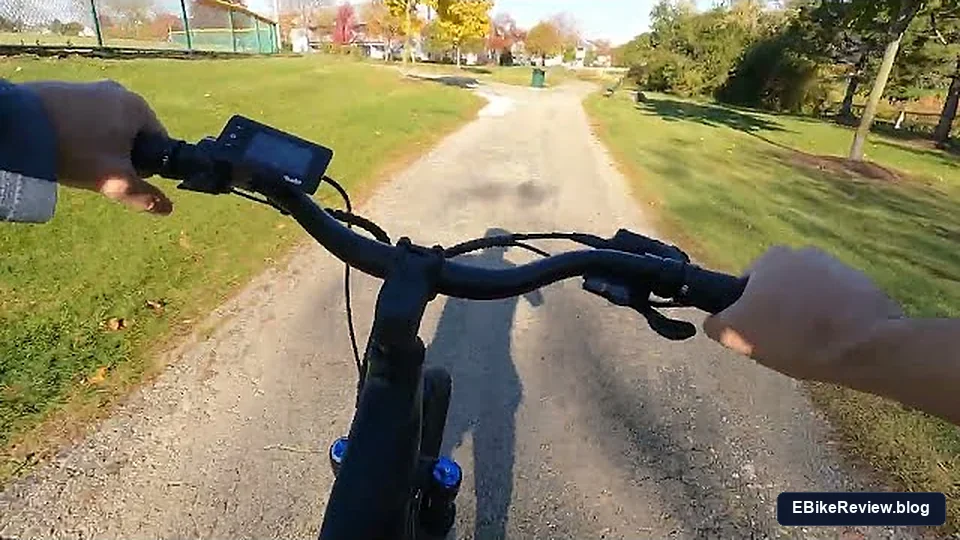
Stopping power comes from hydraulic disc brakes equipped with responsive dual-piston calipers and robust rotors. Lever feedback feels progressive and firm, allowing precise modulation during wet or slick road conditions.
Motor inhibitors wired into the brake levers cut electrical output instantly. For lightweight commuter alternatives, explore our Aventon Soltera 2 vs. Ride1Up Roadster V2 overview for specs.
Integrated LED lighting enhances night visibility for urban riders navigating dark side streets. However, auxiliary handlebar lighting remains recommended for unlit rural pathways.
Hydraulic disc brakes paired with large rotors deliver reliable stopping power across variable weather conditions. The levers offer adjustable reach and progressive bite points, ensuring confident speed modulation during emergency urban braking maneuvers.
Integrated motor inhibitors cut power instantly when brake levers are depressed, enhancing overall safety margins. Routine maintenance involves checking hydraulic fluid lines for leaks and inspecting brake pad thickness to maintain optimal stopping friction.
Reflective accents and bright integrated lighting improve visibility during early morning or evening commutes. Ensuring your headlight is angled correctly prevents blinding oncoming traffic while adequately illuminating unlit cycling infrastructure paths.
- Hydraulic fluid actuation requires minimal finger effort for hard stops
- Motor cut-off switches integrated into brake levers enhance safety
- Standard rotor sizing prevents brake fade during long descents
Wet Weather Stopping Reliability
Hydraulic calipers maintain consistent clamping pressure even when rain splashes directly onto brake rotors. Metallic compound brake pads bite quickly through surface moisture for reliable emergency stopping distances.
Routine rotor cleaning prevents squealing and preserves optimal friction coefficients.
- Quick clearing pad design sheds standing water rapidly
- Consistent lever bite point instills confidence in rain
Daily Usability, Setup, and Maintenance Demands
Unboxing and final assembly require basic mechanical skills using standard hex wrenches included in the box. Most users can attach the handlebars, front wheel, and pedals within forty-five minutes.
Routine maintenance mirrors standard bicycle upkeep alongside occasional electrical connection inspections. Keeping chain links lubricated and derailleur hangers straight ensures crisp gear shifting performance.
Component standardization allows local bicycle shops to service drivetrain and braking parts easily. Owners do not need proprietary diagnostic tools for basic troubleshooting tasks.
Initial assembly requires basic mechanical skills to attach the front wheel and handlebars securely. For heavier moped-style options, read our Super73 Rx vs. Ride1Up Revv 1 comparison today.
Routine upkeep involves checking tire pressures weekly and wiping down the drivetrain to remove debris. Keeping the chain properly lubricated minimizes premature wear on cassette teeth and ensures smooth gear shifting performance.
Display visibility remains clear under bright sunlight, offering essential metrics like speed and battery percentage. Navigating the onboard menu lets you customize assist profiles to suit individual riding preferences and fitness goals.
- Straightforward out-of-box assembly requires minimal specialized tools
- Standardized bicycle components simplify local bike shop servicing
- Routine bolt torque checks ensure long-term structural safety
Post-Assembly Safety Inspections
Always verify front axle retention tightness before embarking on your maiden voyage. Checking spoke tension and headset play prevents premature component wear during early miles.
Test all electrical cutoffs to ensure brakes instantly disable motor power.
- Double-check front wheel axle nuts for absolute security
- Verify handlebar clamp bolts meet specified torque ratings
Component Longevity and Long-Term Durability
Drivetrain components endure heavy torque loads remarkably well thanks to robust chain and cassette metallurgy. Sealed bottom bracket bearings resist grit intrusion from wet winter commuting environments.
Electrical connectors feature waterproof sealing rings that protect against corrosion during heavy downpours. Securing loose wiring harness points prevents snag damage during routine transport.
Frame structural integrity remains solid under maximum payload ratings over thousands of miles. Periodic inspection of structural weld zones ensures early detection of stress fatigue.
Drivetrain components withstand normal commuting abuse when cleaned and lubricated on a consistent schedule. Upgrading high-wear parts like chains and brake pads periodically preserves the overall mechanical integrity of your electric bicycle.
Electrical connectors feature weather-resistant seals to protect internal wiring from moisture and road salt damage. Storing the bike indoors shields sensitive electronics and metallic finishes from corrosive environmental elements over extended winter seasons.
Wheel truing and spoke tension checks prevent structural wheel failures under heavy daily payloads. Investing time in preventative maintenance significantly extends the operational lifespan of major structural bicycle components.
- Sealed electrical connectors prevent moisture ingress and corrosion
- Hardened drivetrain gears withstand high torque motor output
- Durable frame paint resists chipping from road debris impacts
Winter Storage and Care Practices
Storing the battery at partial charge in a climate-controlled room protects cell longevity. Wiping down the frame after salt-treated winter rides prevents unsightly metal oxidation.
Keeping tires properly inflated prevents flat spots during extended storage intervals.
- Store lithium batteries at fifty percent charge indoors
- Clean road salt residue promptly to protect fasteners
Comparative Buyer Guidance: Who Should Buy It
Urban commuters seeking responsive torque sensor performance will find immense value in this machine. It suits riders who want athletic handling and class-3 speed without paying boutique brand prices.
Conversely, riders needing an ultra-plush cruiser or a lightweight folding bike should look elsewhere. The firm ride quality and substantial weight demand a willingness to compromise.
Weighing your primary route characteristics against these traits ensures long-term satisfaction with your investment. Prioritizing raw climbing power makes this choice difficult to beat.
Commuters seeking a capable, high-speed urban transit solution will appreciate this model's balanced performance. It suits riders prioritizing dynamic acceleration and responsive torque-sensing assistance over casual, low-effort throttle cruising experiences.
Cyclists tackling rolling hills and varied city infrastructure benefit immensely from the powerful motor setup. However, those needing ultra-lightweight portability or frequent stair-carrying capabilities should evaluate the substantial overall vehicle weight.
Buyers wanting a dependable commuter without breaking industry pricing norms find exceptional value here. Proper sizing and realistic expectations ensure long-term satisfaction for everyday riders adopting this robust electric mobility platform.
- Ideal for daily commuters valuing responsive pedal assistance
- Great choice for hilly urban environments requiring strong torque
- Skip if you regularly navigate apartment stairwells without elevators
Final Purchasing Checklist
Confirm local regulations allow class-3 e-bikes on your intended bike paths. Measure your storage space to accommodate the physical dimensions of the frame.
Verify your comfort level with lifting a fifty-three-pound bicycle regularly.
- Check local municipal e-bike speed classifications
- Measure storage clearance for parking security
Frequently Asked Questions
What is the maximum assisted speed of the Ride1Up Lmt D?
This e-bike reaches up to 28 miles per hour using pedal assist. Throttle-only operation typically peaks around 20 miles per hour.
Can I remove the battery for charging inside my apartment?
Yes, the battery unlocks with a physical key and slides out easily. This allows convenient off-bike charging inside your home or office.
Does this electric bike feature a torque sensor or cadence sensor?
It utilizes a responsive bottom-bracket torque sensor that matches motor output to your actual pedaling pressure. This delivers a natural riding experience.
What kind of maintenance do the hydraulic brakes require?
Hydraulic brakes require periodic pad replacements and occasional system bleeding. This ensures firm lever feel and reliable stopping performance over time.
How far can I travel on a single battery charge?
Real-world range typically spans 30 to 50 miles depending on assist levels and terrain. Heavier throttle use will reduce total mileage.