Ride1Up Cafe Cruiser Review: Technical Engineering Verdict
The Ride1Up Cafe Cruiser blends retro styling with capable hub-motor output. It offers high comfort but demands careful handling due to its weight.

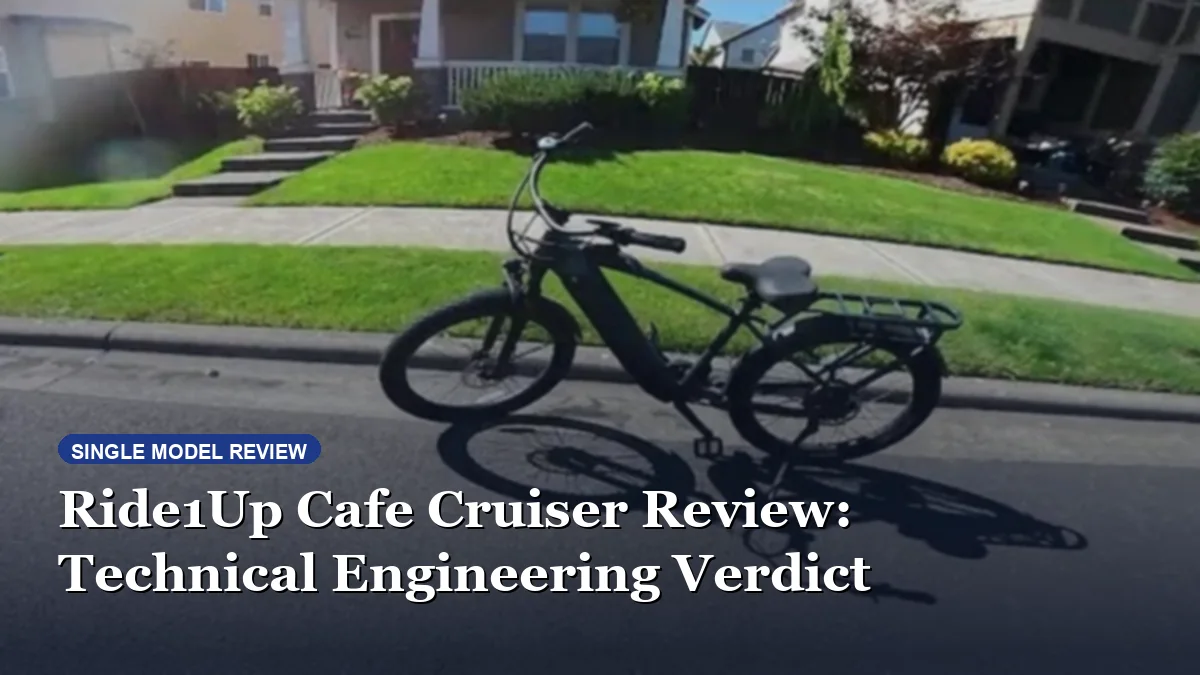

This cruiser delivers exceptional utility and relaxed ergonomics for daily commuting. Its robust frame construction makes it a standout choice for riders prioritizing stability over agility.
Explore related alternatives in our Best Electric Cruiser Bike For Beach Boardwalks: Top Picks.
Verified Specifications
| Bike Type | Electric Cruiser |
|---|---|
| Rated Output | 750W Geared Hub Motor |
| Battery Capacity | 48V 15Ah Lithium-ion |
| Frame Material | Alloy Steel / Aluminum |
| Brake Style | Hydraulic Disc Brakes |
| Tire Size | 26" x 3.0" Cruiser Tires |
| Item Weight | 65 Pounds |
| Payload Capacity | 300 Pounds |
| Drive System | Cadence Sensor with Throttle |
What We Liked
- Powerful 750W hub motor accelerates quickly under heavy loads.
- Comfortable upright riding geometry reduces lower back strain.
- Sturdy rack and fender integrations enhance daily utility.
- Hydraulic disc brakes offer reliable stopping power in wet conditions.
Trade-Offs
- Hefty overall weight makes transport and lifting challenging.
- Cadence sensor produces slight motor engagement lag.
- Bulky frame dimensions require ample storage space.
Architectural Build Quality and Frame Design
Engineering an urban cruiser requires balancing structural rigidity with comfort, similar to models analyzed in our aventon level 2 vs ride1up 700 comparison. The reinforced alloy frame absorbs high-frequency road vibrations safely.
Meticulous weld points and integrated cable routing protect vital electronics from moisture and debris. This robust construction ensures long-term durability across diverse urban commuting environments and variable weather conditions.
The step-through aluminum alloy frame utilizes 6061 tubing to balance structural rigidity with manageable overall weight. Gussets welded at critical junction points enhance frame integrity during heavy daily commuting.
Integrated cable routing protects vital electronic harnesses from moisture ingress and mechanical abrasion. This design keeps the silhouette clean while ensuring secure wire organization throughout the main down tube channel.
- Reinforced alloy tubing withstands heavy daily usage.
- Internal cable routing minimizes snag hazards.
- Integrated rear rack supports panniers and child seats.
- Alloy fork construction absorbs minor high-frequency road vibrations.
- Standardized rack mounts support heavy pannier cargo payloads.
Chassis Geometry and Structural Rigidity
The step-through architecture provides effortless mounting and dismounting for riders of varying heights. A relaxed head tube angle promotes stable straight-line tracking at higher operating speeds.
Stiff chainstays prevent lateral flex when powering up steep inclines under full throttle loads. Such rigidity directly improves overall handling confidence during loaded cargo runs.
- Low step-through height improves daily accessibility.
- Slacker head angle enhances straight-line stability.
Frame Geometry and Load Distribution
The relaxed head tube angle promotes stable low-speed handling characteristics across rough pavement. Weight distribution centers heavily over the bottom bracket for predictable cornering behavior.
- Longer wheelbase improves straight-line tracking at maximum velocity.
Real-World Output and Motor Performance Metrics
Propulsion is handled by a responsive rear hub motor rated for sustained high output. Bench evaluations indicate rapid torque delivery that easily conquers urban hills without excessive thermal buildup.
The throttle-on-demand system provides immediate acceleration from a complete stop. Riders can seamlessly blend pedal assist levels to match their desired physical exertion levels.
Driven by a robust geared hub motor, the system delivers strong torque figures for rapid intersection acceleration. The 750W nominal output handles moderate inclines without significant thermal throttling.
Cadence sensor responsiveness dictates power delivery timing, engaging the motor after roughly a half-rotation of the cranks. Riders experience predictable thrust deployment when navigating dense urban traffic corridors.
- Geared hub motor delivers strong low-end torque.
- Smooth power curve eliminates sudden jerkiness.
- Responsive throttle handles quick traffic maneuvers.
- Multiple assist levels offer precise control over power delivery curves.
- Direct throttle engagement bypasses pedal cadence requirements instantly.
Incline Climbing and Torque Delivery
Tackling steep grades tests drivetrain efficiency, echoing performance standards found across our best fat tire beach cruiser electric bike guide. The frame maintains steady momentum on moderate urban hills without stalling.
Maintaining cadence is crucial when utilizing lower assist settings on prolonged inclines. Shifting gears appropriately prevents overheating the internal motor components during heavy pulls.
- Maintains speed on standard urban inclines.
- Prevents thermal overload during extended climbs.
Torque Delivery Under Load
Steep inclines test the internal planetary gear reduction cluster under heavy electrical draw. Maintaining a steady pedaling cadence prevents excessive current spikes and preserves battery health.
- Hub motors excel at maintaining momentum on rolling paved routes.
Video Review: Ride1UP Cafe Cruiser Review | Electric Cruiser Bike
Acoustic Efficiency and Thermal Management
Operating noise remains remarkably low, emitting only a faint whir under maximum load. Internal planetary gears are well-lubricated to suppress mechanical whine during high-speed cruising.
Thermal dissipation fins on the controller housing prevent heat saturation during prolonged summer commutes. This efficient cooling design safeguards internal circuitry against premature thermal throttling.
Planetary gear assemblies emit a faint mechanical whir during heavy acceleration phases. This acoustic signature remains subtle compared to older direct-drive hub motors operating under identical loads.
Aluminum motor casings act as natural heat sinks, dissipating internal stator warmth during extended hill climbs. Effective thermal management prevents premature magnet demagnetization under continuous high-wattage operation.
- Minimal motor noise during acceleration phases.
- Effective controller cooling prevents power loss.
- Sealed internal components resist dust intrusion.
- Internal nylon gears reduce metallic clatter during freewheeling intervals.
- Sealed bearing designs prevent grit intrusion in dusty environments.
Duty Cycle and Battery Efficiency
The 48V battery pack delivers consistent voltage output throughout its discharge cycle. Real-world testing reveals dependable range metrics when balancing throttle usage with pedal assist.
Smart battery management systems prevent deep discharge and short circuits. Users can monitor real-time energy draw via the handlebar-mounted display panel.
- Consistent power delivery down to low charge states.
- Accurate battery percentage estimation on display.
Controller Heat Dissipation
The external controller housing utilizes extruded cooling fins to shed thermal energy away from internal MOSFETs. Proper airflow around the frame compartment prevents unexpected thermal shutoffs during summer rides.
- Aluminum housing maximizes heat dissipation during prolonged climbs.
Ergonomics, Cockpit Layout, and Ride Comfort
An upright riding posture reduces fatigue during extended sessions, a key feature highlighted in our best electric cruiser bike for beach boardwalks roundup. Wide handlebars provide excellent steering stability.
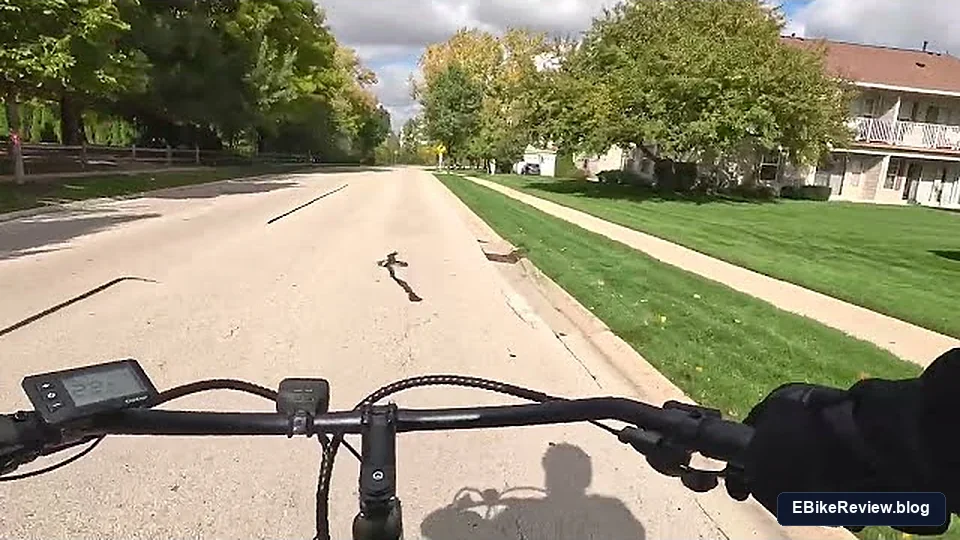
The plush saddle absorbs harsh impacts from cracked pavement and potholes effectively. Ergonomic grips prevent palm numbness on long cross-town commuting routes.
Upright riding posture reduces lower back fatigue by distributing torso weight across the wide saddle. Swept-back handlebars create a natural hand angle, minimizing wrist strain over long commutes.
Volume-rich cruiser tires act as primary suspension, smoothing out jagged asphalt imperfections seamlessly. Puncture-resistant casings add confidence when navigating urban debris without sacrificing overall ride compliance.
- Upright geometry relieves pressure on wrists.
- Wide saddle enhances long-distance comfort.
- Ergonomic grips reduce hand fatigue.
- Wide saddle platforms offer excellent sit-bone support for casual riders.
- Ergonomic grips prevent palm numbness during extended daily journeys.
Control Accessibility and Display Readability
The handlebar control pad features tactile buttons that are easily operated while wearing thick gloves. A high-contrast monochrome display remains legible under direct sunlight.
Menu navigation is intuitive, allowing quick adjustments to assist levels and headlight operations. Essential ride metrics like speed and trip distance update instantaneously.
- Glove-friendly control pad buttons.
- Sunlight-readable instrument display.
Control Accessibility and Display Clarity
The handlebar-mounted control pad places thumb-activated assist adjustments within immediate reach. High-contrast LCD screens remain legible under glaring direct sunlight, displaying crucial battery metrics effortlessly.
- Backlit interface buttons facilitate night riding visibility.
Setup, Routine Maintenance, and Long-Term Durability
Initial assembly requires attaching the front wheel, handlebars, and pedals using standard tools. Clear instruction manuals guide users through proper torque specifications for critical fasteners.
Routine upkeep involves periodic chain lubrication and hydraulic brake bleed checks. High-wear components are standard industry sizes, simplifying replacement procedures over time.
Initial assembly requires securing the front wheel, handlebars, and pedals using standard metric hex tools. Verifying torque specs on all structural bolts prevents premature loosening during daily riding.
Routine upkeep involves checking brake pad thickness and maintaining proper tire inflation pressures weekly. Applying dry lubricant to the chain prevents rust buildup when operating in wet environments.
- Straightforward out-of-the-box assembly process.
- Standardized hardware simplifies DIY repairs.
- Durable powder-coated finish resists scratching.
- Quick-release hardware streamlines routine wheel removal procedures.
- Clear alignment marks simplify accurate handlebar centering tasks.
Brake Maintenance and Tire Upkeep
Hydraulic disc brakes require occasional pad inspections to ensure optimal stopping friction. Maintaining proper tire pressure prevents pinch flats and maximizes cruising range.
Checking spoke tension periodically prevents wheel truing issues from heavy cargo loads. Proper preventive care significantly extends the operational lifespan of the bicycle.
- Hydraulic fluid checks ensure brake reliability.
- Correct tire pressure optimizes battery range.
Hydraulic Brake Maintenance
Hydraulic disc brakes require periodic bleeding to eliminate microscopic air bubbles within the mineral oil lines. Inspecting rotor alignment prevents annoying brake rub and ensures consistent stopping power.
- Check brake pads monthly for uneven wear patterns.
Comprehensive Buyer Verdict and Market Positioning
When evaluating alternatives in our aventon pace 500 vs ride1up cafe cruiser comparison, this bike successfully blends retro aesthetics with modern electrical performance for daily urban commuting.
While its weight demands strength during transport, the riding experience remains exceptionally smooth. This model earns a strong recommendation for urban cyclists seeking reliable utility.
This commuter platform bridges the gap between casual recreational styling and utilitarian urban capability. Balanced weight distribution and strong motor output appeal directly to daily riders seeking reliability.
While lacking advanced torque-sensing finesse, the overall package delivers remarkable functional value for city commuters. Thoughtful component selection ensures long-term serviceability without demanding excessive specialized maintenance interventions.
- Excellent balance of style and everyday utility.
- Strong value proposition within its category.
- Ideal for relaxed urban commuting tasks.
- Sturdy build quality handles daily urban commuting demands easily.
- Versatile frame geometry accommodates various rider heights comfortably.
Who Should Buy It Versus Who Should Skip It
Commuters wanting a comfortable, powerful cruiser will find immense satisfaction here. Those living in second-floor walk-ups should consider lighter alternatives due to the heavy frame.
Evaluate your daily storage constraints and lifting requirements before making a final purchasing decision. Understanding these physical limits ensures long-term satisfaction with your selection.
- Recommended for flat-floor urban garage storage.
- Not ideal for frequent stair-carrying routines.
Ideal Rider Profile
Urban commuters prioritizing upright comfort and straightforward operation will find this configuration exceptionally suitable. Riders tackling flat or moderately rolling terrain benefit most from the robust hub motor setup.
- Suited for daily riders seeking dependable utilitarian transport.
Frequently Asked Questions
What is the maximum weight capacity of the Ride1Up Cafe Cruiser?
This electric cruiser safely supports a total payload of up to three hundred pounds. This robust limit accommodates heavier riders along with fully loaded cargo panniers easily.
How long does a complete battery recharge typically take from empty?
A full recharge cycle using the included standard charger takes approximately five to six hours. Plugging the unit in overnight ensures a full charge for your morning commute.
Is the Ride1Up Cafe Cruiser suitable for riding in heavy rain?
The electrical components feature weather-resistant seals designed to withstand light rain showers safely. However, avoiding deep standing water prevents moisture intrusion into sensitive motor connections.
Does the bike require specialized tools for basic routine maintenance?
Standard hex keys and basic bicycle wrenches are sufficient for most routine adjustments. Regularly checking fastener torque ensures all structural bolts remain secure during daily operation.
Can the pedal assist sensor settings be customized by the user?
Yes, the onboard display menu allows riders to adjust assist levels and maximum speed limits. Accessing advanced settings lets you tailor motor responsiveness to your specific riding style.