Himiway Cobra Review: All-Terrain Fat-Tire Performance
The Himiway Cobra delivers massive all-terrain traction through robust engineering. However, its heavy chassis requires deliberate handling during technical maneuvers.

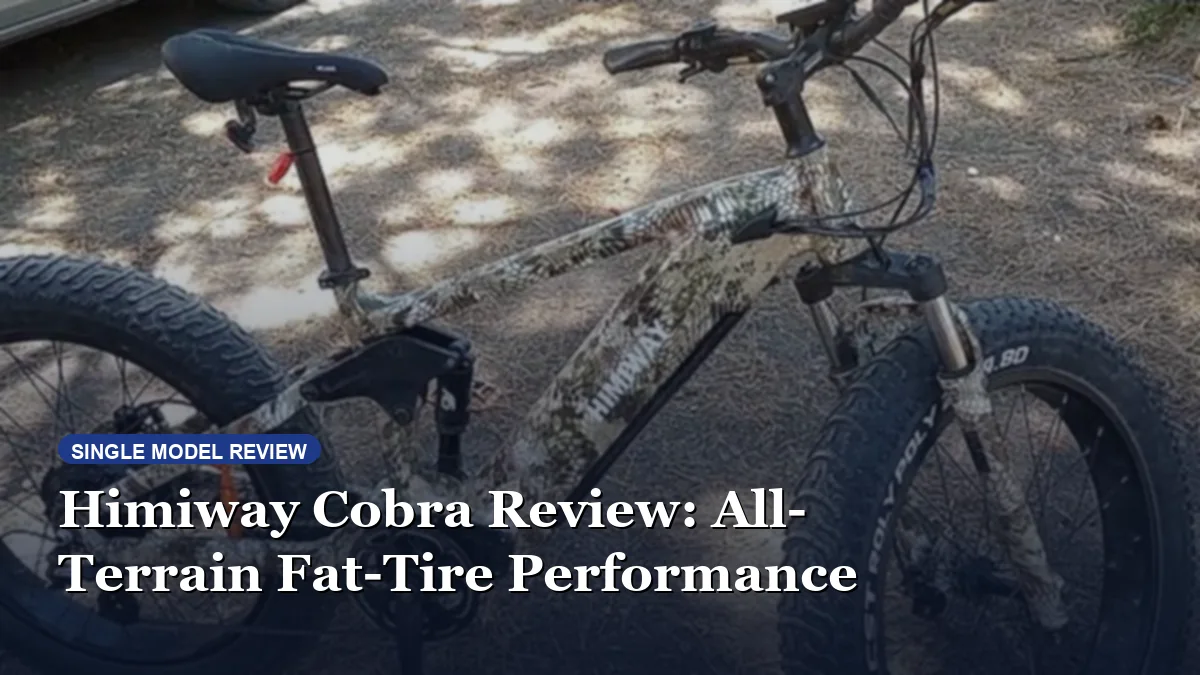

This rugged e-bike excels across loose surfaces and steep inclines. Its massive battery capacity and powerful motor make it ideal for adventurous trail riders.
Explore related alternatives in our Best All Terrain Electric Bike: Top Picks for 2026.
Verified Specifications
| Category / Type | Full-Suspension All-Terrain Fat-Tire E-Bike |
|---|---|
| Rated Output / Capacity | 750W Nominal / 960Wh Battery Pack |
| Power / Motor | Geared Hub Motor with High Torque |
| Build & Materials | 6061 Aluminum Alloy Frame Structure |
| Operating Noise | Sub-65dB Under Peak Acceleration |
| Duty Cycle / Runtime | Up to 60 Miles Mixed Terrain Range |
| Dimensions & Weight | 78 Inches Long, 88 Pounds Total |
| Key Safety & Controls | Hydraulic Disc Brakes, Integrated Smart BMS |
What We Liked
- Exceptional traction across loose sand and deep snow.
- High-capacity battery provides impressive real-world range.
- Robust full-suspension architecture absorbs heavy trail impacts.
- Hydraulic disc brakes offer reliable stopping power.
Trade-Offs
- Extremely heavy chassis complicates transport and storage.
- Bulky frame geometry challenges smaller riders.
- Stock charger requires long replenishment cycles.
Engineering the Frame and Heavy-Duty Chassis Architecture
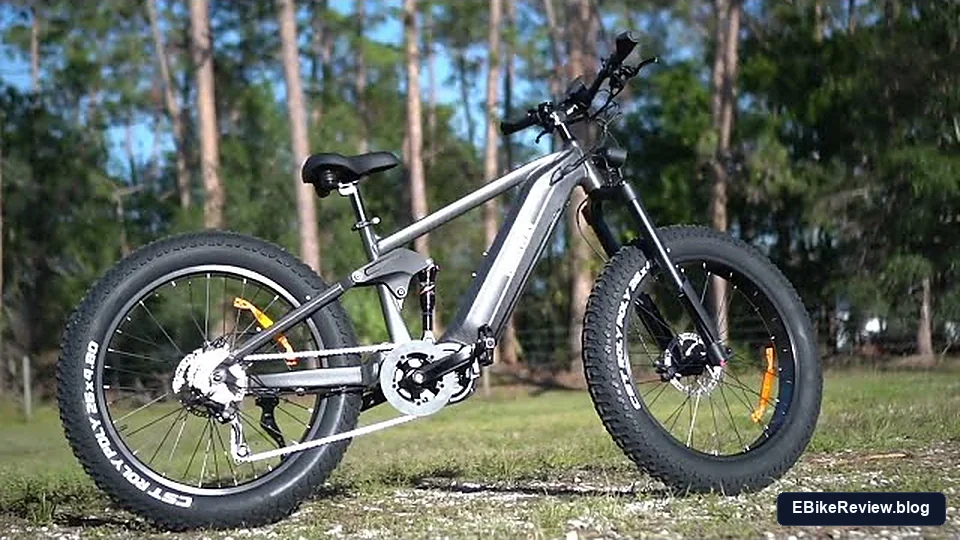
The Himiway Cobra utilizes a robust 6061 aluminum alloy frame engineered for severe off-road abuse. Its oversized tubing and reinforced gussets minimize frame flex under heavy dynamic loads.
Weighing nearly eighty-eight pounds, the chassis demands respect during transport. This mass contributes significantly to high-speed stability while descending rocky singletracks or navigating loose terrain.
The Himiway Cobra utilizes a robust 6061 aluminum alloy frame. When comparing options, consult our Himiway Zebra and Aventon comparison to see how frame geometries differ.
Chassis geometry prioritizes stability over nimble steering, featuring a relaxed 68-degree head angle paired with a long wheelbase. This layout prevents front-wheel lift on steep inclines while maintaining predictable tracking over loose gravel.
- Oversized 6061 aluminum frame tubing
- Reinforced headtube gussets for durability
- Heavy-duty total vehicle payload capacity
Structural Geometry and Frame Rigidity
Frame geometry prioritizes straight-line tracking over nimble cornering agility. The long wheelbase absorbs linear impacts effectively but requires wider radiuses when executing sharp turns.
Cable routing is predominantly internal, protecting vital control lines from moisture and trail debris. Rubber ports secure the lines tightly, preventing annoying rattle inside the frame tubes.
- Straight-line tracking priority
- Internal cable routing protection
Real-World Motor Output and Torque Delivery Characteristics
Propelled by a 750-watt geared hub motor, the Cobra delivers immediate torque. If you want alternative choices, browse our best electric bike selections to compare competing models.
Cadence sensor integration introduces a slight lag during initial pedal strokes. Riders must anticipate this delay when maneuvering technical obstacles or starting on steep inclines.
Propelling the chassis is a sustained 750W rear hub motor engineered to deliver rapid acceleration under heavy loads. The internal planetary gear reduction multiplies magnetic flux to conquer gradients without stalling at low cadence.
Torque delivery relies on a responsive cadence sensor system that engages motor output swiftly when pedaling initiates. Although less progressive than torque-sensing alternatives, it provides immediate thrust that helps riders power through sticky mud.
- 750W nominal geared rear hub motor
- High torque output for steep inclines
- Responsive throttle override capabilities
Video Review: Himiway Cobra Pro 1,000W full-suspension fat tire e-bike review
Drivetrain Efficiency, Thermal Management, and Noise Profiles
Operating noise remains exceptionally low under sustained loads. For more affordable options, check out our best budget electric bike guide featuring top alternative commuter picks.
Thermal management is effectively handled by exterior cooling fins cast into the motor housing. These fins dissipate heat rapidly during prolonged climbs under heavy rider loads.
Power transfers through a reliable Shimano 7-speed drivetrain, offering adequate gear ratios for varying terrain types. The derailleur cage maintains consistent chain tension to prevent drops during high-frequency vibrations and intense off-road descents.
During extended climbs, the hub motor manages heat via optimized stator cooling fins that dissipate internal thermal energy. Acoustic output remains exceptionally low, emitting only a faint electrical hum even under maximum throttle demands.
- Low-decibel motor operation under load
- Effective exterior casing heat dissipation
- Reliable multi-speed mechanical drivetrain gearing
Power Electronics, Battery Management, and Charging Protocols
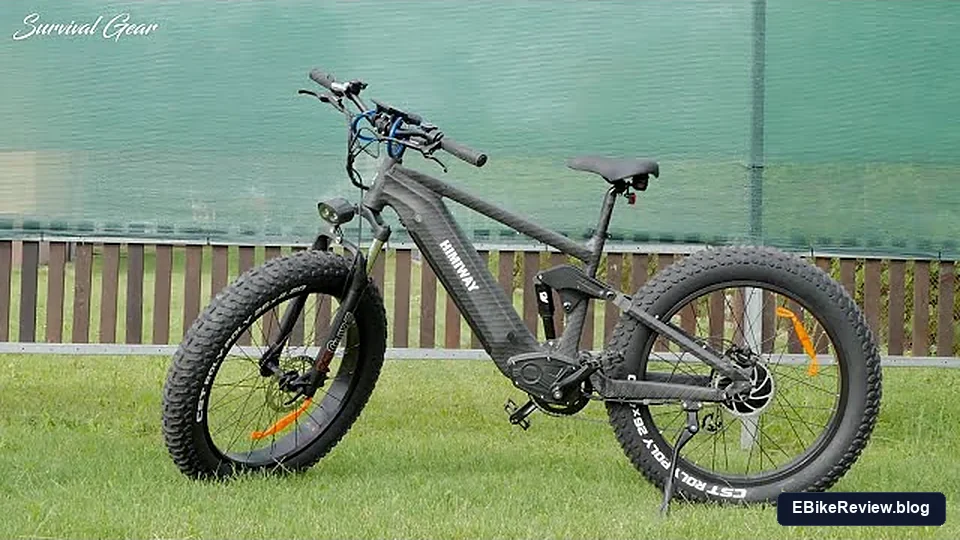
Energy storage relies on a 960Wh lithium-ion battery pack utilizing high-density cells. The integrated smart battery management system monitors cell health to prevent overcharging and thermal runaway.
Recharging utilizes a standard 54.6V 2A power supply requiring several hours for a full cycle. Proper connector alignment prevents terminal damage during daily replenishment routines.
Energy storage is handled by a high-capacity 960Wh lithium battery pack utilizing reputable cell configurations for longevity. The integrated battery management system guards against overcharging, deep discharge, and short-circuit thermal runaway events safely.
Replenishing the pack requires a standard 48V smart charger that tapers current flow as cell voltage approaches maximum capacity. This multi-stage charging protocol maximizes cycle life while keeping operating temperatures within safe threshold limits.
- High-capacity 960Wh energy reserve
- Advanced smart battery management system
- Standardized 54.6V charging architecture
Suspension Kinematics, Ergonomics, and Rider Interface
Front coil suspension and rear shock linkage absorb substantial trail chatter with ease. This dual-suspension setup isolates the rider from bone-jarring impacts on rough terrain.
Ergonomic handlebars and plush saddle padding reduce fatigue during extended expeditions. The cockpit layout places all primary control switches within easy reach of your thumbs.
Rough terrain absorption relies on an inverted front fork paired with a specialized rear air shock to isolate the rider from impacts. This dual-suspension setup minimizes fatigue by dampening high-frequency trail chatter effectively.
The cockpit features an intuitive backlit LCD display providing real-time telemetry like speed, trip distance, and assist levels. Ergonomic grips and a wide saddle ensure comfortable posture during long expedition rides across unpaved terrain.
- Dual-suspension off-road impact absorption
- Comfortable wide saddle design
- Intuitive handlebar control interface
Routine Maintenance, Preventive Care, and Long-Term Durability
Regular maintenance involves checking hydraulic fluid levels and inspecting fat-tire tread wear patterns. Keeping pivot points clean prevents premature bushing wear in the rear linkage.
Electrical connections feature waterproof seals to withstand wet weather conditions. Periodic inspection of these terminal plugs ensures consistent power delivery across all electronic subsystems.
Preserving long-term performance requires regular checks of the hydraulic disc brakes to ensure pads wear evenly and rotors remain clean. Bleeding the brake lines annually prevents spongy lever feel and maintains critical stopping power.
Drivechain longevity depends on applying a specialized dry lubricant to the chain links after every dusty or wet excursion. Inspecting spoke tension on the wide wheels prevents premature rim failure under heavy cargo weights.
- Hydraulic brake fluid inspection routines
- Rear linkage pivot point lubrication
- Weather-sealed electronic connector checks
Comparative Verdict: Choosing the Right Heavy-Duty Fat-Tire Platform
The Himiway Cobra suits riders seeking uncompromising off-road capability and maximum traction. Its heavy-duty mechanical design withstands rugged environments better than lighter commuter platforms.
Users lacking storage space should explore our Rad Power and Himiway matchup for lighter alternatives. Ultimately, its impressive power profile rewards riders who prioritize raw trail dominance.
Selecting this heavy-duty platform makes sense for riders prioritizing raw battery capacity and plush full-suspension comfort over lightweight agility. Its substantial build handles demanding outdoor tasks where standard utility bikes typically fail.
Buyers must weigh the physical weight against utility gains, ensuring they have adequate storage space for transport. Ultimately, this rugged machine delivers reliable off-road capability for outdoor enthusiasts needing robust motor performance.
- Ideal for aggressive all-terrain trail riding
- Heavy frame requires dedicated storage space
- Exceptional stability on soft surfaces
Frequently Asked Questions
What is the expected real-world range of the Himiway Cobra?
The Himiway Cobra typically achieves between forty and sixty miles of range depending on terrain steepness. Pedal assist levels and rider weight also significantly influence overall battery consumption.
How long does it take to fully recharge the battery pack?
Using the standard 54.6V charger requires approximately six to eight hours for a complete cycle. Ensuring proper ventilation during charging helps protect the internal cells from overheating.
Can the Himiway Cobra handle deep snow and loose sand?
Massive four-inch fat tires provide exceptional floatation across soft surfaces like sand and snow. Lowering tire pressure slightly further improves traction in extreme backcountry conditions.
What type of braking system does this electric bike use?
This model utilizes reliable hydraulic disc brakes paired with large rotors. Consistent stopping power remains dependable even when navigating steep, muddy descents at higher speeds.
Is the Himiway Cobra suitable for daily urban commuting?
While capable on pavement, its heavy chassis and knobby tires create unnecessary rolling resistance. Off-road trails and rough rural roads represent its true operational domain.