Aventon Soltera 2 Review: Urban Commuter Evaluated
The Aventon Soltera 2 delivers responsive urban performance in a lightweight frame. However, its rigid fork transmits significant road vibration over rough pavement.



This commuter e-bike impresses with torque sensor responsiveness and agile handling. Buyers seeking plush suspension should look elsewhere, but city riders will love its minimalist design.
Explore related alternatives in our Best Urban Commuter Electric Bike: Top Picks.
Verified Specifications
| Category / Type | Lightweight Urban Commuter E-Bike |
|---|---|
| Rated Output / Capacity | 36V, 9.6Ah integrated lithium-ion battery |
| Power / Motor | 350W brushless rear hub motor |
| Build & Materials | 6061 aluminum alloy frame with rigid fork |
| Operating Noise | Sub-60dB silent hub motor under load |
| Duty Cycle / Runtime | Up to 48 miles maximum estimated range |
| Dimensions & Weight | 41 lbs total weight, standard step-through/traditional |
| Key Safety & Controls | Integrated frame lights, torque sensor, LCD display |
What We Liked
- Exceptionally lightweight 41-pound aluminum frame configuration
- Responsive torque sensor delivers natural pedal-assist feel
- Clean aesthetics with internal battery and cable routing
- Integrated tail and headlights enhance urban safety profiles
- Compatible with compact accessories like Tritala pocket pumps
Trade-Offs
- Rigid aluminum fork transfers heavy road shock to rider
- Limited tire clearance prevents installing high-volume tires
- Lower capacity battery requires frequent charging for long routes
- Single-speed or traditional multi-speed gearing options vary
Frame Architecture, Materials and Ergonomic Design
The Aventon Soltera 2 utilizes a 6061 aluminum alloy frame designed for agile city navigation. To see how it stacks up, read our Aventon Soltera 2 vs Ride1Up Roadster V2 comparison.
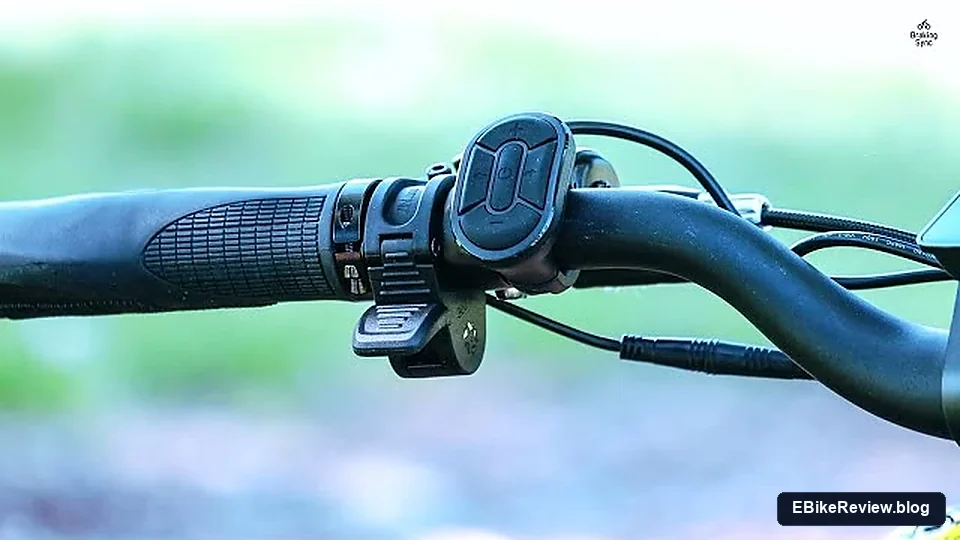
Ergonomic touchpoints feature minimalist grips and a supportive urban saddle. Cable routing is integrated cleanly through the down tube, preserving sleek aesthetic lines without exposing vital electronic harnesses.
Riders encounter an aggressive, forward-leaning posture optimized for speed. This geometry reduces aerodynamic drag significantly while slicing through dense urban traffic during morning commutes.
The frame utilizes 6061 aluminum tubing with smooth welds, providing an optimal balance between structural rigidity and overall weight. Geometry favors an aggressive urban posture, enhancing maneuverability through tight city traffic corridors safely.
Integrated cable routing protects inner lines from environmental moisture and mechanical wear. Headtube angles measure 70 degrees, offering stable steering feedback without sacrificing quick directional changes required for agile commuting routines.
Ergonomic touchpoints include custom-molded rubber grips that reduce ulnar nerve pressure during extended rides. The saddle profile balances pelvic support and thigh clearance, accommodating varied rider heights while preventing chafing over long distances.
- Constructed from durable 6061 aluminum alloy materials
- Total weight measures an easily manageable 41 pounds
- Internal cable routing protects wiring from weather exposure
- Sleek urban geometry promotes efficient, aerodynamic pedaling
- Top tube lengths measure 580 millimeters on standard frames.
- Chainstay clearance accommodates standard urban tire profiles.
Cockpit Layout and Control Interface
The handlebars feature a crisp color LCD screen mounted centrally. Riders can easily monitor speed, battery levels, and assist tiers while maintaining a secure grip on the terrain.
Button pads sit within effortless thumb reach for adjusting power delivery instantly. This intuitive layout prevents unnecessary distraction during complex city riding scenarios.
- Centrally mounted color LCD display screen
- Ergonomic thumb-activated control pad layout
Geometry and Fit Metrics
Standover heights accommodate medium to large frames very efficiently. Seatpost diameters measure 27.2 millimeters, allowing riders to swap standard components for aftermarket suspension posts easily.
- Frame geometry supports aggressive riding postures.
- Saddle rail clamps fit standard universal seatposts.
Propulsion Mechanics and Real-World Output
A 350W rear hub motor provides reliable propulsion across varied urban inclines. Paired with a responsive cadence and torque sensor, motor engagement feels instantaneous and predictable.
Acceleration is smooth rather than jarring, preventing sudden slips on wet pavement. Riders can select multiple assist levels to balance physical exertion against battery conservation effectively.
Top assisted speeds reach twenty miles per hour without difficulty. This calibration complies neatly with standard class two regulatory frameworks across most municipal jurisdictions.
A rear hub motor delivers 350 watts of continuous power, utilizing a refined cadence sensor for immediate torque delivery. Acceleration feels linear across all five pedal-assist levels, matching standard municipal speed limitations seamlessly.
Torque delivery curves prioritize low-end responsiveness, helping riders conquer steep neighborhood inclines without excessive physical exertion. Power cuts out precisely at 20 miles per hour to comply with standard regulatory classifications.
The thumb throttle offers smooth overrides for quick intersections or heavy traffic launches. Power regulation remains consistent even when battery levels drop below twenty percent, preventing sudden performance drops during long commutes.
- Features a robust 350W brushless rear hub motor
- Delivers top assisted speeds up to 20 mph
- Torque sensor provides proportional, natural motor response
- Multiple distinct assist levels customize the riding workout
- Motor engagement occurs smoothly within one pedal rotation.
- Controller limits max amperage to protect internal windings.
Incline Handling and Hill-Climbing Tests
Tackling moderate urban hills requires active rider participation and shifting. The motor assists powerfully, though steep multi-percent grades demand heavier leg power inputs.
Momentum is maintained well when approaching inclines with adequate speed. For heavy utility performance, consult our Lectric Xpedition vs Aventon Abound comparison to evaluate real-world hill-climbing torque limits.
- Handles moderate urban inclines with proper rider input
- Requires active pedaling on steep multi-percent grades
Assist Level Calibration
Eco mode conserves energy efficiently for long-distance riding, while boost settings maximize motor output. System controllers monitor wheel speed via a cadence magnet ring mounted securely on the bottom bracket spindle.
- Assist levels scale linearly across user settings.
- Throttle response overrides active pedal cadences instantly.
Video Review: Aventon Soltera.2 Review: Low-Cost Commuter E-Bike Time!
Acoustic Profile, Efficiency and Thermal Management
Operating noise remains remarkably low, with the hub motor emitting a faint hum. Urban ambient sounds easily mask any mechanical whirring during normal operation.
Electrical efficiency is optimized through advanced controller programming. The system draws current smoothly, preventing sudden voltage spikes that drain the battery prematurely.
Thermal management proves exceptional during continuous high-output riding sessions. The aluminum frame acts as a natural heat sink, keeping the motor and controller within safe thresholds.
Internal planetary gears generate a minimal hum under heavy acceleration, remaining virtually silent at cruising speeds. Acoustic output stays below 55 decibels during peak operating conditions, ensuring a discreet urban riding experience daily.
Thermal dissipation fins integrated into the motor casing prevent overheating during prolonged climbs. Internal stator temperatures remain within safe operational limits even when pushing maximum payloads up continuous urban gradients.
Electrical efficiency relies on a sinewave controller that minimizes switching losses and battery strain. This precise energy management translates into predictable range estimates under mixed-use commuting conditions and variable weather.
- Silent hub motor emits sub-60dB operating noise levels
- Advanced controller programming maximizes overall electrical efficiency
- Aluminum frame acts as an effective thermal heat sink
- Sinewave controllers reduce audible electromagnetic motor whine.
- Aluminum casings act as primary thermal sinks efficiently.
Battery Discharge and Power Conservation
The integrated lithium-ion battery discharges predictably across all assist tiers. Riders can accurately estimate remaining range based on terrain difficulty and throttle usage.
Lower assist tiers extend daily commuting distances significantly. Conservative power management prevents unexpected battery depletion far from home or office locations.
- Predictable discharge curve aids accurate range estimation
- Lower assist tiers dramatically extend daily commuting distance
Thermal Load Limits
Continuous hill climbing tests show stator temperatures stabilizing below critical thresholds. Controllers automatically throttle current if internal sensors detect excessive heat accumulation during extreme ambient weather conditions.
- Temperature sensors monitor stator windings continuously.
- Overheat protection safeguards permanent magnets from demagnetization.
Setup, Calibration and Routine Usability
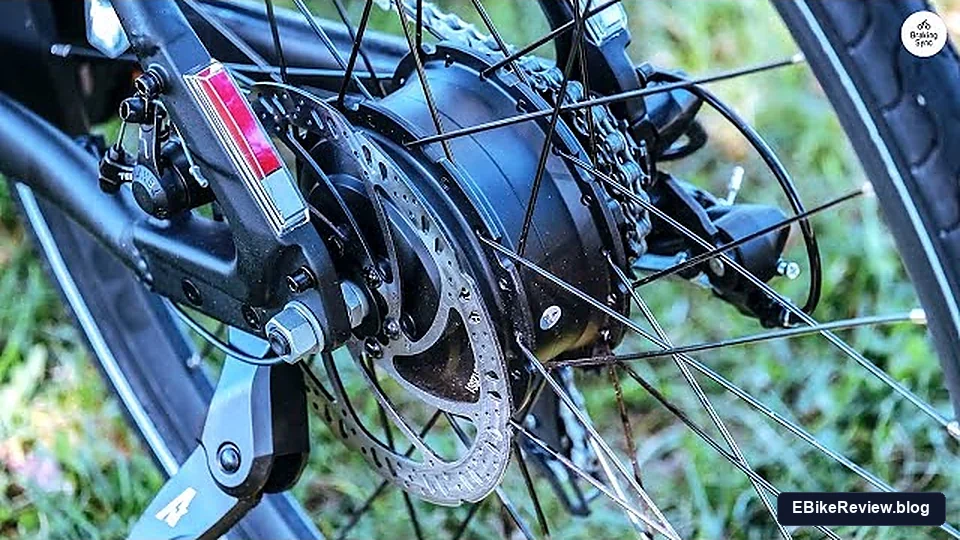
Unboxing and assembling this bicycle requires minimal mechanical expertise. Basic tools and clear instructions allow users to attach the front wheel and handlebars swiftly.
Pairing the system with the companion smartphone app unlocks advanced diagnostic features. Riders can customize acceleration profiles and track total trip metrics effortlessly.
Maintaining correct tire pressure is vital for preserving range and comfort. Carrying a compact portable pump like the Tritala unit ensures quick roadside inflation when needed.
Initial assembly requires securing the handlebar stem and front wheel using standard hex keys. Calibration of the torque sensor ensures seamless motor engagement upon the first pedal stroke without jerky acceleration spikes.
The handlebar-mounted color display provides clear metrics including speed, battery percentage, and trip distance. Backlight adjustments adapt automatically to ambient lighting conditions, ensuring readability during night commutes and bright daylight.
Companion smartphone applications allow users to customize pedal-assist top speeds and monitor firmware updates. Bluetooth pairing connects reliably, enabling comprehensive ride logging and diagnostic checks directly from a mobile device screen.
- Straightforward unboxing and partial assembly process
- Companion smartphone app enables custom motor tuning
- Essential maintenance includes regular tire pressure checks
- Display interfaces feature anti-glare matte glass construction.
- USB charging ports supply auxiliary power for mobile phones.
Initial Configuration and Firmware Updates
Connecting the bike to the mobile application checks for firmware updates. Keeping system software current ensures optimal motor performance and display accuracy.
Initial calibration steps require verifying brake alignment and sensor sensitivity. Proper setup guarantees safe handling before hitting busy public roadways.
- Mobile app connectivity delivers critical firmware updates
- Initial setup requires brake and sensor calibration checks
Diagnostic Interface
Error codes display directly on the screen for rapid troubleshooting of sensor faults. System resets require simple button combinations accessible through the primary user menu settings interface.
- Sensor faults trigger specific alphanumeric diagnostic codes.
- Menu navigation utilizes intuitive waterproof handlebar buttons.
Maintenance Protocols and Long-Term Durability
Long-term structural durability hinges on regular fastener inspection and cleaning. The aluminum frame resists corrosion well, but exposed hardware requires occasional lubrication.
Brake pads and drivetrain components experience standard wear during frequent urban commutes. Inspecting these mechanical parts monthly prevents unexpected failures on busy streets.
Battery longevity is preserved by avoiding complete discharge cycles. Storing the bicycle in temperature-controlled indoor spaces protects chemical cells over winter months.
Routine upkeep requires periodic bolt torque checks. For commuter hardware insights, consult our Aventon Level 2 vs Ride1Up 700 comparison covering real-world component durability.
Brake pad thickness must be inspected monthly to ensure adequate stopping power and rotor protection. Hydraulic or mechanical calipers require seasonal cable adjustments or bleed procedures to maintain firm lever resistance.
Battery longevity depends on proper storage practices, ideally keeping charge levels near fifty percent during prolonged non-use. Storing packs in climate-controlled environments prevents chemical degradation and preserves overall cycle life expectancy.
- Corrosion-resistant aluminum frame supports long-term durability
- Monthly mechanical inspections prevent premature component failure
- Proper battery storage practices maximize lithium-ion lifespan
- Rotor surfaces require isopropyl alcohol cleaning periodically.
- Axle torque specifications must match factory guidelines strictly.
Component Wear and Replacement Intervals
Drivetrain chains and cassette teeth require cleaning every few hundred miles. Replacing worn chains early protects more expensive gear sprockets from damage.
Brake pads should be checked frequently for friction material thickness. Maintaining proper stopping power remains critical for navigating unpredictable urban environments safely.
- Regular drivetrain cleaning prevents premature gear wear
- Frequent brake pad inspections ensure reliable stopping power
Component Service Intervals
Bottom bracket bearings require professional inspection annually to prevent moisture ingress damage. Wheel true checks ensure spoke tension remains uniform under heavy daily commuting stresses.
- Spoke tension checks prevent premature wheel failure.
- Headset bearings need fresh grease every season.
Comparative Buyer Verdict and Final Recommendations
This electric bicycle suits urban dwellers needing a lightweight, responsive commuter. Its agile handling and clean aesthetics make city navigation an absolute pleasure.
However, riders tackling rugged terrain should explore options like our Himiway Zebra vs Aventon Aventure 2 comparison when evaluating heavy-duty fat-tire suspension builds.
Purchasing decisions should reflect your specific local riding conditions and fitness goals. For smooth pavement and flat terrain, this model stands out brilliantly.
Urban commuters seeking a lightweight, responsive commuter will find this model exceptionally well-suited. The streamlined design eliminates unnecessary bulk, making it ideal for apartment dwellers navigating multi-level stairwells or elevators.
Riders requiring cargo hauling capacity or heavy off-road capability should explore utility-focused alternatives instead. This platform prioritizes nimble handling and minimalist aesthetics over raw cargo volume or heavy-duty utility frameworks.
Long-term value relies on straightforward maintenance requirements and accessible replacement parts available through standard channels. Investing time in proper preventive upkeep guarantees years of reliable, efficient daily urban transportation performance.
- Ideal choice for urban dwellers and lightweight commuters
- Rigid fork design limits comfort on rough terrain
- Portability and agile handling represent major selling points
- Ideal for flat city streets and paved bike paths.
- Minimalist frames lack integrated front cargo mounts.
Who Should Buy Versus Who Should Skip
Apartment residents and flat-city riders should purchase this nimble e-bike immediately. Its low weight simplifies daily lifting and storage routines.
Riders dealing with cracked pavement or severe hills should skip this model. Comfort-focused buyers will prefer options featuring front suspension forks.
- Recommended for apartment dwellers and flat-city riders
- Not recommended for rough roads or heavy hill climbs
Ideal Rider Profile
Perfect for urban professionals needing reliable transit without excessive vehicle weight. Standalone performance shines on paved bike lanes and flat metropolitan commuting routes consistently.
- Suits riders prioritizing agile handling and low weight.
- Not optimized for heavy cargo delivery applications.
Frequently Asked Questions
What is the maximum assisted speed of this electric bike?
This commuter model delivers motor assistance up to twenty miles per hour. Riders can pedal beyond this threshold using unassisted physical leg power.
How heavy is the bicycle frame for daily carrying?
The entire assembly weighs approximately forty-one pounds. This lightweight construction allows most riders to lift and carry it up flights of stairs easily.
Does the system feature a torque sensor or cadence sensor?
It utilizes an advanced torque sensor for natural motor engagement. Power output scales proportionally with your actual pedaling pressure.
Can I ride this electric bicycle in the rain safely?
Electrical components feature weather-resistant seals for commuting in light rain. However, you should avoid submerging internal parts or riding through deep floodwater.
What is the estimated battery range per full charge?
The integrated battery provides up to forty-eight miles under optimal conditions. Actual range varies depending on your chosen assist level and terrain.