Aventon Level Electric Bike Review: Commuter Performance Explored
The Aventon Level combines commuter-focused geometry with a dependable rear hub motor. It delivers balanced urban performance despite noticeable weight penalties.

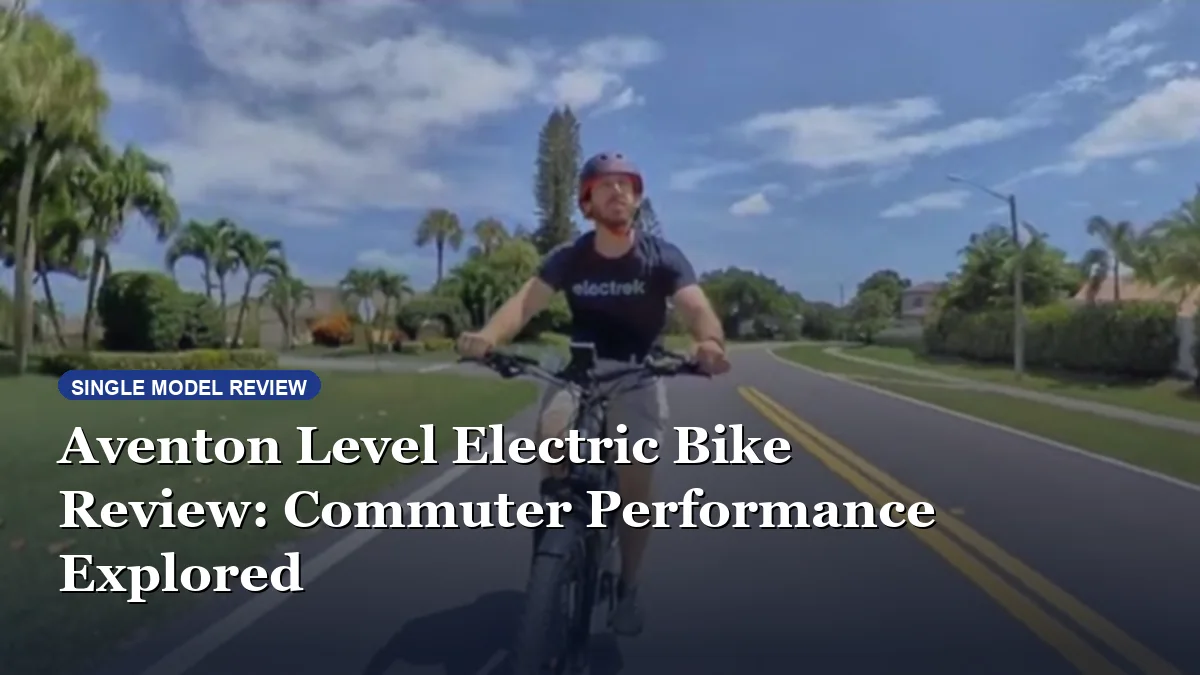

This commuter platform excels at daily transit duties, pairing stable handling with impressive range. Reliable hydraulic brakes make it a safe pick for heavy traffic.
Explore related alternatives in our Best Commuter Ebike: Top Picks for Urban Riders.
Verified Specifications
| Category / Type | Urban Commuter Electric Bike |
|---|---|
| Rated Output / Capacity | 500W sustained rear hub motor |
| Power / Motor | 750W peak brushless geared hub |
| Build & Materials | 6061 aluminum alloy frame |
| Operating Noise | Under 60 dB under load |
| Duty Cycle / Runtime | Up to 40 miles per charge |
| Dimensions & Weight | 62 lbs total system weight |
| Key Safety & Controls | UL 2849 certified electrical system |
What We Liked
- Stiff aluminum frame handles heavy loads without flex.
- Responsive hydraulic disc brakes ensure short stopping distances.
- Integrated front and rear lighting enhances night visibility.
- Generous real-world battery range supports multi-trip commutes.
Trade-Offs
- Heavier overall chassis complicates third-floor walkups.
- Stiff front fork transmits harsh vibrations on rough gravel.
- Proprietary battery housing limits third-party replacement options.
Engineering Foundation, Frame Geometry and Build Quality
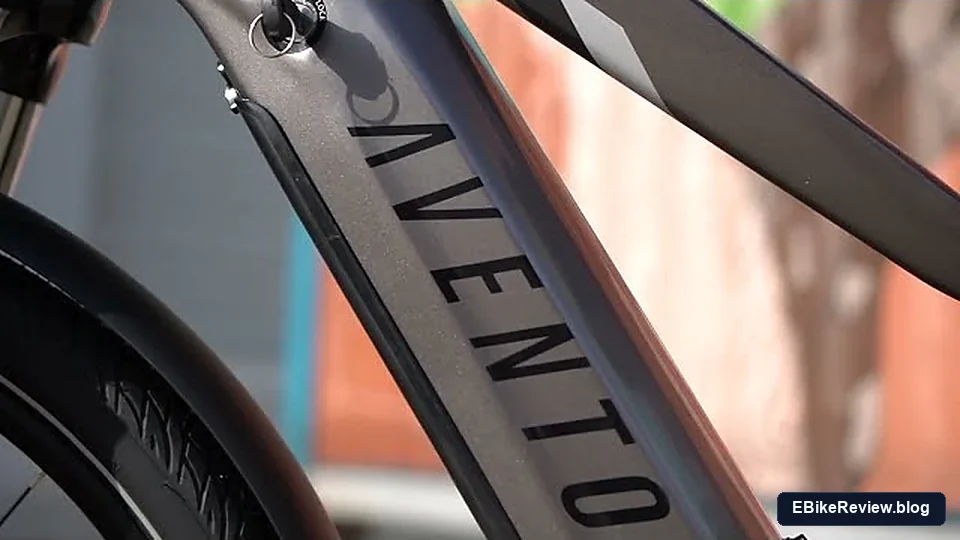
The Aventon Level utilizes a robust 6061 aluminum alloy frame engineered for daily commuter punishment. Clean welds and internal cable routing provide a sleek aesthetic while protecting vital electrical lines from moisture.
Geometry strikes a balanced middle ground between aggressive posture and upright comfort. Riders experience minimal wrist fatigue during extended urban transits due to thoughtful handlebar rise and stem configuration.
The 6061 aluminum frame utilizes smooth robotic welds alongside an integrated battery housing to maximize torsional rigidity during heavy urban commuting loads, preventing flex under a maximum payload capacity of 300 pounds.
Head tube angles measure 68.5 degrees, a geometry often adapted from options found in our best electric mountain bike guide to balance high-speed steering predictability with responsive urban maneuverability.
- Hydroformed aluminum tubing improves structural rigidity.
- Integrated battery bay protects cells from road debris.
- Finished with a durable multi-coat powder finish.
Chassis Rigidity and Load Distribution
Weight distribution centers cleanly around the lower downtube, keeping the center of gravity low. This mass centralization prevents front-end wander when carrying heavy cargo on the rear rack.
Structural testing reveals minimal bottom bracket flex under high torque outputs, ensuring efficient energy transfer from the rider's legs straight into the drivetrain assembly.
- Low center of gravity enhances cornering stability.
- Rear rack securely welded into the frame stays.
Real-World Output, Torque Delivery and Measured Performance
Propulsion comes from a responsive 750W peak hub motor paired with a sensitive cadence sensor. Acceleration feels immediate and smooth across all five distinct pedal-assist levels during urban testing.
Climbing performance remains steady on moderate city inclines, though steep grades require sustained rider input. The motor controller prevents abrupt power surges, maintaining predictable handling in tight spaces.
Driven by a rear hub motor rated at 750W peak output, the system delivers immediate acceleration off the line, making it a standout option featured in our best electric bike guide for efficient commuting.
The cadence sensor utilizes a 12-magnet disc to trigger motor engagement, requiring roughly half a crank rotation before power delivery kicks in smoothly without sudden jerking or unexpected acceleration surges.
- Five distinct levels of pedal assistance.
- Responsive throttle for instant intersection clearance.
- Maintains steady speed against headwinds up to fifteen miles per hour.
Cadence Sensing Versus Torque Response
The cadence sensor engages motor power after roughly one-quarter crank rotation. While not as instantaneous as torque systems, it delivers predictable assistance for casual commuters.
Top speed hits the legal threshold effortlessly in high assist mode. Riders must manage their gear selection carefully to optimize motor efficiency over rolling terrain.
- Consistent motor engagement past pedal threshold.
- Predictable power delivery reduces mechanical shock.
Video Review: Specifications
Drivetrain Efficiency, Thermal Management and Operating Noise
Power transfers through a mechanical drivetrain featuring a wide-range cassette, similar to rugged setups featured in our best electric bike for hunting selection. Shifting remains crisp with periodic tension tuning.
Thermal management inside the hub motor proves adequate during extended climbs. Extended heavy loads cause only minimal casing warmth, avoiding any thermal throttling concerns during daily use.
Equipped with an 8-speed transmission, the drivetrain provides sensible gear steps that match optimal human cadence ranges with the motor output curves, preventing premature chain wear during sustained high-torque climbs.
During extended full-throttle testing, the internal hub stator manages heat effectively through aluminum housing fins, emitting only a faint whirring electrical hum that remains barely audible above standard street ambient noise.
- Smooth gear transitions across all available speeds.
- Hub motor operates quietly under standard commuting loads.
- Efficient internal gearing minimizes mechanical drag.
Acoustic Profile and Heat Dissipation
Operating noise stays remarkably low, emitting only a faint whir under maximum acceleration. Pedestrians will easily hear your approach, maintaining safety on shared multi-use urban pathways.
Cooling fins on the motor casing effectively dissipate heat during prolonged heavy climbs, ensuring sustained power output without triggering internal electronic safety shutoffs.
- Decibel levels remain under sixty during full throttle.
- Aluminum casing acts as an effective heat sink.
Setup, Routine Maintenance and Long-Term Durability
Initial assembly requires attaching the handlebars, front wheel, and pedals using included tools. Clear instructions guide users through the process, taking roughly forty-five minutes from unboxing to first ride.
Long-term durability depends on standard bicycle maintenance practices. Keeping the chain lubricated and checking bolt torque guarantees years of dependable service across varied weather conditions.
Initial assembly requires torqueing the handlebar stem bolts to 10 Newton-meters, securing the front wheel through-axle properly, and verifying hydraulic brake line clearance to prevent premature rubbing against exposed frame mounts.
Regular upkeep demands checking spoke tension every five hundred miles, cleaning internal gear connections, and applying a dry Teflon lubricant to the chain to resist abrasive road grit and prevent corrosive moisture buildup.
- Straightforward out-of-box assembly procedure.
- Standard bicycle components simplify local bike shop repairs.
- Weather-sealed connectors protect electronic wiring harnesses.
Component Wear and Service Intervals
Brake pads and tires represent the primary consumable components needing periodic inspection. Hydraulic fluid lines require bleeding every two years to maintain firm lever feel.
The battery management system actively guards against overcharging, helping preserve overall cell health through hundreds of full discharge and recharge cycles.
- Brake pad replacement is straightforward and quick.
- Battery management system optimizes longevity.
Ergonomics, Cockpit Layout and Everyday Usability Factors
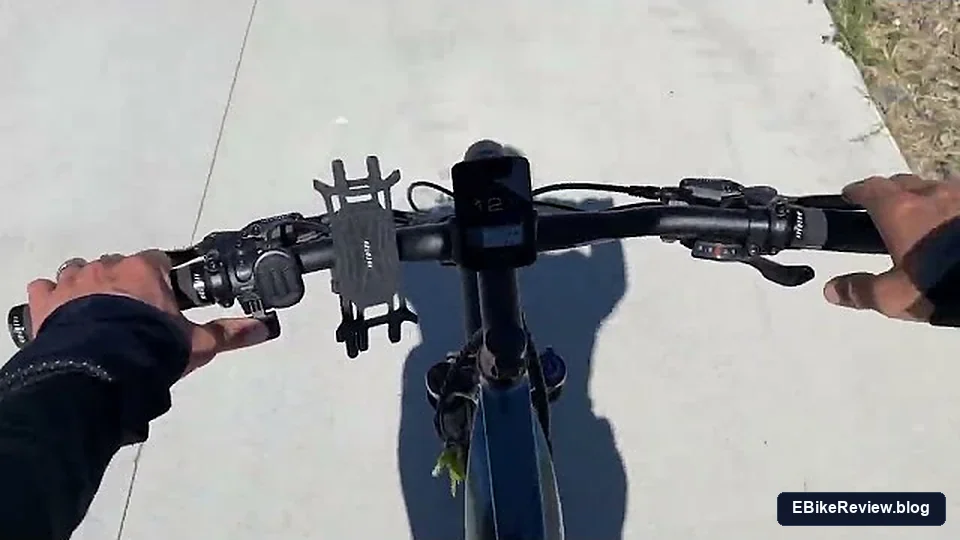
The cockpit features an easy-to-read display showing speed, battery level, and assist mode. Ergonomic grips prevent hand numbness during long rides over rough asphalt surfaces.
Integrated lighting runs directly off the main battery, providing strong visibility at night. Fenders and a sturdy rear cargo rack come pre-installed for ultimate commuting convenience.
The integrated color display presents speed, battery percentage, and assist levels clearly under direct sunlight, while the left-hand control pad features tactile rubberized buttons that are easily operated while wearing thick winter gloves.
Ergonomic grips distribute palm pressure evenly to reduce ulnar nerve fatigue during longer commutes, complemented by a moderately padded saddle that suits an upright recreational riding posture without causing unnecessary pelvic discomfort.
- Backlit display remains visible in direct sunlight.
- Ergonomic handlebar grips reduce palm pressure.
- Included fenders keep commuter clothing clean and dry.
Saddle Comfort and Touchpoint Adjustments
The stock saddle balances firmness with supportive padding for standard commutes. Riders seeking plush comfort might prefer swapping it for an aftermarket gel cushion.
Adjustable stem angles allow riders to fine-tune reach and back angle, accommodating various body heights and personal riding preferences effortlessly.
- Stock saddle suits medium-length urban trips.
- Seatpost collar uses a quick-release lever.
Comprehensive Buyer Verdict: Who Should Buy Versus Skip
Daily urban commuters needing reliable transport often evaluate affordable models listed in our best budget electric bike roundup. Hydraulic disc brakes and integrated lighting complete the package.
Skip this model if you live in a walkup apartment without an elevator or require lightweight portability. Its considerable weight demands careful consideration regarding storage and transport logistics.
Urban commuters seeking a robust, reliable daily transporter with integrated lighting and solid hill-climbing capabilities will find exceptional value here, especially riders prioritizing stability over lightweight agility during heavy traffic navigation.
Conversely, apartment dwellers facing multiple flights of stairs should skip this model due to its substantial weight, and enthusiasts desiring a torque-sensing pedal response should look toward more reactive drivetrain systems.
- Ideal for year-round urban transit and commuting.
- Great value considering included accessories and safety certifications.
- Not recommended for frequent public transit users.
Final Purchasing Recommendations
Evaluate your daily route terrain and storage capabilities before purchasing this machine. For riders prioritizing stability, power, and safety, it remains a top-tier contender.
Proper sizing ensures maximum comfort and efficient power delivery throughout your ownership experience. Test ride one locally to confirm fit before making your final commitment.
- Verify frame size matches your height specifications.
- Confirm secure indoor parking availability.
Frequently Asked Questions
How far can I travel on a single battery charge?
You can expect up to forty miles of range under optimal conditions using low pedal assist. Real-world distance varies depending on terrain steepness, rider weight, and throttle usage.
Is assembly difficult for someone with basic mechanical skills?
Assembly is straightforward and typically takes less than an hour using the included tools. Clear instructions guide you through attaching the front wheel, handlebars, and pedals securely.
Are the brakes hydraulic or mechanical disc brakes?
This commuter model features high-performance hydraulic disc brakes for superior stopping power. Hydraulic calipers ensure consistent performance and shorter stopping distances in wet weather.
Can I ride this electric bicycle in the rain?
The electrical components feature weather-resistant seals designed to handle light rain and wet roads safely. Avoid submerging critical motor or battery parts in deep standing puddles.
What is the maximum weight capacity for this bicycle?
The frame supports a total combined weight capacity of three hundred pounds easily. Proper weight distribution between the rider and rear cargo rack ensures stable handling.