Understanding Bms Cut Off On Lithium Ebike Battery
Electrical safety systems protect your pack from structural damage. Master these technical principles to maintain peak performance.

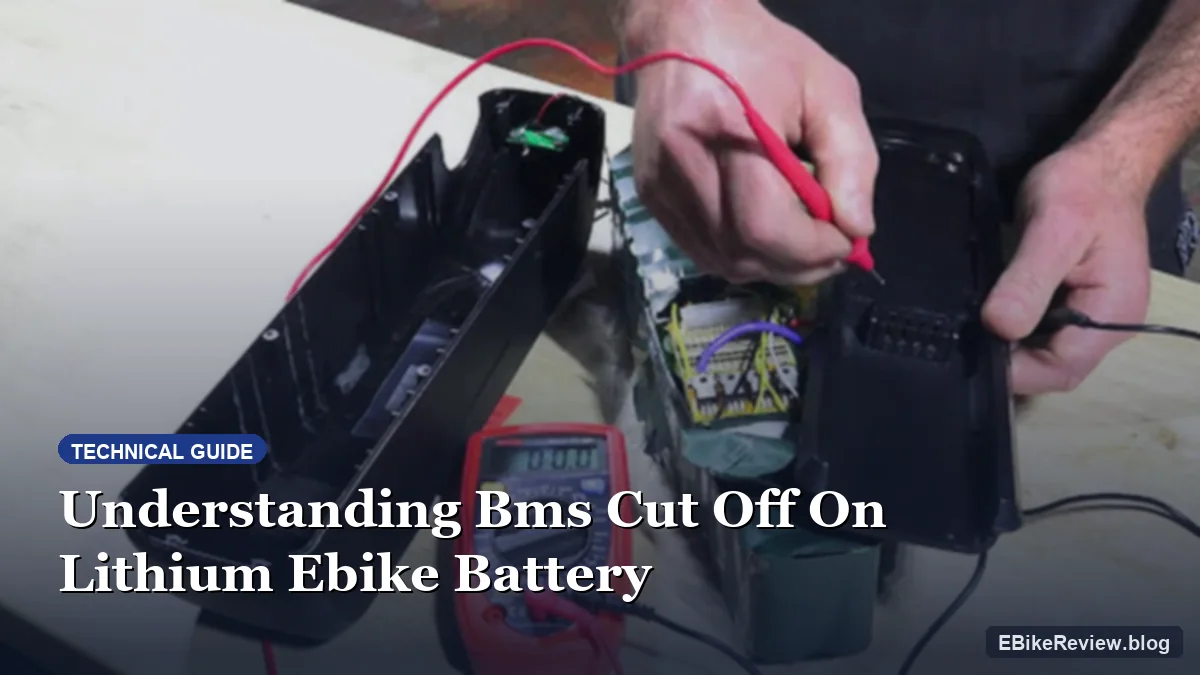
A battery management system disconnects power when parameters exceed safety thresholds. Always verify cell voltage limits before heavy riding.
Looking for matching picks? See our Best Off Road Electric Bike: Top Picks for Trails (2026).
Practical Quick-Reference Table
| Scenario / Metric | Recommended Target | Why It Matters |
|---|---|---|
| Low Voltage Cutoff | 2.8V to 3.0V per cell | Prevents irreversible lithium plating damage. |
| High Voltage Limit | 4.2V per cell maximum | Stops overcharging and thermal runaway risks. |
| Overcurrent Limit | 30A to 40A continuous | Protects wiring harnesses from melting down. |
| Thermal Cutoff | 60°C internal temp | Avoids permanent separator breakdown inside cells. |
| Balancing Delta | Below 30mV spread | Ensures even charging across all series groups. |
| Storage Voltage | 3.65V per cell nominal | Minimizes chemical degradation during downtime. |
Anatomy And Architecture Of Battery Management Systems
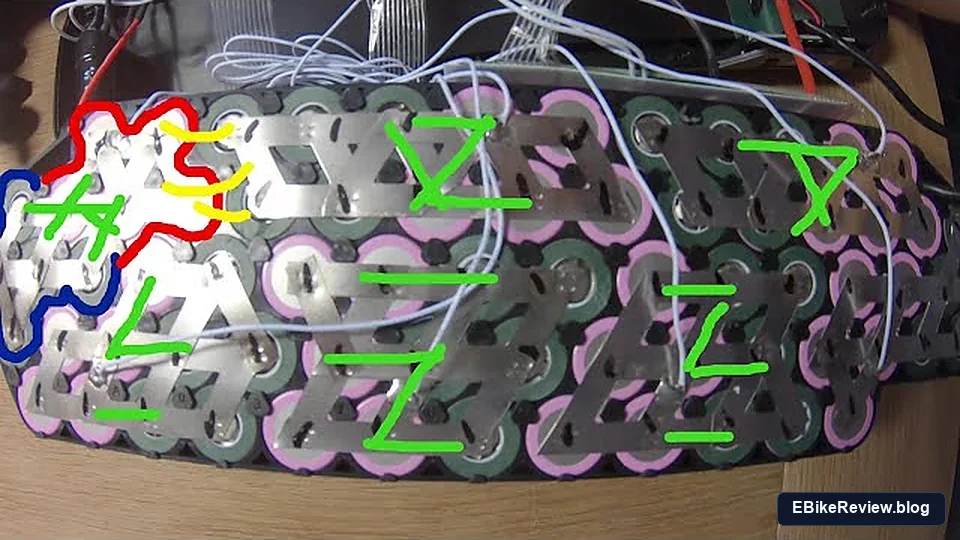
Modern lithium packs rely on complex circuit boards to monitor individual cell groups. These microprocessors constantly evaluate voltage, current draw, and temperature metrics to ensure safe daily operation.
The primary brain utilizes specialized integrated circuits coupled with power mosfets. When evaluating potential upgrades in our 48v vs 52v ebike battery comparison, these high-current switches immediately sever connections during anomalies.
Balancing circuits actively bleed off minor voltage discrepancies during the final charging stages. This continuous equalization prevents weaker parallel groups from reaching critical thresholds prematurely during heavy discharge cycles.
Communication protocols like UART or I2C often link the management board to advanced displays. Riders can review real-time diagnostic error codes directly on their handlebars when safety triggers activate.
- Circuit boards monitor every individual parallel cell group.
- Power transistors act as electronic circuit breakers under load.
- Bleed resistors equalize voltage disparities during charging phases.
- Diagnostic interfaces transmit error codes to handlebar displays.
Internal Circuitry And Mosfet Integration
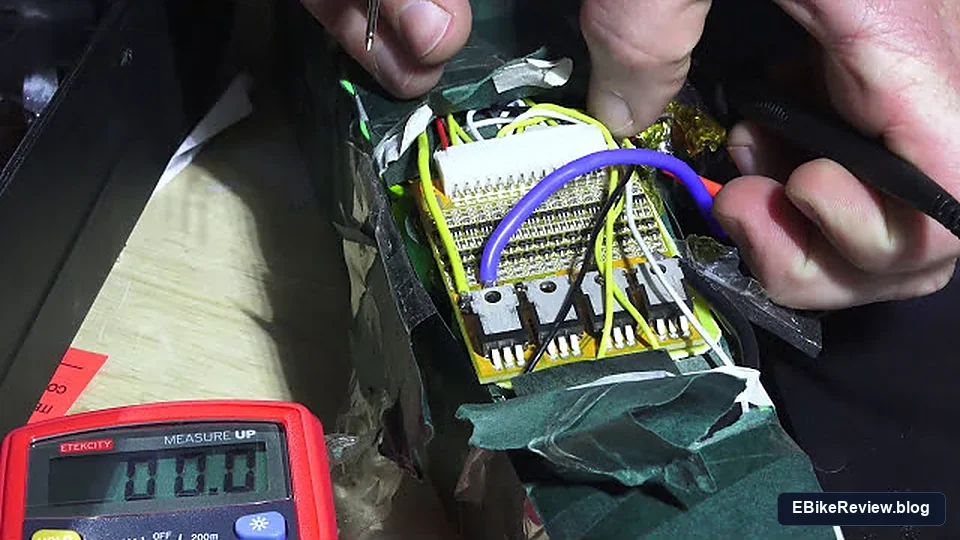
Power switches handle the massive amperage demanded by electric hub motors. These microscopic gates control electron flow with minimal resistance to maximize overall system efficiency.
Thermal pads couple the transistor banks directly to aluminum enclosure walls. This dissipates heat effectively during sustained hill climbs and high-speed commuting sessions.
- Mosfets control high amperage flow safely.
- Thermal coupling prevents localized overheating.
Low Voltage Protection Triggers And Cell Discharges
Pushing a battery past its safe discharge boundary degrades internal chemistry rapidly. Reviewing details inside our 48 vs 52 volt ebike battery guide helps prevent such damage by outlining proper operational limits.
Nominal lithium-ion chemistry requires absolute floors to prevent copper shunts from forming inside the jellyroll. Hitting this boundary causes sudden motor shutdowns while riding under load.
Sagging voltage under heavy throttle often fools older controllers into premature cutoffs. Modern firmware analyzes true resting voltage rather than instantaneous sag to prevent annoying interruptions.
Recovering a completely dead pack requires slow trickle charging via specialized diagnostic equipment. Standard chargers will refuse to recognize packs tripped below safety voltage floors.
- Discharge floors stop catastrophic internal copper shunting.
- Sudden motor shutdowns indicate low voltage threshold breaches.
- Firmware distinguishes between transient sag and true depletion.
- Specialized equipment is required to recover deeply discharged packs.
Voltage Sag Versus True Depletion Dynamics
High current draws naturally pull nominal pack voltage down temporarily. Intelligent controllers calculate internal resistance to differentiate real exhaustion from temporary load drops.
Ignoring these sag algorithms leads to erratic power delivery during aggressive acceleration. Proper calibration ensures seamless assistance until actual capacity runs genuinely empty.
- Internal resistance causes temporary voltage drops.
- Accurate algorithms prevent erratic power cutoffs.
Video Walkthrough: BMS High-Voltage Cutoff Explained (What Happens When LiFePO4 Cells Reach 3.65V)
Overcurrent Protection Protocols Under Heavy Motor Load
Steep inclines and heavy cargo loads demand massive current. Analyzing housing formats in our integrated vs removable ebike battery review reveals how firmware establishes strict amperage caps to protect delicate internal wiring.
When motor controllers demand amperage exceeding predetermined safety limits, the electronic switches trip instantly. This instantaneous response prevents catastrophic overheating of internal copper busbars.
Transient spikes during initial startup acceleration are usually granted brief grace periods. Continuous overdraw, however, triggers permanent shutdowns requiring manual power resets.
Upgrading controller amperage without matching the pack's discharge rating causes constant nuisance trips. Always verify continuous discharge specifications before modifying electrical hardware components.
- Amperage caps protect delicate nickel strip connections.
- Instantaneous switches prevent busbar overheating during stalls.
- Startup spikes receive brief grace periods from firmware.
- Hardware upgrades require careful matching of discharge ratings.
Amperage Thresholds And Controller Compatibility
Controller maximum current must align precisely with battery capability. Mismatched components lead to constant protection cutoffs during normal commuting operations.
Evaluating continuous versus burst ratings prevents unexpected power loss on steep hills. Always prioritize battery safety margins over maximum controller output.
- Match controller current to battery capabilities.
- Prioritize safety margins over maximum power output.
Thermal Thresholds And Temperature Monitoring Sensors
Internal heat generation remains the primary enemy of lithium-ion safety. Checking our ebike range calculator tool helps estimate thermal loads while thermistors strategically monitor temperature fluctuations across the cell matrix.
Operating packs above recommended thermal limits accelerates chemical degradation and electrolyte breakdown. Safety protocols force immediate power shutdowns if internal temperatures exceed safe ceilings.
Cold weather operation poses distinct challenges by increasing internal resistance significantly. Charging frozen packs causes metallic lithium plating, permanently destroying capacity and triggering lockouts.
Proper ventilation inside the frame enclosure prevents heat entrapment during summer rides. Thermal management relies heavily on ambient airflow and passive chassis cooling.
- Thermistors monitor real-time temperature across cell matrices.
- Overheating triggers immediate shutdowns to prevent degradation.
- Charging frozen batteries causes permanent metallic plating.
- Frame ventilation prevents dangerous heat accumulation.
Cold Weather Charging And Thermal Lockouts
Sub-freezing temperatures alter lithium-ion chemistry drastically during energy replenishment. Smart management boards refuse charging current entirely until cells warm above safe thresholds.
Attempting to bypass these thermal locks risks catastrophic internal short circuits. Always bring packs indoors to room temperature before initiating a recharge cycle.
- Management boards lock out cold charging cycles.
- Bypassing thermal sensors risks internal short circuits.
Diagnostic Procedures For Resetting Tripped Protection Units
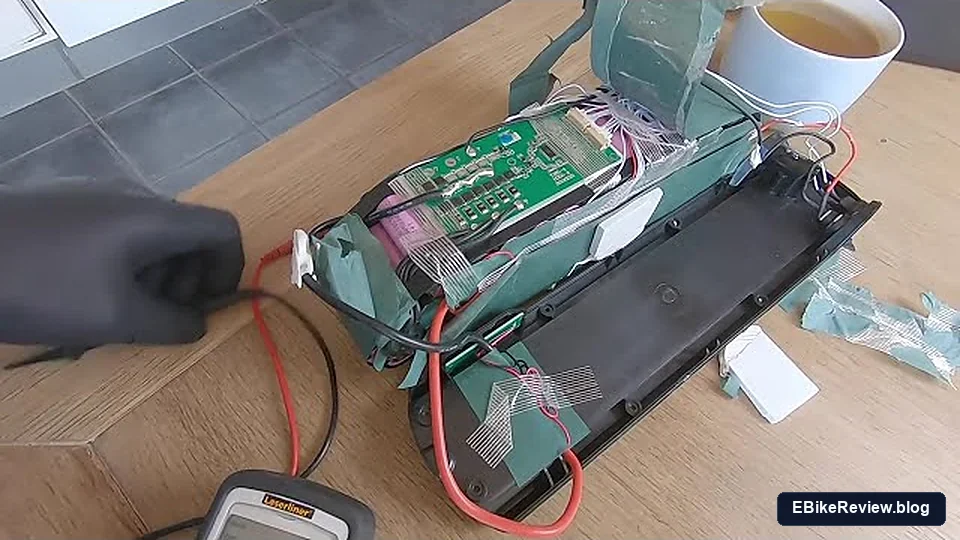
Experiencing an unexpected power cutoff requires methodical troubleshooting of electrical subsystems. Begin by checking handlebar console error codes and measuring terminal output voltage with a multimeter.
Many basic protection trips reset automatically once the triggering condition resolves itself. Removing the load and letting the system rest often restores normal functionality instantly.
Stubborn lockouts caused by hard faults require connecting the charger to wake the circuit. The incoming charge voltage signals the microprocessor to clear temporary error flags.
Persistent hardware faults demand professional bench testing to identify failed components. Never attempt soldering internal circuit boards without specialized electronic repair training.
- Measure terminal voltage with a digital multimeter first.
- Allowing the system to rest clears temporary fault conditions.
- Connecting the charger often wakes tripped microprocessors.
- Professional bench testing is required for persistent hardware failures.
Using Multimeters To Verify Terminal Voltage
Measuring voltage directly across discharge terminals reveals lockout states clearly. A reading near zero volts indicates an active electronic disconnect by the management board.
Comparing charger output voltage to terminal voltage highlights communication discrepancies. This simple diagnostic step isolates battery faults from controller issues.
- Zero volts at terminals indicates active board disconnect.
- Compare charger output to isolate specific electrical faults.
Video Walkthrough: E-Bike Battery Won't Charge? Self-Discharge \u0026 BMS Cutoff Explained
Preventative Maintenance Practices For Longevity
Proactive care minimizes the frequency of unexpected battery management system cutoffs. Store packs at partial charge levels when not riding for extended seasonal periods.
Avoid deep discharges whenever possible to reduce stress on vulnerable parallel cell groups. Regular balancing charges ensure all internal groups maintain uniform voltage profiles over time.
Keep charging ports clean and free of moisture, debris, and corrosion. Inspect wiring harnesses periodically for signs of chafing, loose fasteners, or insulation wear.
Adhering to manufacturer guidelines preserves chemical stability and ensures reliable daily commutes. Proper maintenance directly extends the operational lifespan of expensive lithium assemblies.
- Store batteries at partial charge during seasonal downtime.
- Avoid deep discharges to minimize parallel group stress.
- Keep charging ports clean and free from moisture.
- Inspect wiring harnesses regularly for insulation damage.
Storage Voltage Protocols For Extended Downtime
Leaving lithium packs fully charged or completely empty degrades capacity rapidly. Maintain storage voltage around nominal levels to minimize internal chemical stress.
Check stored batteries every few months to ensure voltage hasn't drifted downward. Top off capacity if levels approach the lower safety lockout thresholds.
- Store packs at nominal voltage to prevent degradation.
- Check stored batteries periodically for voltage drift.
Field Troubleshooting Techniques For Electrical Faults
Encountering sudden power loss mid-ride requires a systematic field inspection approach. Check all external connector plugs for secure fitment and signs of arcing damage.
Inspect phase wires and sensor cables emerging from the rear hub motor. Loose connectors can trigger false overcurrent protections within the main management board.
Feel the battery enclosure for abnormal heat buildup after a sudden shutdown. Thermal cutouts require extended cooling periods before normal operation can safely resume.
Carrying a basic multimeter in your toolkit simplifies roadside electrical diagnostics immensely. Isolate variables quickly to determine whether the issue is mechanical or electrical.
- Inspect all external connector plugs for secure fitment.
- Check motor phase wires for loose connections or arcing.
- Feel enclosures for abnormal heat after unexpected shutdowns.
- Carry a basic multimeter for quick roadside diagnostics.
Isolating Controller Versus Battery Malfunctions
Distinguishing between controller faults and battery lockouts saves valuable repair time. Test auxiliary functions like lights and displays to check for baseline power delivery.
If console displays remain functional while the motor cuts out, suspect overcurrent protection. Total loss of console power points directly to a battery management disconnect.
- Test auxiliary functions to verify baseline power delivery.
- Console status helps isolate controller versus battery faults.
Frequently Asked Questions
What causes an electric bike battery to suddenly cut off power?
Sudden power loss typically happens when the management system trips due to low voltage, overcurrent, or high temperature. The internal protection circuit severs the circuit to prevent permanent cell damage.
How can I reset my battery after a protection lockout occurs?
Many lockouts clear automatically after resting the system for several minutes. Connecting a compatible charger often wakes the sleeping microprocessor and restores terminal voltage instantly.
Will riding in freezing temperatures trigger a management system cutoff?
Yes, operating or charging in sub-freezing conditions risks catastrophic lithium plating. Smart boards enforce thermal lockouts to protect the internal cell chemistry from permanent harm.
Why does my motor cut out only when accelerating up steep hills?
Heavy climbs demand massive amperage that exceeds your programmed threshold. This temporary overcurrent event forces the circuit board to intervene and shut off power.
How do I check if my battery management system is functioning correctly?
Measure resting terminal voltage with a digital multimeter and check console error codes. Ensuring balanced cell groups confirms your hardware diagnostics are operating within normal parameters.