Turbo Levo vs. Trek Rail: Which Fits Your Setup Better?
Engineered for aggressive trail riding, these two heavyweights dominate the full-power e-mountain bike category. Choosing the right frame geometry and motor mapping depends on your technical climbing priorities.


Choose the Turbo Levo for telemetric tuning and seamless power delivery on complex singletracks. Select the Trek Rail for brute vertical capability and planted high-speed stability through chattery rock gardens.
Compare all top models in our Best Electric Bike: Top Commuter Picks for 2026.
Side-by-Side Breakdown
| Criteria | Turbo Levo | Trek Rail | Edge |
|---|---|---|---|
| Peak Performance & Output | Custom Specialized Full Power motor with seamless delivery | Bosch Performance Line CX with high torque output | Trek Rail |
| Duty Cycle & Consistency | Advanced thermal management prevents aggressive motor throttling | Robust continuous cooling handles long alpine climbs | Turbo Levo |
| Operating Noise & Vibration | Quiet planetary gear train minimizes mechanical drivetrain buzz | Noticeable internal gear whine under maximum load | Turbo Levo |
| Portability & Footprint | Optimized carbon chassis reduces total system weight | Heavier alloy or heavy-duty carbon frame layout | Turbo Levo |
| Maintenance & Service Life | Proprietary software diagnostic tools require authorized service | Standardized Bosch diagnostic network simplifies local repairs | Trek Rail |
| Power Requirements | Large capacity integrated battery with range extender options | High-density removable power pack with fast charging | Tie |
| Best Ideal Use-Case | Technical singletrack riding and custom power tuning | Steep technical ascents and rugged enduro racing | Trek Rail |
Chassis Architecture and Frame Engineering
Frame stiffness dictates how a full-power electric mountain bike handles high-speed impacts. Both platforms utilize advanced composite materials to optimize structural integrity without excessive weight penalties.
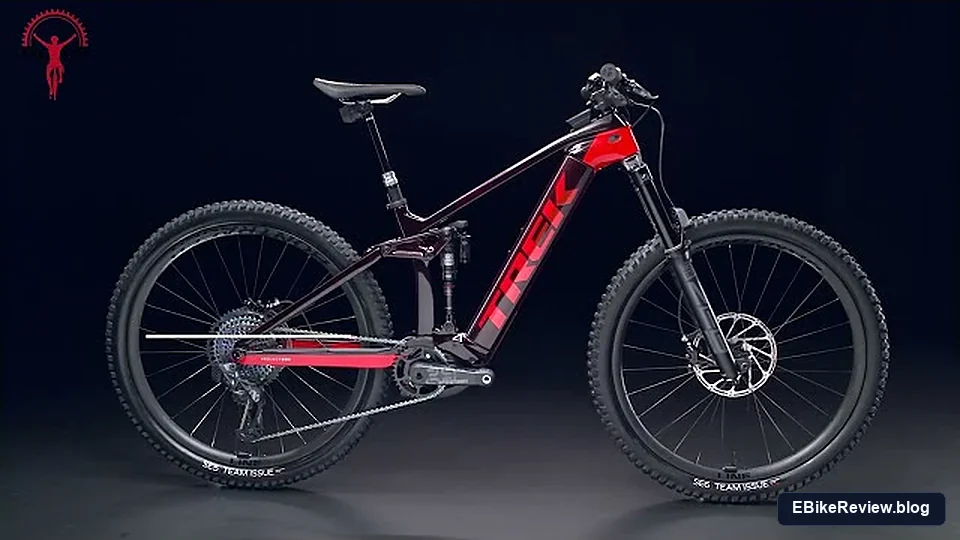
Highlighted inside our specialized turbo levo comp review, the brand employs an asymmetric sidearm frame layout. This design directly targets high torsional rigidity stresses generated by motor torque.
Specialized uses FACT 11m carbon for the Levo chassis, optimizing torsional rigidity across the front triangle. Trek employs OCLV Mountain Carbon for the Rail, balancing vertical compliance with aggressive trail loading demands.
Head tube angles differ subtly, affecting high-speed stability and technical climbing. The Levo features adjustable geometry via headset cups, whereas the Rail utilizes the Mino Link flip chip to alter bottom bracket height.
- Asymmetric carbon sidearm improves frame tracking precision.
- Integrated downtube battery ports protect internal electronics.
- Optimized pivot placements reduce unwanted pedal bob.
- Oversized pivot hardware enhances lateral stiffness under heavy cornering loads.
- Integrated cable routing protects control lines from abrasion and moisture ingress.
Geometry Adjustments and Head Angles
Adjustable headset cups allow riders to tailor steering responses. A slacker front end enhances high-speed stability on steep descents.
Steeper effective seat tube angles keep your center of gravity centered over the bottom bracket during technical ascents.
- Flip-chip linkages alter bottom bracket height.
- Adjustable head tube angles modify trail characteristics.
Frame Tolerance and Bearing Longevity
Pivot hardware on both frames relies on oversized alloy axles and sealed cartridge bearings. Proper torque specs prevent premature side-load wear during heavy compression cycles in sloppy trail conditions.
- Always use a calibrated torque wrench on carbon pivot bolts.
- Inspect bearing seals annually for signs of grease contamination.
Motor Topology and Power Delivery Profiles
Electric assist systems define the primary character of these heavy-duty trail machines. Torque sensing accuracy determines how naturally the motor reacts to your personal pedal input.
Specialized partners with Custom Rx Tune software to deliver exceptionally smooth engagement. This eliminates abrupt surges when navigating technical rock gardens at low speeds.
As detailed in our specialized turbo levo review, the bike runs a proprietary Brose-derived motor delivering 90 Nm of torque. Power delivery mimics natural leg input seamlessly through a triple-sensor architecture.
Trek relies on the Bosch Performance Line CX system, producing 85 Nm of torque with an aggressive eMTB mode. Bosch systems excel in immediate engagement during steep technical step-up maneuvers.
- Instantaneous torque sensors measure rider input precisely.
- Custom firmware maps tailor power curves to trail conditions.
- Seamless clutch engagement prevents mechanical drag when unpowered.
- Custom firmware tuning alters assist percentages via mobile applications.
- Magnesium motor casings reduce unsprung weight compared to aluminum units.
Cadence Sensitivity and Assist Modes
Optimizing your pedaling cadence maximizes efficiency across varied terrain. Both drive units deliver peak output when riders maintain a spin rate above eighty revolutions per minute.
Dynamic micro-adjustments in eco mode help conserve battery life during extended backcountry exploration sessions.
- High cadence efficiency reduces internal motor strain.
- Customizable assist levels via smartphone application.
Thermal Management Under Sustained Loads
Extended climbs test internal motor temperatures, risking software throttling. Specialized utilizes custom potting compounds for heat dissipation, while Bosch relies on cast magnesium housings to shed excess operational heat effectively.
- Avoid prolonged high-mode climbs in extreme ambient heat.
- Allow systems to cool before initiating rapid charging cycles.
Battery Chemistry and Range Management Systems
Energy storage capacity dictates how far you can push your vertical limits. High-density lithium-ion cells pack substantial watt-hours into streamlined downtube profiles.
Smart battery management systems monitor cell temperatures and voltage fluctuations to prevent premature degradation during sustained high-output discharges.
Explored further in our specialized turbo levo sl review, the chassis houses a massive 700Wh battery securely inside the down tube, optimizing the overall center of gravity.
The Trek Rail utilizes Bosch's Removable Integrated Battery system, featuring a protective cover. Total capacity peaks at 750Wh on select models, offering extended range for riders tackling epic all-day alpine excursions.
- High-capacity battery packs support multi-hour alpine loops.
- Advanced thermal sensors prevent dangerous overheating cycles.
- Secure locking mechanisms eliminate battery rattle on rough descents.
- Lithium-ion cells require storage between forty and sixty percent charge.
- Anti-vibration padding prevents terminal fretting during aggressive descents.
Range Extender Integration and Charging
Bottle-cage mounted auxiliary batteries provide extra watt-hours for epic backcountry rides. Quick chargers replenish depleted main cells within a few hours.
Weatherproof charging ports safeguard internal electrical contacts from moisture ingress and abrasive trail grit.
- Plug-and-play range extenders boost total system capacity.
- Rapid charging technology minimizes downtime between trail sessions.
Smart Charging and BMS Protocols
Advanced battery management systems monitor cell voltage imbalances and thermal thresholds. Both platforms prevent catastrophic failure by automatically tapering current output when internal cell temperatures approach critical safety limits.
- Always use OEM-approved chargers to prevent overvoltage events.
- Store battery packs indoors during freezing winter storage periods.
Suspension Kinematics and Pivot Layouts
Active suspension performance remains critical when managing e-bike weights. Well-designed leverage ratios ensure small bump compliance without sacrificing mid-stroke support.
Custom shock tunes account for sprung mass and chassis inertia. This prevents wallowing through fast compressions and heavy g-outs.
Specialized relies on a modified FSR linkage design, delivering active suspension performance independent of braking forces. This layout maintains rear-wheel traction over square-edge bumps during heavy descending braking maneuvers.
Trek deploys the patented ABP (Active Braking Pivot) alongside a Mino Link configuration. This proven design isolates suspension movement from braking inputs, ensuring the rear wheel tracks predictably across loose technical terrain.
- Optimized leverage curves improve small bump sensitivity.
- Robust pivot bearings withstand high lateral cornering loads.
- Thoughtful kinematics isolate braking forces from suspension action.
- Custom shock tunes match kinematic leverage ratios for optimal stroke utilization.
- High-volume air cans reduce harshness on initial small bump impacts.
Damper Tuning and Air Spring Volume
High-volume air cans reduce initial breakaway force for better traction. Custom damper shim stacks manage heavy chassis loads during aggressive riding.
Bottom-out resistance features protect critical internal components during severe landing impacts.
- Volume token adjustments tailor progression curves.
- External rebound and compression dials simplify tuning.
Shock Tune and Leverage Ratios
Leverage curve progression directly influences bottom-out resistance on big hits. The Levo uses a progressive stroke ideal for air shocks, whereas the Rail accommodates high-volume air cans and coil shocks seamlessly.
- Adjust rebound damping according to total system weight changes.
- Verify sag measurements with riding gear fully equipped.
Component Spec and Drivetrain Integration
Heavy-duty drivetrains must withstand massive electrical torque loads. Steel chainrings and reinforced chains prevent premature wear under high stress.
Powerful hydraulic disc brakes with large rotors provide the necessary stopping power for heavy e-mountain bikes travelling at high velocities.
Electric drivetrains experience accelerated chain and cassette wear due to high motor torque. SRAM Eagle Transmission provides robust shifting under heavy power loads via direct-mount hangerless interfaces on premium builds.
Braking duties on both heavy e-bikes require robust four-piston calipers paired with oversized rotors. Specialized often specs SRAM Code brakes, while Trek frequently pairs Shimano XT components with 220mm centerline rotors.
- Reinforced chains endure high-torque shifting cycles.
- Oversized brake rotors manage thermal fade on long descents.
- Tubeless-ready wheelsets resist pinch flats on rocky trails.
- Steel chainrings outlast aluminum alternatives in high-torque applications.
- Metallic brake pads offer superior fade resistance on steep descents.
Cockpit Ergonomics and Cable Routing
Clean cable routing protects hydraulic lines and electrical wiring from impact damage. Ergonomic remote levers offer intuitive access to assist modes.
Wide handlebars enhance leverage when wrestling heavy steering geometry through tight switchbacks.
- Internal cable routing minimizes snag hazards.
- Ergonomic remote switches improve rider focus.
Chainline Optimization and Q-Factors
Motor spindle designs dictate Q-factors and chainline offsets. Proper tooth profiling on custom chainrings minimizes friction, protects against dropped chains, and extends the overall operational lifespan of the entire drivetrain assembly.
- Inspect chain stretch regularly using a precise go-no-go tool.
- Keep lubrication fresh to counteract wet and gritty trail contaminants.
Trail Handling and Descending Dynamics
Weight distribution fundamentally alters how an e-bike corners and jumps. Low center of gravity placement ensures planted stability through loose gravel corners.
Active braking performance keeps rear tires tracking predictably over braking bumps and jagged roots during steep descents.
Weight distribution dictates how these heavy trail bikes corner through berms and switchbacks. The Levo places mass low and centrally, offering exceptionally nimble handling characteristics through rapid direction changes.
Analyzed thoroughly in our trek rail 7 review, the bike feels planted and secure through chaotic rock gardens, utilizing a longer rear center measurement to enhance high-speed descent stability.
- Planted front-end traction inspires confidence in loose corners.
- Balanced weight distribution aids air control on jumps.
- Predictable chassis flex dampens high-frequency trail chatter.
- Lower bottom brackets improve cornering but increase pedal strike risks.
- Steeper seat tubes position the rider efficiently for steep technical climbs.
Cornering Agility and Line Selection
Executing rapid line changes requires precise weight shifts. Short chainstays help flick the rear end around tight alpine switchbacks.
Stiff wheel assemblies maintain tracking accuracy when pushing through berms at maximum speed.
- Responsive handling rewards active riding styles.
- Stiff chassis platforms track clean lines through rock gardens.
Cornering Traction and Wheel Paths
Rear-wheel axle paths influence how the bike absorbs impacts while cornering hard. Both platforms manage chain growth effectively, ensuring suspension compliance remains active when leaning heavily into loose dirt berms.
- Match tire casing construction to local rock sharpness and weight.
- Monitor tire pressures closely to prevent pinch flats at speed.
Maintenance Protocols and Long-Term Serviceability
Routine upkeep preserves mechanical efficiency and prevents costly premature failures. Regular pivot bearing inspections eliminate annoying creaks and play.
Diagnostic software updates keep motor firmware running at peak operational efficiency throughout the ownership lifecycle.
Routine service intervals keep high-torque e-bikes operating safely and efficiently. Mechanics must regularly inspect pivot bearings, check spoke tension, and update firmware via proprietary dealer software tools to ensure optimal performance.
Cable routing through headset cups or frame ports requires patience during component replacements. Both manufacturers provide internal guide tubes, simplifying the replacement of hydraulic lines and electronic control wiring.
- Regular bolt torque checks prevent structural fatigue issues.
- Authorized service centers provide specialized diagnostic support.
- Routine chain replacement protects expensive cassette teeth.
- Keep electronic port covers securely closed during pressure washing.
- Check spoke tension frequently due to heavy motor acceleration forces.
Bearing Care and Pivot Overhauls
Sealed cartridge bearings shield internal rolling elements from moisture and grit. Periodic cleaning and fresh grease extend service intervals significantly.
Proper pivot hardware torque specs prevent frame misalignment and premature bearing wear.
- Sealed cartridge bearings resist water intrusion.
- Scheduled overhauls maintain suspension plushness.
Motor Service and Diagnostic Interfaces
Servicing modern e-bike motors requires specialized diagnostic hardware and authorized technician training. End-users can monitor basic battery health via smartphone apps, but internal mechanical rebuilds demand factory service center intervention.
- Record error codes promptly when troubleshooting electrical faults.
- Store diagnostic service logs for warranty verification purposes.
Frequently Asked Questions
Which e-bike offers better motor customization options?
The Turbo Levo provides superior app-based tuning features for personalized power delivery. You can easily adjust peak current and acceleration response to match your riding style.
How do battery ranges compare between these models?
Both platforms deliver exceptional watt-hour capacity for full-day alpine rides. Actual range depends heavily on elevation gain, rider weight, and selected assist levels.
Are these motors difficult to maintain over time?
Regular firmware updates and authorized dealer inspections ensure long-term reliability. Standardized diagnostic networks make routine troubleshooting straightforward for local bike shops.
Can I install a range extender battery on both bikes?
Yes, both manufacturers offer proprietary auxiliary battery options that mount inside the main triangle. This boosts total system capacity for extended backcountry excursions.
Which platform excels better on steep technical climbs?
The Trek Rail delivers brute vertical climbing capability on loose terrain. Specialized balances this with exceptionally smooth, natural-feeling power modulation.