Step Through vs. Step Over Ebike Frame: Which Fits Your Setup Better?
Step through frames prioritize mounting convenience, while step over frames maximize structural rigidity under heavy loads. Evaluating these geometries ensures optimal structural safety for your riding style.


Step over frames win for high-speed cargo hauling and aggressive trail riding. Meanwhile, step through models dominate urban commuting where frequent mounting is mandatory.
Compare all top models in our Best Electric Bike: Top Commuter Picks for 2026.
Side-by-Side Breakdown
| Criteria | Step Through | Step Over Ebike Frame | Edge |
|---|---|---|---|
| Peak Performance & Output | Moderate torsional stiffness under aggressive cornering loads | Maximum power transfer via rigid triangle | Step Over Ebike Frame |
| Duty Cycle & Consistency | High urban stop-and-go mounting efficiency | Exceptional long-distance touring frame stability | Step Over Ebike Frame |
| Operating Noise & Vibration | Slightly higher chassis flex noise on rough roads | Damped, silent vibration absorption profile | Step Over Ebike Frame |
| Portability & Footprint | Easier handling in tight urban bike racks | Standard footprint requiring specialized locking clearance | Step Through |
| Maintenance & Service Life | Requires periodic inspection of down-tube gussets | Longer baseline fatigue life under heavy payloads | Step Over Ebike Frame |
| Power Requirements | Optimized for efficient city hub and mid-drives | Handles high-torque dual-battery system distribution | Step Over Ebike Frame |
| Best Ideal Use-Case | Daily urban commuting and relaxed riders | Trekking, cargo hauling, and rough terrain | Step Over Ebike Frame |
Frame Architecture and Structural Integrity
Modern electric bike manufacturing utilizes advanced aluminum alloys to balance weight reduction with structural endurance. Engineers must compensate for lower top tubes by reinforcing the bottom bracket junction significantly.
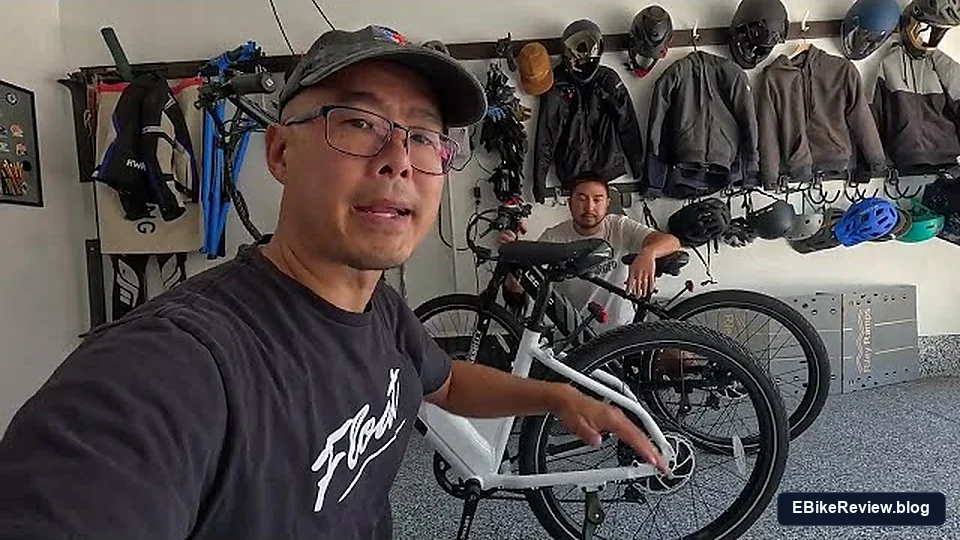
Traditional diamond geometry inherently distributes physical stress evenly across the entire front triangle. This time-tested design minimizes flex during heavy acceleration and high-speed cornering maneuvers.
Step-over frames utilize a traditional diamond triangle geometry, incorporating a top tube that maximizes structural triangulation. This design efficiently disperses torsional loads across the headset, seat cluster, and bottom bracket junction.
Step-through frames eliminate the top tube, replacing it with a reinforced down tube. As demonstrated in our aventon level step through commuter ebike review, engineers must deploy hydroformed aluminum to prevent excessive flex under dynamic pedal forces.
- Triangulated bracing provides superior structural reinforcement under heavy pedal torque.
- Single-tube drops require thicker wall diameters to prevent unwanted frame flex.
- Gusset placement dictates overall frame lifespan during aggressive urban commuting.
Bottom Bracket Junction Reinforcement
The bottom bracket area experiences immense rotational forces from both rider pedaling and mid-drive motor output. Step through variants require forged aluminum gussets to prevent micro-cracking over time.
Step over frames naturally tie the seat tube, down tube, and chainstays into a cohesive node. This geometry inherently resists lateral deflection without adding excessive dead weight.
- Forged gussets absorb heavy rotational torque.
- Cohesive nodes eliminate lateral frame deflection.
Ergonomic Loading and Rider Mounting Dynamics
Mounting clearance remains the primary functional differentiator between these two popular frame styles. Riders with limited hip flexibility benefit immensely from lowered clearance heights.
Step over frames demand a high leg swing that can challenge commuters wearing restrictive professional attire. However, this traditional layout accommodates larger internal frame storage bags seamlessly.
Step-through architectures enable mounting without high leg extensions, lowering the barrier for commuters in urban environments. This geometry shifts the rider's center of mass slightly downward, enhancing stability during low-speed maneuvering and frequent stop-and-go traffic.
Step-over geometries require a higher leg clearance, typically demanding a minimum standover height of 750 millimeters for standard medium frames. However, this traditional layout accommodates aggressive riding postures and better distributes rider weight across the contact points.
- Low mounting heights eliminate strain for riders with mobility constraints.
- High top tubes restrict emergency dismount maneuvers in dense traffic.
- Integrated rear rack attachments require careful weight distribution planning.
Clearance Heights and Hip Flexibility
Ergonomic studies indicate that step through frames reduce lower back strain during urban commutes. Models in our best lightweight step through electric bike guide let riders plant both feet firmly on the pavement.
Step over geometry requires a deliberate sideways leg sweep that tests balance when carrying heavy panniers. This traditional requirement favors tall riders with excellent core stability.
- Reduced back strain during frequent stop-and-go traffic.
- Requires core stability for safe pannier loading.
Torsional Rigidity Under Heavy Payload
Carrying heavy cargo introduces severe twisting forces that test the limits of bicycle frame engineering. Step over variants excel here due to their closed structural loop design.
Removing the top tube creates an open-channel chassis that permits minor lateral twisting under heavy loads. Manufacturers counteract this by oversizing the down tube diameter substantially.
Cargo e-bikes place immense stress on the main frame triangle during cornering. Our best step through electric bikes for seniors guide shows how properly braced frames maintain structural integrity under heavy loads.
Modern step-through cargo platforms combat frame whip by utilizing dual down tubes or oversized rectangular extrusions. These structural enhancements help maintain lateral stiffness, preventing steering wander when carrying rear rack accessories or heavy front panniers.
- Closed structural loops resist heavy torsional twisting forces.
- Open-channel designs require oversized down tubes for stability.
- Cargo capacity is directly limited by frame torsional stiffness.
Down Tube Oversizing Strategies
To match diamond frame stiffness, step through builders employ massive hydroformed aluminum down tubes. These oversized tubes house internal batteries while providing necessary structural rigidity.
Standard round tubing fails under heavy electrical payload demands without internal reinforcing ribs. Modern hydroforming allows complex cross-sections that maximize strength-to-weight ratios.
- Hydroformed aluminum down tubes house large internal batteries.
- Internal reinforcing ribs prevent catastrophic structural failure.
Materials Engineering and Tube Wall Thickness
Aluminum alloy selection dictates how well an electric bike handles persistent vibrational fatigue. 6061-T6 aluminum remains the industry standard for balancing cost, weight, and weldability.
Wall thickness must vary across the frame length to handle localized stress concentrations safely. Double-butted tubing removes unneeded material where stress is low to save weight.
Aluminum alloy 6061-T6 is the industry standard for electric bike frames, offering an excellent strength-to-weight ratio. Manufacturers typically specify wall thicknesses ranging from 2.2 millimeters at high-stress junctions down to 1.5 millimeters at mid-tube sections.
Step-through designs require increased wall thicknesses to compensate for missing top tubes. As seen in our best step through electric bike under 1000 guide, these reinforcements add a minor weight penalty of 300 to 500 grams.
- 6061-T6 aluminum provides optimal balance and weldability.
- Double-butted tubing removes unneeded material for weight savings.
- Weld quality determines long-term resistance to cyclic fatigue.
Butting Profiles and Stress Distribution
Engineers use computer-aided stress analysis to determine exact tube wall thickness requirements. High-stress zones near the head tube receive thicker reinforcement profiles.
Step through frames require thicker down tube walls to compensate for the missing top tube. This extra metal adds noticeable weight compared to traditional diamond frames.
- Computer stress analysis optimizes exact wall thicknesses.
- Thicker down tube walls compensate for missing top tubes.
Cable Routing and Integrated Component Housing
Modern electric bikes feature complex internal routing for hydraulic brake lines and electronic shifter wires. Step over frames offer straightforward, linear paths from handlebars to dropouts.
Routing cables through a step through frame requires tight radius bends inside the oversized down tube. Maintenance technicians must utilize specialized internal liners to prevent annoying rattles.
Internal cable routing protects electronic harnesses, hydraulic brake lines, and shift cables from environmental contamination and mechanical snagging. Step-over frames route these elements cleanly through the top tube or down tube channels for optimal weather resistance.
Step-through frames concentrate all internal routing through the massive down tube alongside the semi-integrated battery dock. Mechanics must navigate tight entry ports and foam sleeves to prevent rattling and cable abrasion during rough road vibrations.
- Internal routing paths protect delicate electronic wiring harnesses.
- Linear channels simplify hydraulic brake line maintenance procedures.
- Acoustic lining prevents persistent internal cable rattle noises.
Internal Battery Compartment Integration
Integrating removable battery packs weakens the structural integrity of the main down tube. Frame designers must add heavy internal reinforcement collars to maintain rigidity.
Step over frames manage this cutout better because the top tube bears tensile loads. Step through frames place all structural burden entirely on the reinforced down tube.
- Battery cutouts require heavy internal reinforcement collars.
- Tensile loads distribute differently across frame cutouts.
Safety Standards and ISO Compliance Metrics
Electric bicycles must pass rigorous international safety standards before hitting public roads. ISO 4210 testing subjects both frame designs to punishing vertical drop and pedal fatigue tests.
Step through frames undergo modified testing protocols to evaluate open-frame deflection limits accurately. Passing these standards guarantees structural reliability under normal operating conditions.
Electric bicycles must pass rigorous structural testing outlined in standard ISO 4210 to ensure frame longevity and rider safety. These standardized tests simulate extreme pedal forces, vertical impacts, and fatigue cycles on specialized laboratory testing rigs.
Step-through designs undergo identical fatigue protocols but face stricter deflection limits during the frame drop and pedal load tests. Engineers reinforce the down tube-to-head tube weld zones to satisfy EN 15194 electrical and mechanical requirements.
- ISO 4210 testing subjects frames to punishing fatigue trials.
- Modified protocols evaluate open-frame deflection limits accurately.
- Standardized drop tests verify overall structural safety margins.
Fatigue Testing Protocols and Load Limits
Testing rigs apply hundreds of thousands of repetitive pedal cycles to measure frame deflection. Frames exhibiting micro-fractures during these laboratory tests fail compliance certification immediately.
Manufacturers use strain gauges to identify unexpected stress concentration points during prototype testing. This data allows engineers to refine tube profiles before mass production begins.
- Repetitive pedal cycles measure long-term frame deflection.
- Strain gauges identify unexpected stress concentration points.
Long-Term Maintenance and Frame Fatigue Analysis
Routine maintenance extends far beyond lubricating chains and checking tire pressures on electric bikes. Frame inspections should include checking paint around welds for hairline cracking.
Step through models require closer inspection of the down tube weldment due to continuous flexing. Catching microscopic cracks early prevents catastrophic structural failure during high-speed rides.
Aluminum frames possess a fatigue limit, meaning cyclic loading will eventually cause micro-cracking over years of heavy usage. Technicians should regularly inspect high-stress weld areas around the bottom bracket shell and head tube for paint flaking or hairline fractures.
Step-through frames experience concentrated flexing near the lower downtube junction, requiring periodic torque checks on motor mounting bolts. Preventative maintenance includes applying anti-seize compounds and monitoring frame alignment to ensure long-term structural integrity without premature failure.
- Weldment inspections catch hairline cracks before failure.
- Continuous flexing demands regular checks of down tube joints.
- Preventative maintenance preserves structural integrity over decades.
Weld Inspection and Crack Detection
Aluminum fatigue manifests as subtle paint flaking or discoloration near high-stress frame welds. Technicians use magnifying tools to inspect suspect areas during annual tune-ups.
Proper rust prevention and cleaning protect exposed aluminum surfaces from environmental degradation. Following these maintenance guidelines ensures your chosen frame design lasts for years.
- Subtle paint flaking indicates underlying fatigue issues.
- Magnifying tools assist technicians during annual tune-ups.
Frequently Asked Questions
Which frame style provides better overall longevity under heavy daily commuting loads?
Step over frames typically offer superior structural fatigue resistance due to their continuous top tube triangulation and reduced lateral flex during heavy pedaling intervals over rough urban asphalt.
Over thousands of punishing miles, this fully triangulated architecture prevents premature bottom bracket wear and structural hinge fatigue.
Are step through frames structurally weaker than traditional step over designs?
Step through frames are not inherently weak, but they require heavier hydroformed down tubes and forged gussets to match the torsional rigidity of traditional diamond frames. Modern manufacturing techniques ensure they easily meet all international safety standards for everyday riders.
How does frame geometry affect battery placement and overall bike balance?
Battery integration is simpler in step over frames because the top tube helps distribute weight evenly across the entire chassis. Step through models concentrate battery weight entirely within the oversized down tube, altering handling dynamics slightly.
Can shorter riders comfortably handle a step over electric bicycle safely?
Shorter riders often struggle with step over frames due to the high top tube height required to maintain proper diamond geometry. Step through frames provide vastly superior standover clearance for riders of all heights.
What maintenance differences exist between step through and step over frames?
Maintenance routines are largely identical, though step through frames require more frequent visual inspections around the bottom bracket. Technicians must check these high-stress weld zones annually for any signs of micro-cracking.