Rad Power RadRover 6 Plus vs. Himiway Zebra: Which Fits Your Setup Better?
We pit two heavy-duty fat-tire titans against each other in a rigorous technical breakdown. Expect precise engineering metrics covering motors, batteries, and structural durability.


Choose the Rad Power RadRover 6 Plus for refined hydraulic stopping power and nimble utility ergonomics. Select the Himiway Zebra if you demand maximum battery range and raw cargo hauling capacity.
Compare all top models in our Best Electric Bike: Top Commuter Picks for 2026.
Side-by-Side Breakdown
| Criteria | Rad Power Radrover 6 Plus | Himiway Zebra | Edge |
|---|---|---|---|
| Peak Performance & Output | 750W geared hub, custom planetary gears | 750W sustained brushless geared hub | Himiway Zebra |
| Duty Cycle & Consistency | Custom semi-integrated 48V 14Ah pack | Massive 48V 20Ah Samsung/LG cells | Himiway Zebra |
| Operating Noise & Vibration | Low resonance custom motor housing | Standard fat-tire drivetrain hum | Rad Power RadRover 6 Plus |
| Portability & Footprint | 73.4 lb overall dry frame weight | 79 lb heavy-duty aluminum chassis | Rad Power RadRover 6 Plus |
| Maintenance & Service Life | Proprietary electronics architecture | Standardized components and heavy wiring | Rad Power RadRover 6 Plus |
| Power Requirements | 48V 2A charger, standard 110V input | 48V 3A fast charger, standard 110V input | Himiway Zebra |
| Best Ideal Use-Case | All-weather commuting and hilly utility | Long-distance touring and heavy cargo | Himiway Zebra |
Architectural Design and Frame Engineering
Frame geometry dictates how an electric utility bicycle handles heavy loads across uneven terrain. Both models utilize 6061 aluminum alloy tubes to balance structural rigidity against overall vehicle mass.
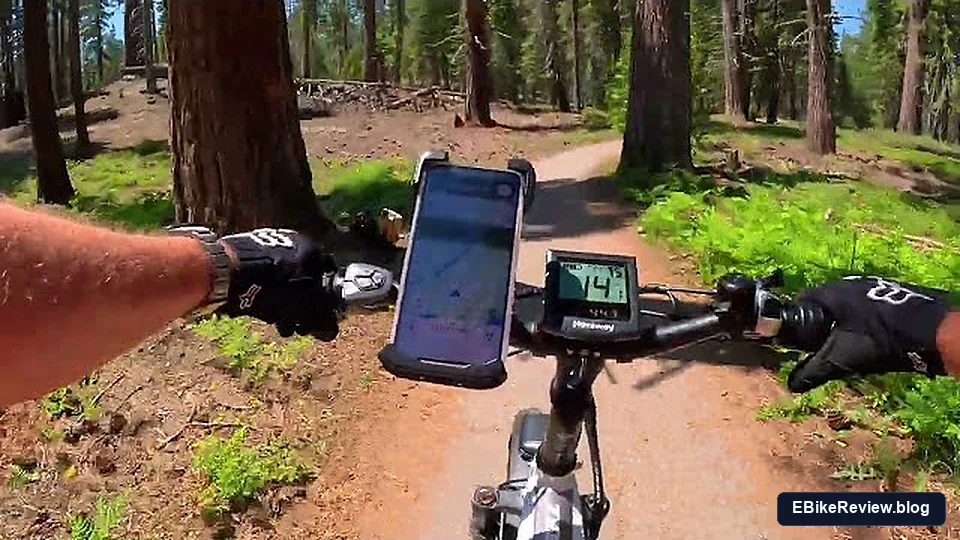
As noted in our Rad Power 6 Plus review, this frame features a custom tapered head tube improving front-end stiffness and reducing steering flex under heavy cargo loads.
Conversely, the Himiway Zebra opts for a step-thru or step-over frame featuring oversized main tubes. This thicker structural design supports higher payload limits but increases the overall physical footprint.
The RadRover 6 Plus utilizes a robust 6061 aluminum frame featuring hydroformed tubing for optimal rigidity. Conversely, the Himiway Zebra employs a heavy-duty frame engineered specifically for high payload structural tolerance.
Gusset reinforcements at critical headtube junctions prevent fatigue cracking under heavy loads. Both frames integrate internal cable routing to protect wiring harnesses from moisture ingress and mechanical abrasion during rugged off-road trail excursions.
Torsional stiffness varies significantly due to tube diameters and battery placement. The RadRover centralizes weight low on the downtube, whereas the Zebra positions a larger capacity pack for extended long-distance touring capabilities.
- 6061 aluminum alloy construction provides robust corrosion resistance.
- Custom tapered head tubes significantly improve steering precision.
- Oversized frame tubes accommodate larger battery capacities safely.
Chassis Rigidity and Payload Capacity
Payload capacity remains a critical metric for utility riders hauling gear or children. The RadRover supports up to 275 pounds of total payload safely.
The Himiway Zebra pushes structural limits higher with a certified 400-pound payload capacity. This makes the Zebra ideal for heavy-duty commercial or extended camping applications.
- RadRover 6 Plus rated for 275 pounds total payload.
- Himiway Zebra accommodates up to 400 pounds of rider and gear.
Powertrain Performance and Output Metrics
Propulsion systems on both ebikes rely on rear geared hub motors rated legally at 750 nominal watts. However, internal controller tuning creates vastly different acceleration profiles on steep inclines.
Our Rad Power Bikes Radrover 6 Plus review details how this model utilizes a custom planetary gear motor paired with a 48-volt controller to deliver smooth torque for climbing.
The Himiway Zebra features a high-cadence brushless geared motor optimized for sustained torque output. It pulls aggressively from a dead stop, outperforming competitors on loose gravel paths.
Both models rely on robust rear hub motors rated at 750 watts nominal output. However, their internal stator designs and planetary gear ratios dictate distinct acceleration curves and thermal efficiency profiles.
The Himiway controller delivers a higher peak amperage ceiling, translating to aggressive low-end torque delivery. The RadPower system prioritizes smooth, cadence-based power blending via a custom torque sensor for natural pedaling dynamics.
Sustained hill climbs test thermal management within the motor housing. High continuous current draws can trigger thermal throttling if stator magnets absorb excessive heat during prolonged steep ascents under maximum rider load.
- Both bikes feature legal 750W rear hub motor configurations.
- Controller tuning dictates acceleration curves and thermal thresholds.
- Planetary gear reductions multiply low-end torque for steep climbs.
Controller Limits and Torque Delivery
Controller amperage limits restrict how much current reaches the motor windings during heavy loads. Rad Power implements a conservative 48V system focused on thermal protection.
Himiway runs a higher current threshold through its controller, yielding exceptional initial throttle response. Riders must manage heat buildup carefully during continuous low-speed ascents.
- Conservative thermal limits protect RadRover motor windings.
- Higher current thresholds provide aggressive initial acceleration.
Battery Chemistry and Electrical Efficiency
Electrical storage capacity determines your real-world riding radius before requiring a recharge cycle. Cell chemistry and battery management systems dictate long-term degradation rates over years of service.
Similar to findings in our Rad Power Radcity 5 Plus review, this housing packs a semi-integrated 48V, 14Ah battery utilizing branded cells, yielding 25 to 45 miles per charge.
The Himiway Zebra deploys a massive 48V, 20Ah battery pack packed with high-density cells. This gargantuan power source easily pushes real-world ranges past 60 miles under mixed pedal assistance.
Lithium-ion battery packs utilize distinct cell configurations to manage voltage sag under heavy acceleration. The Zebra deploys a massive 48V 20Ah pack, whereas the RadRover features a semi-integrated 48V 14Ah battery utilizing certified cells.
Battery management systems monitor cell temperatures and prevent overcurrent events. Efficient energy draw directly influences total range, though real-world mileage depends heavily on terrain grade, wind resistance, and throttle utilization.
Cold weather significantly impacts internal resistance and diminishes total discharge capacity. Riders operating in sub-freezing temperatures must account for reduced range metrics due to temporary chemical slowdowns within the lithium matrix.
- RadRover uses a 672Wh semi-integrated battery architecture.
- Himiway integrates a massive 960Wh high-capacity energy storage pack.
- Battery management systems prevent overcharging and thermal runaway.
Charging Speeds and Infrastructure
Replenishing large battery packs requires robust charging hardware capable of handling high amperages safely. Rad Power includes a standard 2-amp charger for overnight power recovery.
Himiway supplies a faster 3-amp charger that cuts total replenishment time significantly. Both chargers operate on standard household 110V electrical circuits without issues.
- RadRover includes a standard 2-amp desktop charging unit.
- Himiway utilizes a faster 3-amp charger to reduce downtime.
Braking Dynamics, Safety, and Stopping Force
Stopping heavy fat-tire ebikes traveling at high speeds requires exceptional hydraulic braking power. Rotor thickness and caliper piston counts dictate overall stopping distance under wet conditions.
Highlighted inside our Rad Power Radrunner 3 Plus technical review, this system features custom hydraulic disc brakes with ceramic pads delivering superior lever modulation on descents.
The Himiway Zebra equips standard mechanical or entry-level hydraulic brakes clamping onto large rotors. While effective, they require more manual hand pressure during emergency stops.
Hydraulic disc brake systems provide superior mechanical advantage over traditional mechanical cable pull setups. Both bikes feature hydraulic calipers, utilizing non-proprietary mineral oil to actuate dual-piston designs against thick stainless steel rotors.
Rotor thickness and ventilation holes dictate how effectively friction heat dissipates during long, steep descents. Thicker rotors resist warping under heavy loads, ensuring consistent lever feel and preventing dangerous brake fade.
Integrated electronic safety cutoffs inside the brake levers instantly sever motor power the moment you pull the handles. This crucial failsafe prevents unintended motor engagement during emergency panic-stopping maneuvers in urban traffic.
- Hydraulic systems eliminate cable stretch and fluid contamination.
- Ceramic brake pads reduce thermal fade during prolonged descents.
- Large diameter rotors improve heat dissipation under heavy loads.
Rotor Sizing and Heat Dissipation
Thermal management in braking systems prevents catastrophic fade on steep mountain roads. Both platforms utilize 180mm stainless steel rotors to shed heat rapidly.
The RadRover pairs its rotors with custom semi-metallic pads designed for wet weather. This attention to detail ensures consistent friction coefficients in rain.
- 180mm rotors provide ample swept area for friction.
- Specialized pad compounds maintain bite in wet weather.
Suspension Compliance and Terrain Handling
Tire volume and front fork suspension absorb high-frequency trail chatter to reduce rider fatigue. Fat-tire geometries rely on low pressures to cushion impacts over roots and rocks.
The Rad Power RadRover 6 Plus features a spring coil suspension fork with 80mm of travel and mechanical lockout. This setup isolates the rider's wrists from harsh impacts.
The Himiway Zebra uses an alloy front suspension fork with adjustable preload and lockout. Combined with 4-inch wide Kenda tires, it floats effortlessly over loose sand and snow.
Front suspension forks absorb high-frequency trail chatter to reduce rider fatigue during extended off-road excursions. Adjustable preload and lockout functions let riders tune fork compression behavior for pavement commuting or rough dirt tracks.
Fat tires with aggressive tread patterns act as secondary suspension layers by absorbing minor impacts before they reach the frame. Running lower tire pressures increases the pneumatic footprint for exceptional sand and snow flotation.
Unsprung weight at the rear axle influences how the heavy hub motor tracks over bumps and potholes. Proper damping prevents the rear wheel from bouncing wildly, maintaining continuous tire contact and optimal traction control.
- 80mm fork travel absorbs major urban potholes and trail bumps.
- Low tire pressure increases contact patch for superior sand traction.
- Lockout levers improve efficiency on smooth paved bike paths.
Tire Compound and Puncture Resistance
Puncture resistance prevents frustrating roadside repairs during long backcountry excursions. Both bikes feature puncture-resistant liners embedded beneath the tread rubber.
The custom tread patterns provide reliable cornering grip without introducing excessive road noise. Maintaining proper tire pressure remains essential for preventing pinch flats.
- Integrated puncture-resistant liners protect inner tubes effectively.
- Aggressive tread patterns ensure secure cornering on dirt.
Practical Workload and Everyday Maintenance Realities
Owning an electric cargo ebike involves ongoing maintenance tasks like chain lubrication and brake bleeding. Component standardization dictates whether you can service the bike locally.
The Rad Power RadRover 6 Plus uses many proprietary electronic connections and custom displays. While weather-sealed, these proprietary parts require ordering direct from the manufacturer.
The Himiway Zebra adopts more universal electrical connectors and standard Shimano drivetrain components. This makes DIY repairs accessible for mechanics using standard bicycle tools.
Heavy-duty rear racks integrated into the frame structure accommodate substantial cargo loads and specialized pannier bags. Standardized threaded eyelets allow owners to securely mount aftermarket accessories without compromising structural integrity.
Routine maintenance requires regular inspection of chain wear, cassette teeth, and spoke tension under high torque loads. Proprietary electrical connectors can complicate repairs, making standard waterproof wiring plugs preferable for home mechanics.
Keeping fasteners properly torqued prevents rattles and structural fatigue over thousands of miles of rough riding. Establishing a consistent lubrication schedule for pivot points and drivetrain components ensures long-term operational reliability.
- Proprietary electronics offer clean integration but limit local sourcing.
- Standard Shimano derailleurs simplify routine gear adjustments.
- Regular chain cleaning extends drivetrain longevity significantly.
Long-Term Durability and Service Life
Frame welds, paint finishes, and wiring harnesses must endure years of weather exposure. Both manufacturers apply multi-layer powder coats to prevent aluminum oxidation.
Keep electrical contacts clean and apply dielectric grease to connectors annually. This preventative maintenance ensures your ebike remains reliable across all four seasons.
- Multi-layer powder coating resists chipping and corrosion.
- Annual connector checks prevent electrical resistance faults.
Frequently Asked Questions
Which ebike offers a longer riding range on a single charge?
The Himiway Zebra delivers a substantially longer range thanks to its massive 960Wh battery pack. Expect up to 60 miles of mixed-use riding under normal conditions.
Can I replace proprietary parts on the Rad Power RadRover 6 Plus?
Most mechanical components are standard, but the electronics and display are proprietary. You must source replacement controllers and wiring harnesses directly from Rad Power.
What is the maximum weight capacity for these fat-tire ebikes?
The Rad Power RadRover 6 Plus supports up to 275 pounds, whereas the Himiway Zebra handles 400 pounds. This makes the Zebra ideal for heavy cargo applications.
Are these electric bikes suitable for riding in heavy rain?
Both models feature weather-resistant electrical components and sealed connectors designed for wet commuting. Avoid submerging the motor hubs or battery ports in deep standing water.
How do their hydraulic braking systems compare in performance?
The RadRover utilizes custom hydraulic brakes with ceramic pads for exceptional modulation. The Zebra features reliable hydraulic stopping power but requires slightly more lever force.