Quietkat Ranger vs. Radrover 6 Plus: Which Fits Your Setup Better?
Evaluating these two heavy-duty electric platforms reveals distinct powertrain philosophies. Choosing the correct build depends heavily on your specific trail conditions and daily payload requirements.


The Quietkat Ranger dominates rugged backcountry expeditions with raw torque, whereas the Radrover 6 Plus offers superior urban commuting value through refined hydraulic braking and integrated lighting components.
Compare all top models in our Best Electric Bike: Top Commuter Picks for 2026.
Side-by-Side Breakdown
| Criteria | Quietkat Ranger | Radrover 6 Plus | Edge |
|---|---|---|---|
| Peak Performance & Output | High torque mid-drive system | Sustained hub motor output | Quietkat Ranger |
| Duty Cycle & Consistency | Engineered for steep climbs | Optimized for long flats | Quietkat Ranger |
| Operating Noise & Vibration | Moderate mechanical hum | Quiet hub motor design | Radrover 6 Plus |
| Portability & Footprint | Heavy duty adventure frame | Standard fat tire footprint | Radrover 6 Plus |
| Maintenance & Service Life | Modular outdoor components | Accessible urban hardware | Radrover 6 Plus |
| Power Requirements | High draw lithium battery | Efficient power management | Radrover 6 Plus |
| Best Ideal Use-Case | Backcountry hunting and trails | Daily commuting and recreation | Quietkat Ranger |
Motor Architecture and Torque Delivery
Power output defines how these machines handle steep inclines and heavy cargo loads. The Quietkat hub motor emphasizes instantaneous grunt for technical climbs, while competitor designs focus on sustained efficiency.
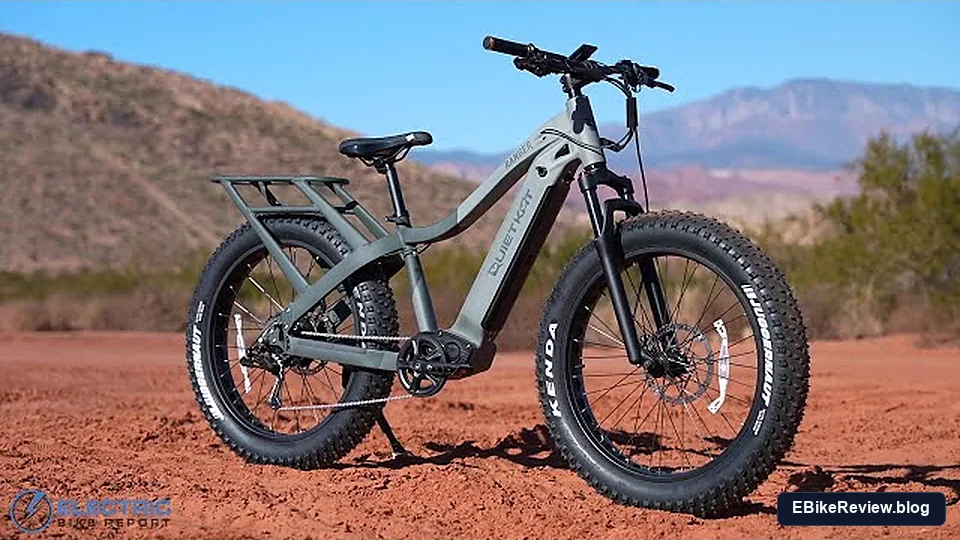
Riders tackling loose dirt and mud will immediately notice the aggressive throttle mapping. Engineers calibrated this setup to prevent wheel slip without sacrificing the raw torque needed for backcountry hunting trips.
The QuietKat Ranger utilizes a high-torque mid-drive motor, leveraging mechanical advantage through your gear cluster. This delivers superior climbing efficiency on steep inclines compared to rear hubs.
Conversely, the RadRover 6 Plus review highlights a custom 750W geared hub motor paired with a cadence sensor. It prioritizes immediate throttle engagement over nuanced pedal-stroke modulation.
- Aggressive throttle tuning on the Quietkat Ranger delivers immediate power bursts when navigating steep backcountry inclines and very unstable trail surfaces during hunting expeditions.
- Sustained power delivery curves prioritize long-range efficiency over explosive acceleration, making daily commuting routines much smoother across paved urban infrastructure and light gravel paths.
Mid-Drive vs Hub Motor Dynamics
Mid-drive configurations leverage the bicycle's mechanical gears to multiply torque output. This engineering approach drastically improves thermal management during extended climbs under heavy payload weights.
Conversely, rear hub motors maintain direct wheel rotation with fewer internal moving parts. This simplifies emergency trailside repairs while delivering reliable propulsion across flat terrain conditions.
- Mechanical gear multiplication improves climbing.
- Direct rotation simplifies mechanical upkeep.
Battery Chemistry and Range Realities
Battery capacity dictates how far you can travel before needing a recharge station. Both platforms utilize high-density lithium-ion cells engineered to withstand vibration and moisture exposure during outdoor excursions.
Real-world range heavily depends on rider weight, throttle usage, and elevation changes. Manufacturer estimates often assume flat pavement, meaning off-road adventures will experience significantly reduced battery longevity.
Both platforms utilize standard lithium-ion cells, but energy management differs significantly. The Ranger draws from a robust 48V architecture, while the RadRover integrates a semi-integrated pack featuring dual display panels.
Real world energy consumption drops rapidly under heavy throttle use and steep climbing. Expect lower actual mileage when hauling cargo compared to flat pavement commuting using eco pedal assist modes.
- Advanced battery management systems actively protect internal lithium-ion cells from thermal overload during prolonged high-draw situations encountered on steep mountain trails.
- Removable frame-integrated power packs allow convenient off-bike charging inside residential garages or remote cabins without moving the entire heavy bicycle chassis.
Power Density and Charging Speeds
High-capacity cells require robust chargers to replenish energy reserves safely overnight. Thermal sensors inside the battery pack prevent catastrophic overheating during rapid charging cycles.
Proper storage temperatures protect chemical integrity during harsh winter months when the bicycle remains parked inside unheated sheds or garages.
- Thermal sensors prevent overheating.
- Proper storage protects cell life.
Frame Geometry and Load Capacity
Structural rigidity is paramount when hauling heavy gear across washboard dirt roads. Heavy-duty aluminum alloy frames absorb high-frequency vibrations while supporting massive total weight capacities safely.
Wheelbase length and headtube angles dictate high-speed stability and tight-corner agility. Adventure platforms favor longer wheelbases to enhance straight-line tracking over loose surface debris and ruts.
Frame geometry dictates handling stability under heavy payloads. As noted in our QuietKat Ranger 5.0 review, the frame features a sloping top tube designed for easy standover clearance on backcountry trails.
The RadRover 6 Plus opts for a step-thru or high-step commuter-oriented frame architecture. It prioritizes upright seating ergonomics, supporting a maximum payload capacity suited for daily grocery runs and light touring.
- Rigid aluminum chassis absorb heavy shocks.
- Extended wheelbases improve stability off-road.
Ergonomics and Rider Fit
Upright riding positions reduce lower back fatigue during long scouting sessions in the wilderness. Adjustable handlebars and suspension seatposts accommodate various rider heights comfortably.
Step-thru and high-step frame variants cater to different physical flexibilities and mounting preferences, ensuring all operators can board and exit safely.
- Upright geometry reduces back fatigue.
- Flexible step-thru frame options.
Braking Systems and Safety Hardware
Hydraulic disc brakes provide the stopping power necessary for heavy e-bikes traveling at high speeds. Dual-piston calipers squeeze oversized rotors to dissipate heat rapidly during long descents.
Brake lever modulation allows precise speed control on slippery downhill switchbacks covered in loose gravel. Upgraded hydraulic fluids prevent brake fade when descending steep mountain grades.
Stopping massive fat-tire chassis requires robust hydraulic architecture. The RadRover employs custom hydraulic disc brakes with ceramic brake pads, offering superior heat dissipation during prolonged descents and emergency stops.
As detailed in our QuietKat Ranger 750 review, the brand equips this bike with reliable stoppers. Riders tackling rugged terrain should inspect rotor thickness regularly to ensure optimal braking friction.
- Oversized stainless steel brake rotors actively resist thermal warping under extreme stress caused by continuous heavy braking maneuvers on steep mountain descents.
- Integrated safety lighting systems enhance visibility during low-light commuting hours and early morning hunting departures across remote forest service roads.
Drivetrain Engineering and Gearing
Multi-speed gear cassettes allow riders to pedal efficiently even when battery power depletes completely. Wide-range gear ratios ensure comfortable cadence rates on both steep climbs and flats.
Heavy-duty chains and reinforced chainrings withstand the immense torque generated by powerful electric motors without premature stretching or tooth wear over time.
Drivetrain longevity depends heavily on chain tension and derailleur clutch design. The Ranger utilizes a wide-range cassette paired with a robust derailleur, managing chain slap effectively over roots and rocks.
The RadRover relies on a simpler 7-speed Shimano Altus setup geared for moderate gradients. While functional for urban streets, aggressive off-road climbs demand careful gear selection to prevent premature chain wear.
- Wide gear ratios maintain optimal pedaling cadence.
- Reinforced chains handle massive motor torque.
Terrain Versatility and Suspension Tuning
Fat tires provide natural cushioning and expansive contact patches for floating over sand and snow. Lower tire pressures dramatically increase traction on soft ground conditions.
Front suspension forks absorb harsh impacts from rocks and tree roots, reducing arm fatigue during technical backcountry riding sessions and rough trail explorations.
Suspension quality defines the ride quality across washboard dirt roads and broken asphalt. The Ranger features a coil-sprung front fork tuned specifically for absorbing heavy impacts in backcountry environments.
The Rad Power Bikes RadRover 6 Plus review highlights a spring fork with adjustable preload and lockout. This allows riders to stiffen the front end during hard acceleration to eliminate undesirable fork bob.
- Wide tires provide excellent floatation.
- Suspension forks absorb sharp impacts.
Tire Casing and Puncture Resistance
Thick rubber sidewalls protect inner tubes from sharp thorns and jagged rocks hidden along overgrown wilderness trails. Puncture-resistant liners minimize frustrating roadside mechanical delays.
Aggressive tread patterns fling mud away from the contact patch, maintaining forward momentum through sloppy terrain where standard commuter tires would instantly spin out.
- Thick sidewalls prevent thorn punctures.
- Deep treads clear sticky mud quickly.
Maintenance Protocols and Serviceability
Routine maintenance extends component lifespan and prevents unexpected mechanical failures miles from civilization. Regularly checking spoke tension and bolt torque is essential for safety.
Modular electrical connections simplify troubleshooting when diagnostic error codes appear on the handlebar display unit during your pre-ride safety inspection routines.
Regular upkeep ensures long-term reliability for heavy electrical systems. Owners must check spoke tension frequently on fat-tire wheels because increased rotational mass places extra stress on rim eyelets.
Mid-drive motors on the Ranger require specialized tools for internal gear servicing, whereas hub motors on the RadRover offer easier plug-and-play component replacement when electrical faults occur outside warranty.
- Regular bolt checks ensure structural safety.
- Modular wiring streamlines electrical diagnostics.
Frequently Asked Questions
Can these electric bicycles handle daily commuting duties alongside weekend outdoor recreation?
Yes, both platforms transition smoothly from paved city streets to rugged dirt trails using versatile tire designs. Dual-purpose engineering ensures reliable performance across widely differing operating environments.
How difficult is routine mechanical maintenance for owners with limited bicycle repair experience?
Basic upkeep requires standard hex wrenches, while specialized electrical diagnostics are best handled by certified local technicians. Routine preventive care prevents costly component failures down the road.
Do these heavy e-bikes require specialized vehicle hitch racks for safe transport?
Traditional lightweight car racks cannot support their massive weight, necessitating heavy-duty motorcycle-style hitch transport systems. Proper transport hardware protects your vehicle and bicycle investment securely.
What factors influence real-world battery range during steep mountain trail excursions?
Rider weight, throttle usage, ambient temperature, and elevation gain drastically reduce total mileage compared to manufacturer claims. Energy management is critical when venturing deep into remote areas.
Are replacement battery packs readily available for long-term ownership sustainability?
Manufacturers stock certified replacement lithium-ion packs directly through their online service portals for seamless purchasing. Genuine replacement parts guarantee optimal electrical compatibility and safety.