Mid Drive vs. Rear Hub E Bike: Which Fits Your Setup Better?
Choosing the right electric assist system alters torque delivery, hill climbing efficiency, and drivetrain wear. Understanding core mechanical differences ensures your setup matches your daily riding demands.

Mid drive systems dominate steep ascents and heavy cargo hauling through integrated gearing leverage. Rear hub motors provide reliable, budget-friendly propulsion for flat commuting and low-maintenance urban transit.
Compare all top models in our Best Electric Bike: Top Commuter Picks for 2026.
Side-by-Side Breakdown
| Criteria | Mid Drive | Rear Hub E Bike | Edge |
|---|---|---|---|
| Peak Performance & Output | High torque amplification via bike gears | Direct direct-drive or geared wheel push | Mid Drive |
| Duty Cycle & Consistency | Better thermal management on long climbs | Prone to thermal throttling under heavy loads | Mid Drive |
| Operating Noise & Vibration | Slight mechanical hum from internal reduction gears | Virtually silent hub motor rotation | Rear Hub |
| Portability & Footprint | Compact center of mass integration | Rear-heavy weight bias affecting wheel lifts | Mid Drive |
| Maintenance & Service Life | Higher chain and cassette wear rates | Isolated motor protecting standard bike chains | Rear Hub |
| Power Requirements | Optimized power draw through mechanical advantage | Direct electrical draw relying on throttle/PAS | Mid Drive |
| Best Ideal Use-Case | Mountain trail climbing and heavy cargo hauling | Flat urban commuting and casual riding | Depends on Use |
Core Mechanical Architecture and Drivetrain Integration
Mid drive motors mount directly within the bottom bracket shell, transferring power straight through the bicycle chain. This setup utilizes your existing gear ratios to maximize mechanical efficiency during steep climbs.
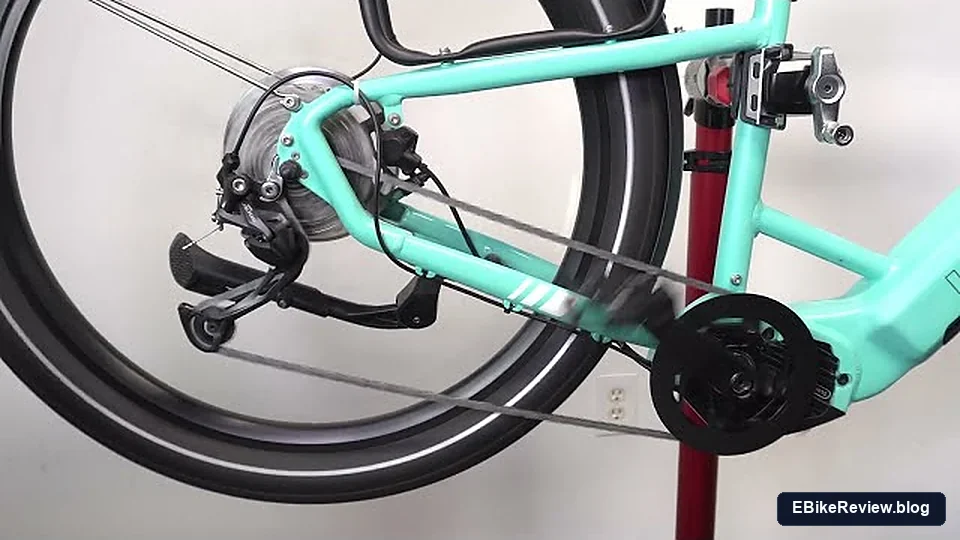
Rear hub motors house the electromagnetic stator and rotor inside the rear wheel hub itself. They apply rotational force independently of the chain, delivering direct propulsion straight to the pavement without intermediate gearing steps.
Mid-drive motors mount directly to the bottom bracket shell, utilizing the chain and gears to transmit power. Exploring options listed in our best mid drive ebike under 2000 roundup highlights these mechanical advantages.
Conversely, rear hub motors house a direct-drive or geared planetary assembly inside the rear wheel hub itself. Power bypasses the chain entirely, applying rotational force directly to the wheel via the axle dropout interface without multi-gear amplification.
- Mid drives leverage bicycle transmission gears for optimal RPM.
- Rear hubs bypass chain strain entirely during heavy motor acceleration.
- Bottom bracket integration keeps the center of gravity low and centered.
Power Transfer Dynamics at the Crank
Applying torque at the crank shell allows the motor to multiply its output force using your cassette. Mechanical advantage ensures steep inclines demand less electrical current from the battery pack.
Independent rear hub propulsion removes motor stress from the chain. This separation reduces snapped chains but places higher thermal demands on the wheel axle during continuous high-output climbs.
- Crank-based torque multiplication improves hill climbing.
- Wheel-based motors eliminate pedal kickback concerns.
Torque Sensing Versus Cadence Activation Metrics
Most mid drive systems rely on sophisticated torque sensors measuring your exact pedaling force. Finding a quality mid drive ebike under 3000 delivers this intuitive and highly responsive assist profile.
Budget-oriented rear hub builds frequently utilize basic cadence sensors that simply detect pedal rotation. The motor engages instantly once cranks spin, offering an on-off feel rather than proportional scaling.
Torque sensors measure rider input force at the pedals via strain gauges, delivering proportional assistance within milliseconds. This yields a natural riding feel that scales naturally with your leg strength up to 250 watts of legal output.
Cadence sensors rely on magnetic ring rotation counts, activating the motor whenever the cranks spin regardless of actual pedal pressure. This binary on-off mechanism can cause sudden acceleration surges, requiring careful management during tight urban cornering maneuvers.
- Torque sensors scale assist dynamically based on rider leg pressure.
- Cadence sensors trigger motor engagement based purely on crank movement.
- Advanced hub motors now integrate torque sensors for smoother delivery.
Evaluating Rider Input Responsiveness
Precise torque measurement prevents unexpected surges when navigating tight technical corners or crowded pathways. Proportional power scaling enhances safety and extends battery range significantly during stop-and-go city riding.
Cadence-based systems require manual motor level adjustments to prevent unwanted acceleration. Understanding this lag helps riders anticipate sudden power delivery moments before entering intersections.
- Proportional scaling prevents low-speed surging in tight spaces.
- Manual adjustments compensate for basic cadence sensor lag.
Thermal Dynamics and Heat Dissipation Under Load
Mid drive units concentrate high thermal loads inside compact aluminum casings near the cranks. Choosing the best mid drive electric bike for climbing ensures reliable cooling under heavy loads.
Rear hub motors dissipate heat across the entire wheel assembly and outer casing. Larger surface areas help shed heat effectively during sustained high-speed cruising on flat asphalt surfaces.
Mid-drive units struggle with localized heat buildup under sustained heavy loads because enclosed motor housings restrict airflow. Climbing extended grades often triggers internal thermal throttling to protect copper windings and sensitive electronic controller components.
Rear hub motors utilize the surrounding aluminum wheel rim and spoke network as a natural heatsink. The rotating exterior shell continuously sweeps ambient air across the stator, enhancing dissipation efficiency during high-speed flat-road cruising.
- Bottom bracket motors require careful thermal management on long climbs.
- Hub motors utilize wheel shells as natural heat-dissipating fins.
- Thermal throttling protects internal nylon gears from melting under stress.
Managing Extreme Operating Temperatures
Continuous heavy cargo hauling pushes mid drive internal temperatures toward critical thresholds. Selecting appropriate assist levels prevents premature electronic degradation during prolonged summer mountain excursions.
Long flat commutes rarely push rear hub motors to their thermal limits. However, heavy stop-and-go delivery work can overheat direct-drive hubs due to low-speed electrical resistance.
- Proper assist selection prevents overheating during cargo transport.
- Stop-and-go delivery stress impacts direct-drive hub longevity.
Drivetrain Wear, Chain Stress, and Consumables
Routing motor power through the chain accelerates wear on cassettes, chainrings, and chains. High tensile loads require frequent component inspections and robust replacement schedules to maintain smooth shifting performance.
Rear hub setups isolate motor force entirely from the bicycle transmission. Standard bicycle chains experience normal human-only wear rates, drastically lowering ongoing replacement costs for everyday commuters.
Because mid-drives route all motor torque and human leg power through the identical chain, consumables experience accelerated wear. Riders must frequently replace stretched chains, worn cassettes, and alloy chainrings due to high tension loads.
Rear hub systems isolate motor propulsion from the drivetrain entirely, meaning your standard bicycle chain only handles human leg inputs. This separation significantly extends the lifespan of transmission components and lowers ongoing maintenance overhead.
- Mid drives accelerate cassette and chain wear through combined forces.
- Hub motors preserve standard bicycle transmission lifespan.
- Routine maintenance intervals differ significantly between both architectures.
Calculating Long-Term Maintenance Outlays
Replacing stretched chains and worn steel cassettes becomes a regular yearly task for high-mileage mid drive owners. Learning how to convert your bike helps clarify these unique mechanical requirements.
Rear wheel flat repairs require disconnecting motor power cables before removing the axle. This extra step complicates roadside tube patches compared to quick-release standard wheels.
- High-mileage mid drives demand frequent cassette replacements.
- Motor cable disconnects add complexity to rear flat repairs.
Weight Distribution and Frame Geometry Effects
Centering motor mass within the bottom bracket optimizes bicycle balance and handling agility. Balanced weight distribution makes lifting the front wheel over obstacles remarkably intuitive during trail rides.
Rear hub motors add unsprung weight directly to the back wheel assembly. This heavy rear bias can make the bike feel sluggish when navigating sharp turns or bunny-hopping curbs.
Centralizing motor weight directly around the bottom bracket creates an optimal center of gravity, improving handling dynamics. This balanced mass distribution enhances stability when navigating technical singletrack trails or executing emergency maneuvers.
Rear hub motors concentrate significant unsprung weight inside the rear wheel assembly, altering suspension responsiveness. Heavy rear wheels can pack down over rapid successive bumps, reducing rear tire tracking and overall suspension compliance.
- Centralized weight placement improves overall handling balance.
- Rear hub weight bias affects suspension compliance and agility.
- Frame designs must accommodate specialized motor shell brackets.
Handling Characteristics on Rough Surfaces
Suspension performance suffers when heavy hub motors increase unsprung rear weight. Rear shocks struggle to track small bumps quickly due to the added rotational inertia of the wheel.
Central motor placement preserves optimal suspension kinematics for full-suspension electric mountain bikes. Rear wheel tracking remains active and responsive across loose gravel and rocky roots.
- Unsprung weight reduces rear suspension responsiveness.
- Central motors maintain active rear wheel tracking on trails.
Servicing Complexity and Component Replacement Costs
Proprietary mid drive gearboxes require specialized manufacturer tools and certified technician training for internal repairs. Out-of-warranty motor failures often necessitate complete assembly swaps rather than simple part fixes.
Rear hub motors feature modular internal components that are straightforward for experienced home mechanics to service. Replacing internal planetary gears or clutches involves standard hand tools and affordable parts.
Servicing a mid-drive motor often requires proprietary diagnostic tools and specialized frame interfaces, complicating DIY repairs. Removing the motor unit to fix internal gearboxes demands advanced mechanical skills and costly specialized puller tools.
Rear hub motors simplify flat tire repairs despite initial wiring harness disconnection hurdles. Swapping a damaged wheel assembly requires basic wrenching knowledge, though replacing an integrated internal stator usually means purchasing a complete replacement wheel.
- Proprietary gearboxes demand specialized manufacturer service tools.
- Hub motors offer modular internal components for easy repairs.
- Warranty support varies widely across different regional dealer networks.
Repair Logistics and Technician Availability
Finding certified technicians for specialized mid drive systems can prove difficult in rural areas. Local bike shops may lack diagnostic software needed to troubleshoot proprietary electronic error codes.
Hub motors rely on standardized controllers and external wiring harnesses that simplify troubleshooting. Swapping a damaged throttle or controller requires minimal technical expertise and basic wiring knowledge.
- Rural areas may lack certified mid drive diagnostic technicians.
- Standardized hub wiring simplifies DIY electrical troubleshooting.
Efficiency Curves Across Varied Terrain Profiles
Operating a mid drive through optimal cadence ranges maximizes battery efficiency on rolling hills. Gearing leverage keeps the motor spinning inside its sweet spot regardless of ground speed.
Rear hub motors achieve peak efficiency only within specific design speed windows. Operating below that threshold on steep inclines causes high electrical draw and rapid battery depletion.
Mid-drives excel on steep mountainous terrain by operating near their maximum RPM sweet spot through gear shifting. Selecting proper gear ratios prevents motor bogging, maintaining high electrical efficiency across extended vertical climbing profiles.
Rear hub configurations achieve peak efficiency on flat, rolling roadways where constant velocity eliminates gear-matching needs. Direct-drive hub motors offer regenerative braking capabilities, recapturing kinetic energy during descents to conserve battery capacity.
- Gearing leverage maintains optimal motor RPM on rolling terrain.
- Hub motors suffer efficiency drops during slow steep climbs.
- Battery range calculations depend heavily on chosen route topography.
Maximizing Battery Range on Commutes
Selecting correct gear ratios on a mid drive prevents bogging down on inclines. This disciplined shifting preserves watt-hours and extends your total daily riding range safely.
Commuters tackling flat urban grid layouts benefit from the consistent cruising speed of direct hub motors. Maintaining momentum without constant gear shifting suits straightforward daily transportation routines.
- Correct shifting preserves battery capacity on hilly routes.
- Flat urban grids favor straightforward hub motor cruising.
Frequently Asked Questions
Which e-bike motor type climbs steep hills better?
Mid drive motors climb steep hills more efficiently by leveraging the bicycle's transmission gearing. This mechanical advantage multiplies torque output while keeping internal motor temperatures within safe operating limits.
Do rear hub motors wear out bicycle chains faster?
Rear hub motors apply propulsion directly to the wheel, leaving standard bicycle chains unaffected by motor stress. This isolation results in normal chain wear rates comparable to traditional non-electric bicycles.
Are mid drive e-bikes more difficult to maintain?
Mid drives demand more frequent drivetrain consumable replacements due to high chain tension. Additionally, internal gearbox repairs require specialized tools and certified technician intervention for complex issues.
Can I ride a rear hub e-bike without battery power?
Rear hub e-bikes can be pedaled without battery power, though added motor weight increases resistance. Geared hub designs feature internal clutches that minimize drag when coasting unpowered.
Which system offers a more natural pedaling experience?
Mid drive systems paired with sophisticated torque sensors deliver an exceptionally natural riding feel. They scale electrical assistance instantly based on your exact human leg pressure applied.