Hub Drive vs. Mid Drive Ebike Motor Systems: Which Fits Your Setup Better?
Choosing the right electric bicycle motor architecture requires balancing mechanical drivetrain complexity with direct wheel torque. Understanding these core engineering differences dictates your long-term riding satisfaction.

Mid drive systems excel on steep inclines by leveraging bicycle gearing, while hub drives offer superior throttle simplicity and lower drivetrain wear for flat urban commuting.
Compare all top models in our Best Electric Bike: Top Commuter Picks for 2026.
Side-by-Side Breakdown
| Criteria | Hub Drive | Mid Drive Ebike Motor Systems | Edge |
|---|---|---|---|
| Peak Performance & Output | Direct wheel torque, simpler electronics | Multiplies gear ratios, high efficiency | Mid Drive |
| Duty Cycle & Consistency | Prone to overheating on long climbs | Excellent thermal management via frame | Mid Drive |
| Operating Noise & Vibration | Whisper quiet direct-drive variants | Internal reduction gears create subtle whir | Hub Drive |
| Portability & Footprint | Adds noticeable unsprung rear wheel weight | Centered weight distribution improves balance | Mid Drive |
| Maintenance & Service Life | Independent of chain wear metrics | Accelerates chain and cassette degradation | Hub Drive |
| Power Requirements | Higher continuous wattage often needed | Lower wattage yields high climbing torque | Mid Drive |
| Best Ideal Use-Case | Budget commuting and cargo hauling | Mountain biking and steep hill climbing | Mid Drive |
Mechanical Architecture and Power Delivery Fundamentals
Hub motors apply rotational force directly to either the front or rear wheel hub. This decouples propulsion from your bicycle chain entirely, reducing stress on traditional drivetrain components.
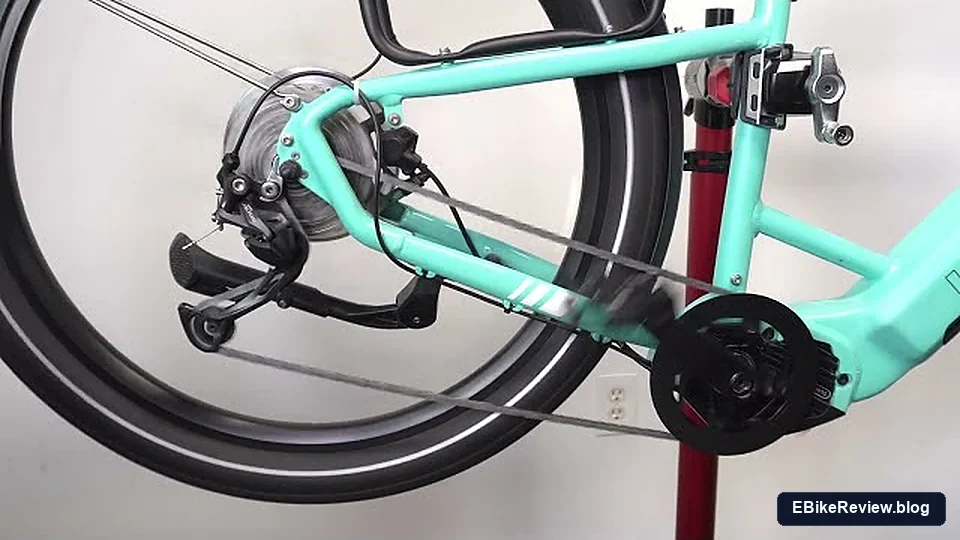
Mid drive motors mount directly at the bottom bracket shell. When exploring options in our best mid drive ebike under 2000 guide, you will see these units apply rotational torque straight to the crankset.
Hub motors integrate directly into the front or rear wheel assembly, applying rotational force straight to the axle. This bypasses the bicycle chain entirely, reducing immediate tension on standard drivetrain components.
Mid drive units mount centrally within the bottom bracket shell, utilizing the bicycle chain and gears to transmit power. This mechanical layout allows the motor to leverage the rear cassette ratios effectively.
- Direct wheel engagement completely bypasses chain tension.
- Crank-mounted motors successfully leverage existing gear ratios.
- Independent throttle control remains standard on hub setups.
Direct Torque Versus Multiplied Force
Hub systems rely on raw electrical wattage to conquer obstacles since they lack gear multiplication. This demands higher continuous amperage during heavy acceleration phases.
Mid drives leverage lower raw wattage by routing power through the cassette. Shifting into a lower gear dramatically multiplies climbing force without overheating internal stator windings.
- Raw electrical wattage drives hub motor performance.
- Gear multiplication optimizes mid drive climbing efficiency.
Efficiency, Gearing, and Hill Climbing Physics
Climbing steep gradients exposes the fundamental limitations of single-speed hub motors. Without mechanical mechanical leverage, motors struggle and pull excessive current from the battery.
Mid drives excel on alpine ascents by keeping the motor spinning in its optimal RPM range. As highlighted in our best ebike motor for hills overview, riders shift gears down to maintain motor efficiency.
Hub motors spin at a fixed internal ratio relative to wheel speed, leading to lower efficiency on steep climbs. Prolonged high-amp draws can cause thermal saturation inside sealed hub shells.
Mid drives optimize climbing physics by keeping motor RPMs high through gear selection. Operating in an optimal RPM band prevents overheating and maximizes torque delivery on steep mountain ascents.
- Steep hills cause hub motors to lose momentum easily.
- Gear shifting keeps mid drive motors running cool.
- Cadence sensors provide a more natural cycling feel.
Cadence Versus Torque Sensing Dynamics
Hub drives typically utilize basic cadence sensors that act as simple on-off switches for motor activation. This creates a delayed power delivery profile.
Mid drives employ sophisticated torque sensors that measure pedaling pressure instantly. The system delivers proportional assistance matching your exact muscular input instantly.
- Cadence sensors react to pedal rotation speed.
- Torque sensors measure exact rider leg pressure.
Drivetrain Wear and Long-Term Component Longevity
Because hub motors power the wheel directly, your bicycle chain experiences zero motor stress. Standard chains and cassettes last significantly longer under normal commuter usage.
Mid drives channel immense electric power straight through the bicycle chain. This high load rapidly accelerates wear on chains, chainrings, and rear cassettes during shifts.
Because hub motors apply force independently of the chain, standard chains and cassettes experience normal wear comparable to traditional bicycles. This significantly extends the lifespan of standard transmission parts.
Mid drives channel high torque through the chain, cassette, and chainrings simultaneously. This amplified mechanical stress accelerates elongation and wear, requiring frequent replacements of high-tensile bicycle chains.
- Hub configurations reduce stress on the bicycle chain.
- Mid drives demand frequent replacement of worn cassettes.
- Chainline alignment is critical for mid drive longevity.
Component Replacement Costs Over Time
Budget-conscious riders appreciate the lower upkeep associated with rear hub systems. You avoid buying heavy-duty e-bike rated chains every single season.
Mid drive owners featured in our best mid drive ebike under 3000 picks must factor in specialized maintenance. High torque output chews through standard bicycle components remarkably fast.
- Hub setups save money on routine chain swaps.
- Mid drives require heavy-duty reinforced transmission parts.
Weight Distribution and Frame Balance Dynamics
Rear hub motors add significant unsprung weight to the back wheel. This affects suspension compliance and makes changing a flat tire a cumbersome roadside chore.
Mid drives center the motor weight right at the bottom bracket. This optimal placement preserves balanced frame handling and maintains predictable steering geometry.
Hub motors concentrate significant unsprung weight at either the front or rear wheel axle. This uneven mass distribution alters natural steering geometry and complicates quick wheel removals during flat repairs.
Mid drives centralize motor weight tightly around the bottom bracket, preserving a balanced center of gravity. As outlined in our bafang mid drive programming guide, this centralized mass improves handling agility.
- Rear hubs increase unsprung rotational rear weight.
- Bottom bracket placement enhances overall bicycle balance.
- Flat tire repairs are simpler without motor wiring.
Handling Rough Terrain and Urban Obstacles
Navigating potholes with a rear-heavy hub setup requires extra attention to rear wheel impacts. The heavy hub absorbs harsher shocks directly from the road.
Centralized mid drive weight allows riders to easily bunny-hop curbs. The bike feels agile and behaves like a traditional non-electric bicycle on trails.
- Heavy hubs absorb direct impacts from road bumps.
- Centered motors improve trail agility and control.
Maintenance Protocols and Field Repair Realities
Fixing a flat tire on a hub-driven e-bike requires disconnecting motor cables and unbolting heavy axle nuts. Specialized torque washers must be reinstalled in precise alignment.
Mid drives use standard quick-release or thru-axle wheels. Changing inner tubes requires zero mechanical knowledge regarding electrical connectors or heavy motorized axles.
Servicing a rear hub motor requires disconnecting specialized waterproof cabling and dealing with heavy axle nuts. Mechanics must carefully manage torque washers to prevent frame damage during axle reinstallation.
Mid drive systems allow standard wheel removals and straightforward tire patches without electrical complications. However, internal motor gearbox servicing demands specialized diagnostic software and proprietary brand-specific tools.
- Hub motors complicate standard roadside flat repairs.
- Mid drives utilize standard wheel removal procedures.
- Motor internal repairs require certified technician intervention.
Electrical Troubleshooting and Wiring Harnesses
Hub motor systems feature exposed external wiring running along the frame dropout. These cables remain vulnerable to snagging on debris during daily rides.
Mid drives integrate internal wiring seamlessly within custom frame cavities. This protects sensitive electronic connections against harsh weather elements and physical impacts.
- External hub wiring is exposed to weather damage.
- Integrated frame routing protects mid drive electronics.
Cost, Complexity, and Consumer Selection Metrics
Hub drive systems dominate the entry-level market due to simple manufacturing and lower production costs. They provide affordable electric mobility for everyday casual riders.
Mid drive setups command premium prices reflecting advanced engineering, complex torque sensors, and precision gearboxes. They target serious enthusiasts seeking maximum performance.
Hub drive setups generally involve fewer moving parts, lowering initial manufacturing costs and overall system complexity. They suit budget-conscious commuters prioritizing low-maintenance urban transport over advanced torque-sensing responsiveness.
Mid drives require reinforced frames, custom motor mounts, and sophisticated torque sensors that increase retail costs. They target performance enthusiasts demanding nuanced power modulation for steep topographical gradients.
- Hub drives offer budget-friendly entry points.
- Mid drives represent premium engineering and higher costs.
- Application dictates the ideal motor investment level.
Matching Motor Architecture to Your Riding Profile
Choose a hub drive if your daily route consists of flat city streets and bike paths. You will enjoy reliable propulsion without breaking your bank account.
Select a mid drive if you tackle steep mountain trails or hilly urban commutes regularly. The investment pays off through superior hill climbing capability.
- Flat commutes favor affordable hub drive systems.
- Hilly terrains demand capable mid drive motors.
Advanced Thermal Management Under Heavy Loads
Hub motors seal electrical components inside tight wheel shells, trapping heat during prolonged climbs. This can trigger thermal throttling to protect delicate internal copper windings.
Mid drives dissipate heat much more effectively through aluminum frame interfaces. This allows sustained high-output performance without risking catastrophic thermal shutdown during long ascents.
Direct-drive hub motors rely primarily on passive air cooling across the exterior aluminum shell to dissipate internal heat. Prolonged heavy loads can trap heat inside the sealed stator core.
Advanced mid drives incorporate internal thermal sensors and aluminum heatsinks to manage heat buildup during sustained climbs. Software controllers automatically throttle current when internal temperatures exceed safe operating limits.
- Hub motors risk overheating during prolonged climbs.
- Frame integration helps dissipate mid drive heat.
- Thermal throttling protects motors from electrical burnout.
Continuous Versus Peak Power Ratings
Understanding motor ratings helps prevent unexpected performance drops when hauling heavy cargo loads up steep grades. Hub motors handle high peak bursts easily.
Mid drives sustain high continuous output by utilizing mechanical advantage, keeping operational temperatures within safe manufacturer specifications under heavy work.
- Peak bursts test hub motor thermal limits.
- Continuous output remains stable on mid drives.
Frequently Asked Questions
Can hub drive e-bikes climb steep hills effectively?
Hub drives can climb moderate inclines, but steep hills often cause them to overheat due to a lack of gear multiplication. Choosing a mid drive system is recommended for hilly regions.
Why do mid drive e-bikes wear out chains faster?
Mid drives apply motor torque directly through the bicycle chain and cassette. This constant high-tension load accelerates normal mechanical wear significantly faster than hub setups.
Do hub motors feature standard throttle control?
Yes, most hub drive electric bikes include thumb or twist throttles for effortless cruising. Many mid drives omit throttles entirely to comply with strict trail regulations.
Which motor type is better for flat urban commuting?
Hub drives are ideal for flat city commuting because they offer throttle simplicity and lower drivetrain maintenance costs. They provide reliable everyday transportation without complications.
How does weight distribution differ between the two systems?
Hub motors add noticeable rear-wheel unsprung weight, while mid drives centralize weight at the bottom bracket. This lower center of gravity improves overall bicycle handling dynamics significantly.