Himiway Zebra vs. Aventon Aventure 2: Which Fits Your Setup Better?
Evaluating two heavyweight fat-tire platforms reveals distinct mechanical approaches. We examine motor tuning, frame geometry, and battery capacities to determine exact utility.


The Aventon Aventure 2 wins for refined torque-sensor cadence and integrated commuting capability. Meanwhile, the Himiway Zebra dominates raw cargo hauling and extended long-range distance touring.
Compare all top models in our Best Electric Bike: Top Commuter Picks for 2026.
Side-by-Side Breakdown
| Criteria | Himiway Zebra | Aventon Aventure 2 | Edge |
|---|---|---|---|
| Peak Performance & Output | High-torque hub motor with cadence sensor | Responsive hub motor with torque sensor | Aventon Aventure 2 |
| Duty Cycle & Consistency | Massive 20Ah battery for extended range | Optimized 15Ah battery with smart firmware | Himiway Zebra |
| Operating Noise & Vibration | Standard quiet brushless motor hum | Whisper-quiet torque-managed engagement | Aventon Aventure 2 |
| Portability & Footprint | Heavy duty-cycle frame with long wheelbase | Hydroformed chassis with agile geometry | Aventon Aventure 2 |
| Maintenance & Service Life | Shimano 7-speed with durable components | Shimano 7-speed with protected derailleur | Tie |
| Power Requirements | 48V 20Ah high-capacity lithium system | 48V 15Ah efficient energy architecture | Himiway Zebra |
| Best Ideal Use-Case | Long-distance cargo and backcountry touring | Urban commuting and responsive trail riding | Split |
Structural Chassis and Frame Engineering
Heavy-duty fat-tire electric bicycles require robust frame construction to handle high gross vehicle weight ratings. Both contenders utilize 6061 aluminum alloy tubes engineered for maximum torsional stiffness under heavy loads.
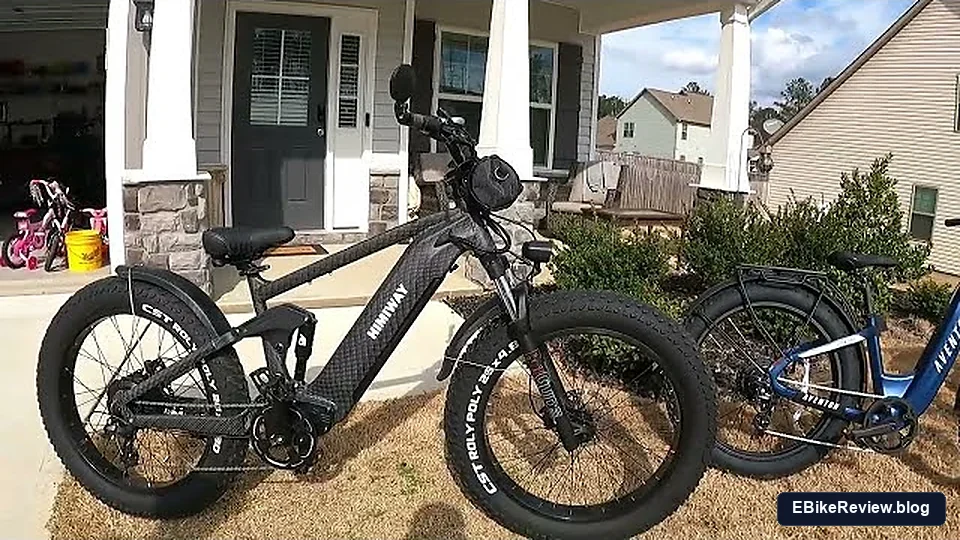
The Himiway Zebra features a traditional step-over frame with a massive down tube housing its semi-integrated battery pack. This design prioritizes maximum frame strength over sleek aesthetic integration.
Conversely, our detailed aventon aventure 2 review highlights how its fully integrated battery compartment uses a hydroformed aluminum chassis to maintain high structural load limits safely.
- 6061 aluminum alloy frame construction for enhanced structural fatigue resistance.
- Integrated cable routing minimizing snag hazards during off-road trail navigation.
- Heavy payload capacities exceeding standard utility bicycle safety specifications.
Frame Geometry and Payload Limits
Frame geometry dictates handling characteristics when loaded with heavy cargo or accessories. The Zebra offers a longer wheelbase, which aids high-speed straight-line stability on loose gravel paths.
Aventon optimizes the Aventure 2 with a slightly tighter headtube angle for responsive low-speed steering maneuvers. Riders navigating tight urban environments will appreciate this responsive front-end geometry.
- Extended wheelbases providing superior high-speed straight-line stability.
- Tighter headtube angles improving low-speed urban maneuverability.
Motor Architecture and Power Delivery
Selecting between hub motor implementations drastically changes how an electric bicycle conquers steep inclines. Both platforms utilize rear hub motors, but their internal controllers and sensor suites differ fundamentally.
As outlined in our himiway zebra review, the model relies on a high-torque brushless rear hub motor paired with a traditional cadence sensor for immediate throttle response.
The Aventon Aventure 2 integrates a sophisticated torque sensor that measures exact pedal pressure instantly. This torque-sensing mechanism provides proportional motor output, mimicking natural human pedaling dynamics seamlessly.
- Brushless rear hub motors delivering consistent nominal power output.
- Torque-sensing bottom bracket offering ultra-smooth pedal assist engagement.
- Cadence-sensing alternatives providing immediate throttle-only propulsion capabilities.
Torque Sensing Versus Cadence Systems
Torque sensors measure human input force to scale electrical assistance accurately across varying inclines. This technology prevents sudden surges when starting from a complete dead stop on hills.
Cadence systems simply detect pedal rotation speed, delivering a binary on-off power profile. While less nuanced, this setup requires minimal physical exertion from commuters seeking effortless transit.
- Proportional assistance scaling based on real-time rider input force.
- Binary engagement providing effortless propulsion for casual commuters.
Battery Chemistry and Electrical Capacity
Energy storage capacity dictates the operational radius of heavy-duty fat-tire electric bicycles. Lithium-ion battery packs must deliver consistent voltage under high amperage discharge during steep climbs.
As detailed in our himiway zebra step-thru review, the model packs a massive 48V 20Ah battery utilizing premium lithium-ion cells for extended backcountry mileage.
The Aventon Aventure 2 utilizes a 48V 15Ah battery pack integrated neatly into the frame. While offering slightly lower total capacity, it optimizes energy delivery through efficient controller firmware.
- 48-volt electrical architectures supporting high current draw requirements.
- Advanced Battery Management Systems protecting against thermal overload.
- Removable battery configurations allowing convenient off-bike indoor charging.
Charging Infrastructure and Range Estimates
Real-world range depends heavily on assist levels, cargo weight, and terrain topography. The Zebra yields exceptional mileage figures thanks to its massive ampere-hour capacity rating.
Standard fast-charging blocks replenish depleted cells within reasonable turnaround times for daily commuters. Proper thermal management during charging prolongs overall lithium-ion cell operating lifespan significantly.
- High ampere-hour capacity yielding exceptional real-world distance ranges.
- Optimized thermal management protecting cells during rapid replenishment cycles.
Drivetrain Mechanics and Gear Ratios
Mechanical gear selection enables riders to optimize pedaling cadences across diverse terrain grades. Derailleur quality and cassette range determine how efficiently human power transfers to the rear wheel.
The Himiway Zebra employs a reliable 7-speed Shimano drivetrain with a wide-range cassette. This mechanical setup handles low-speed hill climbing and high-speed cruising with adequate precision.
Much like findings in our aventon level review, the Aventon Aventure 2 matches this 7-speed setup using robust components to ensure crisp gear shifts during heavy trail rides.
- Shimano 7-speed gear shifters providing dependable mechanical gear ranges.
- Hardened steel chains resistant to elongation under heavy motor torque.
- Replaceable derailleur hangers preventing permanent frame damage during crashes.
Maintenance and Wear Characteristics
Rear hub motors place extra mechanical stress on chains and sprockets during aggressive acceleration. Routine lubrication and tension checks prevent premature wear across high-mileage drivetrain components.
Upgrading to corrosion-resistant chain variants enhances durability in wet winter commuting conditions. Proper indexing ensures silent operation and eliminates missed shifts under heavy loads.
- Routine lubrication protocols mitigating high motor torque chain wear.
- Precision derailleur indexing eliminating missed shifts under heavy loads.
Braking Systems and Safety Compliance
Stopping a seventy-pound electric bicycle traveling at twenty-eight miles per hour demands robust hydraulic brakes. Mechanical disc systems lack the stopping force required for heavy utility applications.
Both the Himiway Zebra and Aventon Aventure 2 feature hydraulic disc brakes paired with oversized rotors. These systems provide consistent clamping pressure and superior heat dissipation on long descents.
Integrated motor cut-off switches embedded within the brake levers enhance safety protocols. Pulling either lever instantly halts electrical propulsion, ensuring immediate stopping priority over motor torque.
- Hydraulic disc brake calipers delivering reliable all-weather stopping power.
- Oversized 180mm brake rotors preventing thermal fade on steep downhills.
- Automatic motor cut-off sensors integrated into the brake lever assemblies.
Stopping Distances and Rotor Management
Hydraulic fluid compressibility remains stable during continuous braking applications on mountain passes. Riders experience predictable lever feedback and minimal hand fatigue during emergency stops.
Inspecting brake pads for organic compound wear ensures optimal friction coefficients remain active. Replacing worn pads promptly protects expensive steel rotors from scoring and permanent damage.
- Stable hydraulic fluid performance during sustained alpine descents.
- Predictable lever feedback minimizing hand fatigue in traffic.
Cockpit Ergonomics and Display Integration
Rider interface design dictates comfort and operational clarity during long-distance commuting excursions. High-contrast displays and ergonomic grips reduce physical strain on wrists and lower backs.
The Himiway Zebra incorporates a large backlit LCD screen displaying vital telemetry data clearly. Its traditional handlebar layout offers ample space for mounting aftermarket accessories or phone holders.
The Aventon Aventure 2 features a color matrix display compatible with a companion smartphone app. This integration allows advanced custom tuning of motor assist levels and tracking capabilities.
- High-visibility color displays readable under direct sunlight conditions.
- Ergonomic handlebar grips reducing nerve pressure during extended rides.
- Integrated USB charging ports powering mobile navigation devices on route.
Smartphone Connectivity and Customization
Companion apps expand diagnostic capabilities by tracking battery health and firmware updates seamlessly. Riders can customize speed limits and throttle responsiveness directly through their mobile devices.
Standalone displays prioritize simplicity and reduce software failure points during wet weather commuting. Both design philosophies serve distinct user preferences effectively across different market segments.
- App-based firmware tuning for personalized motor responsiveness.
- Simplified standalone displays emphasizing weather-resistant reliability.
Workload Applications and Mission Profiles
Matching electric bicycle specifications to specific daily workloads ensures long-term owner satisfaction. Utility hauling requires high payload limits, while commuting demands agility and efficiency.
Choose the Himiway Zebra if your primary mission involves heavy cargo transport and maximum range. Its massive battery and robust frame excel at demanding utility tasks.
Select the Aventon Aventure 2 for daily urban commuting featuring smooth torque-sensing assist. Its refined pedal dynamics and integrated lighting system excel in populated environments.
- Heavy cargo hauling optimized by massive battery and frame capacities.
- Urban commuting enhanced by responsive torque-sensing pedal assistance.
- Recreational trail riding supported by wide fat tires and suspension forks.
Making Your Final Selection
Evaluating local terrain topography and storage limitations clarifies your ideal bicycle choice. Consider whether raw hauling power or refined ride quality takes priority for your needs.
Both models represent peak engineering achievements within the fat-tire electric bicycle category. Prioritizing your specific operational requirements guarantees an informed purchasing decision.
- Topographical evaluation determining optimal motor power delivery.
- Storage capacity planning ensuring seamless residential integration.
Frequently Asked Questions
Which bicycle offers a longer real-world riding range between charges?
The Himiway Zebra delivers significantly superior real-world mileage capabilities due to its massive forty-eight volt twenty amp-hour lithium-ion energy storage pack, which stores significantly more total watt-hours.
This substantial capacity reserve easily outperforms competing models when tackling long-distance backcountry touring excursions under demanding heavy payload conditions across rough terrain.
How do the motor engagement systems differ between these two popular fat-tire electric bicycles?
The Aventon Aventure 2 utilizes an advanced torque sensor that provides proportional power based on pedaling force. Conversely, the Himiway Zebra relies on a cadence sensor delivering immediate throttle and motor activation without requiring active pedal pressure.
Are these heavy utility electric bicycles suitable for navigating steep mountain climbing trails?
Both machines handle steep inclines effectively, but the Himiway Zebra excels with raw throttle power on loose dirt. Meanwhile, the Aventon Aventure 2 provides smoother, more controlled ascents utilizing its responsive torque-sensing pedal assistance framework.
What type of maintenance is required to keep hydraulic disc brakes operating safely?
Regular inspections of brake pad thickness and rotor alignment prevent premature wear during heavy-duty utility hauling. Flushing hydraulic lines periodically ensures consistent lever pressure and reliable stopping power across all weather conditions.
Can riders connect their smartphones to customize the motor performance parameters easily?
The Aventon Aventure 2 features a companion mobile application allowing comprehensive firmware customization and tuning. The Himiway Zebra relies on a standard onboard display without advanced smartphone connectivity features.