Electric Road Bike vs. Electric Hybrid Bike: Which Fits Your Setup Better?
Electric road bikes maximize aerodynamic efficiency and drop-bar speed, whereas electric hybrid bikes prioritize upright comfort and versatile utility. Choosing between them depends entirely on your daily riding workload.

Choose electric road bikes for high-speed tarmac training and long-distance endurance rides. Select electric hybrid bikes for urban commuting, upright visibility, and cargo versatility.
Compare all top models in our Best Electric Bike: Top Commuter Picks for 2026.
Side-by-Side Breakdown
| Criteria | Electric Road Bike | Electric Hybrid Bike | Edge |
|---|---|---|---|
| Peak Performance & Output | High assist efficiency for sustained speed | Balanced torque curve for stop-start riding | Split |
| Duty Cycle & Consistency | Optimized for long-range endurance tarmac | Engineered for mixed-surface urban commuting | Split |
| Operating Noise & Vibration | Minimal chassis resonance with rigid carbon forks | Slightly higher tire damping on wider casings | Electric Road Bike |
| Portability & Footprint | Ultra-lightweight carbon frame profiles | Heavier aluminum chassis with integrated racks | Electric Road Bike |
| Maintenance & Service Life | Requires precise drivetrain alignment and tuning | Robust components built for daily utility use | Electric Hybrid Bike |
| Power Requirements | Lightweight hub or mid-drive with sleek batteries | Higher capacity packs for added utility loads | Split |
| Best Ideal Use-Case | Fast group rides and paved fitness training | All-weather commuting and casual weekend excursions | Split |
Architectural Design and Frame Geometry Fundamentals
Chassis engineering dictates how each platform handles structural loads and rider positioning. Road geometry features aggressive reach measurements, steep head tube angles, and low bottom bracket drops for maximum speed.
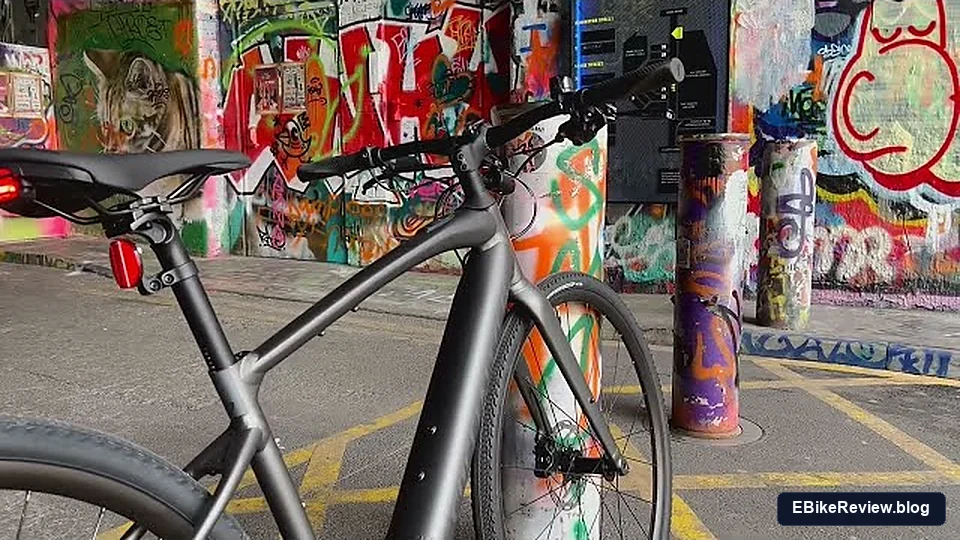
Conversely, hybrid designs emphasize stability through slack steering angles and taller stack heights. This structural distinction alters center of gravity calculations, directly influencing rider comfort during extended hours on the saddle.
Material science also plays a pivotal role in frame construction. Road platforms frequently deploy high-modulus carbon fiber, while hybrids balance cost and durability using hydroformed aluminum alloy tubing.
Electric road bikes utilize aggressive stack and reach ratios and steep head tube angles for rapid steering response. For rugged terrain alternatives, consult our best off road electric bike guide.
Conversely, hybrid models favor relaxed geometry with taller head tubes and slack 70-degree angles, prioritizing vertical compliance and enhanced stability over technical handling precision.
Carbon fiber monocoque frames dominate the road segment to minimize overall system weight, while hydroformed aluminum alloy remains standard for hybrids to absorb urban impacts safely.
- Road frames utilize steep head tube angles for responsive steering.
- Hybrid frames prioritize taller stack heights for upright comfort.
- Carbon fiber dominates premium road tiers to minimize system weight.
- Aluminum alloy provides robust daily durability for hybrid models.
Frame Stiffness and Power Transfer Dynamics
Torsional rigidity around the bottom bracket shell ensures minimal energy loss during heavy pedal strokes. Road models excel in this metric by utilizing oversized carbon tubing profiles.
Hybrid structures accommodate larger tire clearances, slightly modifying rear triangle compliance to absorb low-frequency urban vibrations without sacrificing structural integrity under load.
- Oversized carbon bottom brackets maximize pedal stroke efficiency.
- Wider rear triangles improve comfort over cracked urban pavement.
Motor Integration and Power Delivery Mechanics
Modern electric assist systems balance seamless torque delivery with minimal mechanical drag. For heavy-duty hauling needs, check out our best off road electric bike for hunting picks featuring robust hub motors.
Hybrid builds frequently utilize either torque-sensing mid-drives or robust rear hub motors. Hub motors offer direct power transfer to the wheel, reducing chainwear under heavy acceleration from complete stops.
Software calibration differentiates the two categories significantly. Road firmware prioritizes smooth, natural-feeling assist curves, while hybrid controllers deliver punchy low-end torque for quick intersection starts.
Lightweight mid-drive systems like the Fazua or Mahle X35 hub motors deliver subtle torque assistance peaking around 40Nm, seamlessly blending human effort with electronic propulsion.
Hybrid e-bikes frequently deploy robust mid-drives such as Bosch Performance Line CX units, generating up to 85Nm of torque for conquering steep urban inclines effortlessly.
Power delivery algorithms on road platforms prioritize smooth cadence matching, whereas hybrid controllers emphasize immediate throttle response and high-load acceleration from complete stops.
- Mid-drive motors utilize mechanical gearing for superior efficiency.
- Rear hub motors reduce drivetrain wear during stop-and-go commuting.
- Torque sensors ensure motor output matches rider pedal input precisely.
Assistance Thresholds and Cadence Sensors
Cadence calibration ensures the motor engages only when you pedal actively. Road systems often use sophisticated torque sensors to mimic traditional human power curves.
Hybrid setups may blend cadence and torque sensing to provide immediate assistance at lower speeds, making steep neighborhood climbs significantly more manageable.
- Sophisticated torque sensors deliver natural power progression.
- Cadence blending aids immediate low-speed hill climbing.
Drivetrain Engineering and Gear Ratio Performance
Transmission components dictate how effectively you convert electrical and human energy into forward momentum. Road platforms use tight cassette spacing to maintain an optimal pedaling cadence at high speeds.
Hybrid configurations feature wide-range gearing to conquer steep urban inclines while maintaining a manageable top speed. You can explore budget options in our best electric hybrid bike under 1000 roundup.
Chainline alignment and derailleur clutch mechanisms prevent dropped chains over rough surfaces. Hybrids often incorporate chain guards and robust internal gear hubs for low-maintenance reliability.
Road e-bikes typically incorporate tight-ratio 11-speed cassettes paired with compact cranksets, ensuring minimal cadence gaps when maintaining high speeds during group training sessions.
Hybrid commuters utilize wide-range 1x drivetrains with massive 50-tooth climbing sprockets, delivering versatile gear inches that accommodate both flat sprint sections and vertical climbs.
Chainline alignment and derailleur clutch mechanisms require precise tension adjustments to prevent dropped chains under high motor torque outputs experienced during daily utility riding.
- Road systems use tight gear steps for optimal cadence matching.
- Hybrid drivetrains offer wide-range cassettes for steep urban hills.
- Internal gear hubs protect transmission components from road grime.
Shifting Precision and Component Wear
Electronic shifting is increasingly common on high-end road bikes, offering lightning-fast gear changes. Mechanical derailleurs on hybrids prioritize rugged durability and easy field adjustments.
Chain longevity depends heavily on cross-chaining prevention and proper lubrication schedules, regardless of whether you choose a drop-bar or flat-bar configuration.
- Electronic shifting delivers crisp gear changes under load.
- Mechanical derailleurs ensure straightforward roadside maintenance.
Aerodynamic Efficiency and Rolling Resistance Metrics
Air resistance increases exponentially as velocity climbs, making aerodynamics paramount for sustained speeds. Drop handlebars tuck your torso into a wind-cheating profile, slashing aerodynamic drag substantially.
Hybrid platforms feature flat handlebars that promote an upright posture, increasing frontal surface area. This trade-off improves urban visibility but extracts a heavy aerodynamic penalty above twenty miles per hour.
Tire selection further dictates overall rolling efficiency. Narrow, high-pressure road slicks minimize friction on clean asphalt, while voluminous hybrid tires absorb road imperfections at the cost of slight drag.
Narrow 28mm tubeless tires inflated to 80 psi significantly reduce rolling resistance on asphalt, maximizing battery range during extended endurance road cycling routes.
Hybrid bikes rely on voluminous 40mm tires with puncture-resistant casing, trading minor efficiency losses for superior shock absorption over cracked concrete and gravel paths.
Frame tube profiling on electric road machines incorporates NACA airfoil cross-sections to cheat headwinds. For affordable tarmac options, review our best electric road bike under 2000 buyer's guide.
- Drop bars reduce frontal surface area to decrease aerodynamic drag.
- Flat handlebars improve traffic visibility but increase wind resistance.
- Narrow high-pressure slicks optimize smooth asphalt rolling speeds.
Wheelset Construction and Tire Volume
Deep-section carbon rims enhance aerodynamic performance on high-end road builds. Shallow aluminum rims on hybrids prioritize crosswind stability and impact resistance against potholes.
Tire casing compliance also affects energy loss through hysteresis, making precise inflation pressure critical for maximizing battery range across both styles.
- Deep carbon rims enhance high-speed aerodynamic performance.
- Puncture-resistant casings protect hybrid wheels from debris.
Component Durability and Routine Maintenance Protocols
Daily riding conditions test the mechanical resilience of every fastener, bearing, and seal. Road bikes demand meticulous cleaning to prevent grit from fouling delicate, lightweight transmission parts.
Hybrid bicycles are engineered to endure harsh weather, road salt, and daily commuter abuse. Sealed cartridge bearings and robust fender mounts protect vital components from environmental degradation.
Braking systems also require distinct upkeep routines. Hydraulic disc brakes dominate both categories, offering superior stopping power that demands periodic pad replacements and hydraulic fluid bleeds.
Hydraulic disc brakes on road e-bikes demand regular pad alignment checks due to high rotor heat buildup during sustained descents in mountainous terrain.
Hybrid commuter platforms require frequent drivetrain degreasing because urban road grime accelerates chain wear across exposed gear clusters during all-weather commuting.
Battery terminal inspections and firmware diagnostic updates form an essential part of bi-monthly maintenance routines for safeguarding complex electronic integration wiring harnesses.
- Road components require frequent cleaning to prevent grit wear.
- Hybrid frames feature robust mounts designed for year-round commuting.
- Hydraulic disc brakes ensure consistent stopping power in wet weather.
Hydraulic Brake Maintenance and Rotor Wear
Hydraulic disc systems self-adjust as brake pads wear down over time. Ensuring rotor trueness prevents annoying rubbing noises and maintains optimal stopping friction.
Mineral oil versus DOT fluid requirements dictate your specific bleeding kit choices during annual service intervals for both road and hybrid configurations.
- Hydraulic systems automatically compensate for brake pad wear.
- Annual fluid bleeding preserves crisp brake lever engagement.
Ergonomics, Control Layout, and Contact Point Physics
Rider comfort depends entirely on how effectively handlebar, saddle, and pedal interfaces distribute body weight. Drop bars offer multiple hand positions, reducing fatigue on long endurance rides.
Flat-bar hybrids position your wrists in a natural, neutral alignment that simplifies urban signaling and braking maneuvers. This setup reduces neck tension during shorter, stop-and-go trips.
Saddle selection mirrors these ergonomic priorities. Road saddles are narrow and firm to prevent inner thigh chafing, while hybrid saddles incorporate wider platforms and supportive foam padding.
Drop handlebars on road models offer multiple hand positions to alleviate ulnar nerve pressure during long training hours spent maintaining aggressive aero postures.
Flat handlebars paired with ergonomic grips on hybrids promote an upright spinal alignment, reducing lower back fatigue during casual urban navigation tasks.
Saddle width and padding density vary significantly; road bikes use firm, narrow perches for pelvic rotation, while hybrids utilize wide, cushioned platforms.
- Drop bars provide diverse hand placements to prevent nerve fatigue.
- Flat bars promote a natural wrist alignment for urban signaling.
- Hybrid saddles feature wider platforms for upright pelvic support.
Saddle Compliance and Pelvic Support
Pelvic rotation changes dramatically between aggressive road and upright hybrid positions. Selecting the correct saddle width prevents soft tissue pressure during long excursions.
Carbon seatposts on road bikes offer micro-flex to dampen road chatter, whereas aluminum posts on hybrids prioritize rigid durability under heavy rider loads.
- Proper saddle width prevents uncomfortable soft tissue pressure.
- Carbon seatposts provide vibration dampening on rough roads.
Load Capacity, Utility Integration, and Commuter Workloads
Utility requirements often determine the ultimate viability of your electric bicycle purchase. Road frames rarely include rack mounts, restricting you to lightweight frame bags and backpacks.
Hybrid platforms excel in cargo utility by featuring integrated eyelets for heavy-duty rear racks, panniers, and full-coverage fenders. Integrated cargo mounts transform hybrids into practical car replacements.
Total weight limits reflect these design intents. Hybrids safely support heavier combined loads of rider, cargo, and accessories, whereas lightweight road builds have stricter structural payload thresholds.
Lightweight road platforms rarely support integrated rear racks, limiting cargo capacity to minimalist frame bags or small handlebar packs for light gear.
Hybrid frames feature heavy-duty eyelets and reinforced rear triangles capable of supporting integrated pannier racks and child seats for practical utility tasks.
Total weight limits differ markedly, with robust hybrid structures safely accommodating heavier rider payloads and cargo compared to fragile ultra-lightweight road frames.
- Road frames prioritize light weight over heavy cargo rack mounts.
- Hybrid eyelets support heavy-duty panniers and commuter racks.
- Total weight capacity is significantly higher on hybrid platforms.
Fender Integration and Weather Protection
Full-coverage fenders keep road spray off your clothing during rainy commutes. Hybrids readily accept these accessories without compromising tire clearance.
Road bikes often require specialized clip-on fenders that offer limited protection against deep puddles and wet grit thrown from the front tire.
- Integrated fender mounts keep commuter clothing clean and dry.
- Clip-on fenders offer temporary protection on lightweight frames.
Frequently Asked Questions
Can I ride an electric road bike on gravel trails safely?
Electric road bikes are optimized for smooth pavement and lack adequate tire clearance for rough gravel. Stick to paved tarmac to prevent frame damage and maintain stable handling.
Do electric hybrid bikes require more battery power than road bikes?
Hybrid bikes often require slightly more battery capacity due to heavier frames and upright riding positions. Aerodynamic drag on hybrids increases power consumption at higher speeds.
Which bike style is better for daily grocery hauling?
Electric hybrid bikes are vastly superior for hauling groceries because they feature sturdy rack mounts. Integrated cargo options allow you to easily attach heavy pannier bags.
How does maintenance differ between drop bars and flat bars?
Drop-bar road bikes feature complex integrated cabling that requires careful tuning. Flat-bar hybrids offer simpler mechanical setups that are much easier to service at home.
Are electric road bikes fast enough to keep up with traditional road groups?
Electric road bikes easily maintain high speeds on climbs and flats, keeping pace with fast group rides. Assistance thresholds comply with legal limits, meaning you still supply leg power.