Ebike Rear Hub Motor vs. Mid Drive: Which Fits Your Setup Better?
Understanding electric bike propulsion requires analyzing how torque delivery interacts with your drivetrain. This technical guide contrasts rear hub systems against frame-mounted mid drive motors for everyday riders.

Choose Mid Drive for steep climbing and natural pedaling cadence, or select Ebike Rear Hub Motor for budget-friendly throttle control and lower chain wear.
Compare all top models in our Best Electric Bike: Top Commuter Picks for 2026.
Side-by-Side Breakdown
| Criteria | Ebike Rear Hub Motor | Mid Drive | Edge |
|---|---|---|---|
| Peak Performance & Output | Direct wheel rotation without drivetrain amplification | Torque multiplied through bicycle gear ratios | Mid Drive |
| Duty Cycle & Consistency | Direct frame cooling with ambient airflow | Higher thermal stress under sustained loads | Ebike Rear Hub Motor |
| Operating Noise & Vibration | Near silent operation with direct gearless designs | Distinct mechanical whir from internal reduction gears | Ebike Rear Hub Motor |
| Portability & Footprint | Rear axle weight bias complicates flat repairs | Centralized weight bias balances chassis handling | Mid Drive |
| Maintenance & Service Life | Simple wheel removal and standard chain wear | High chain tension accelerates drivetrain replacement | Ebike Rear Hub Motor |
| Power Requirements | Standard hub controllers with cadence sensors | Advanced torque sensor calibration for smooth engagement | Ebike Rear Hub Motor |
| Best Ideal Use-Case | Urban commuters and casual throttle riders | Mountain trail conquerors and heavy cargo hauling | Mid Drive |
Fundamental Engineering Mechanics and Power Delivery
Rear hub motors apply rotational force directly to the rear wheel axle. This bypasses the bicycle chain entirely, reducing mechanical stress on your shifting components during heavy acceleration.
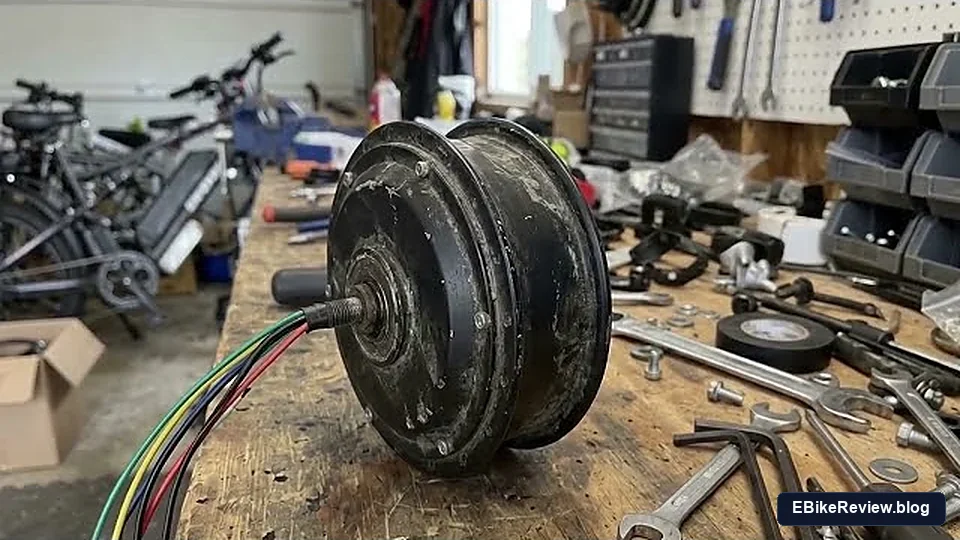
Conversely, mid drive motors integrate directly into the bottom bracket shell. They apply rotational torque straight to the crankset, leveraging your bicycle physical gears for optimal mechanical advantage.
Understanding this foundational difference helps technicians evaluate how power translates to asphalt. Hub units push the chassis forward independently, while mid drives augment your natural pedaling input seamlessly.
Rear hub motors apply rotational force directly to the wheel axle. This bypasses the drivetrain entirely, reducing mechanical wear on the chain and cassette during heavy throttle applications or high-torque starts.
Mid-drive units integrate directly into the bottom bracket shell. Consult our bafang controller programming guide to optimize your motor cutoff thresholds and acceleration curves effectively.
Torque sensors in sophisticated mid-drives measure rider pedal input up to one thousand times per second. This delivers proportional power scaling that mimics natural leg strength without jerky throttle engagement issues.
- Rear hubs apply direct force to the rear wheel.
- Mid drives leverage existing bicycle gear ratios.
- Hub units operate independently of chain tension.
Internal Gearboxes and Motor Stator Designs
Hub motors rely on either direct-drive stators or internal planetary gear sets. Planetary gears multiply initial torque while keeping overall motor casing dimensions compact and lightweight.
Mid drive assemblies incorporate sophisticated reduction gearboxes and dual-freewheel mechanisms. These internal components allow the motor to spin at optimal RPMs while you pedal at a slower cadence.
- Direct-drive hubs offer regenerative braking capabilities.
- Geared hubs provide superior low-end takeoff torque.
Performance Metrics and Real-World Output Under Load
Evaluating real-world output requires testing sustained wattage against steep inclines. You can explore our mid drive budget guide to find efficient climbers designed for rugged off-road terrain.
Rear hub motors deliver impressive off-the-line acceleration through independent throttle control. However, prolonged hill climbing can cause hub motors to overheat due to fixed gear ratios.
Engineers measure thermal efficiency to determine continuous power ratings. Mid drives face higher thermal accumulation inside the frame shell, whereas hub motors dissipate heat through exterior spoke flanges.
Standard hub motors deliver fixed nominal wattage ratings, typically peaking around seven hundred fifty watts in Class 3 configurations. They maintain consistent speed on flat ground but struggle when sustained climbs generate extreme heat.
Mid-drive systems multiply their torque output through the bicycle gear cluster. A modest eighty-five newton-meter motor can conquer steep inclines that cause direct-drive rear hub motors to overheat and trigger thermal throttling safeguards.
Sustained output under heavy loads highlights distinct mechanical limitations. Hub motors lack gearing mechanical advantage, meaning steep grades force them to draw excessive current, rapidly depleting battery capacity and risking stator winding damage.
- Mid drives maintain high RPM on steep mountain grades.
- Hub motors provide instant throttle response without pedaling.
- Thermal management dictates sustained climbing performance.
Torque Sensing Versus Cadence Activation
Mid drives predominantly utilize responsive torque sensors that measure your exact pedal pressure. This creates an intuitive riding experience where motor output matches your physical exertion instantly.
Many hub motor configurations rely on basic cadence sensors that detect crank rotation. While effective for commuting, cadence systems lack the nuanced power modulation of high-end torque setups.
- Torque sensors react instantly to rider leg pressure.
- Cadence sensors activate based on crank rotation speed.
Build Quality, Maintenance Schedules, and Long-Term Durability
Maintenance routines differ significantly between these two propulsion architectures. If you need maximum climbing ability, check our hill climbing motor breakdown to evaluate thermal dissipation limits.
Mid drive systems place extreme tension on your bicycle chain and cassette. Combining human leg power with electric motor output accelerates wear on sprockets, requiring frequent chain replacements.
Evaluating component accessibility helps determine long-term ownership costs. Hub motors feature sealed bearing assemblies that rarely require internal service, whereas mid drives demand specialized factory technician tools.
Rear hub systems feature sealed planetary gear assemblies that require minimal routine user servicing. However, changing a flat tire demands disconnecting the motor power cable and handling heavy unsprung rear wheel weight.
Mid-drive setups place immense mechanical stress on standard bicycle chains and chainrings. High torque output accelerates elongation, demanding frequent replacement of drivechain components to prevent premature cassette tooth wear and skipping.
Internal nylon reduction gears within geared hub motors eventually experience natural tooth wear. Routine inspections around five thousand miles ensure these internal components receive proper grease application for sustained operational longevity.
- Hub motors protect internal wiring away from the drivetrain.
- Mid drives accelerate wear on standard bicycle chains.
- Sealed hub bearings minimize everyday maintenance requirements.
Drivetrain Longevity and Replacement Intervals
Standard bicycle components withstand hub motor power easily because force bypasses the chain. You can expect typical derailleur and cassette lifespans comparable to traditional acoustic bicycles.
Mid drive motors channel thousands of watts through a single chain. Riders must invest in heavy-duty e-bike chains and steel sprockets to prevent premature mechanical failure during shifts.
- Hub setups preserve standard drivetrain component lifespans.
- Mid drives necessitate reinforced steel chainrings.
Operating Noise Profiles, Efficiency Ratings, and Thermal Footprint
Acoustic signatures vary depending on internal gear construction. Gearless direct-drive hub motors operate in near total silence, producing only a faint electromagnetic hum during hard acceleration phases.
Geared hub motors and mid drives generate audible mechanical whirring due to internal metal reduction gears. Reviewing options in our mid drive premium selection reveals quieter gear assemblies.
Electrical efficiency depends on matching motor speed to terrain demands. Hub motors achieve peak efficiency at higher cruising speeds, while mid drives optimize efficiency across diverse cadence ranges.
Direct-drive hub motors operate with near-silent electromagnetic efficiency due to their gearless stator design. Geared alternatives produce a faint whirring sound under heavy acceleration from their internal nylon planetary gear sets.
Mid-drive motors often emit a distinct mechanical whine under load. This noise originates from internal metal or composite reduction gears transferring power through the bottom bracket spindle into the drivetrain.
Thermal dissipation differs drastically between these two primary configurations. Hub motors rely on ambient airflow across the outer aluminum shell, whereas mid-drives trap heat inside the frame, necessitating integrated thermal sensors.
- Direct-drive hub motors offer virtually silent operation.
- Mid drives produce mechanical gear whine under load.
- Efficiency curves shift based on rider cadence.
Thermal Dissipation and Overload Protection
Sustained high-wattage output generates considerable heat inside electric motors. Hub motors utilize exterior aluminum casings to radiate heat away from internal copper stator windings effectively.
Mid drives enclose motors inside dense bicycle frame housings. Manufacturers install internal thermal sensors to throttle power output automatically when core operating temperatures exceed safety limits.
- Hub casings utilize ambient airflow for cooling.
- Frame-enclosed mid drives rely on thermal throttling.
Weight Distribution, Handling Dynamics, and Portability
Weight distribution fundamentally alters how an electric bicycle handles in traffic. Rear hub motors concentrate significant unsprung weight at the back wheel, affecting rear suspension performance.
Mid drive systems centralize mass within the bottom bracket area. This balanced weight distribution mimics traditional bicycle handling characteristics, making cornering and bunny-hopping much more intuitive.
Lifting and transporting your bicycle also highlights structural differences. Rear hub setups make the tail end heavy during loading onto vehicle racks, requiring careful balancing adjustments.
Rear hub motors concentrate significant unsprung weight directly over the rear axle. This alters the bicycle's center of gravity, making the front end feel light and challenging during steep technical descents or cornering.
Mid-drive motors centralize weight low within the frame triangle. This optimal weight distribution preserves natural handling dynamics, mirroring standard acoustic bicycles and improving balance during low-speed maneuvers or trail riding.
Removing wheels for transport or maintenance presents starkly different experiences. A hub motor setup requires careful management of heavy axle assemblies and wiring harness connectors, complicating simple roadside tube replacement procedures.
- Hub motors add unsprung weight to the rear axle.
- Mid drives achieve optimal center-of-gravity balance.
- Centralized weight improves technical cornering agility.
Transporting and Servicing Wheels in the Field
Changing a flat tire on a rear hub e-bike requires disconnecting motor power cables. Mechanics must carefully manage axle washers and torque arms during reinstallation procedures.
Mid drive systems allow for standard quick-release or thru-axle wheel removal. Servicing flat tires requires no electrical disconnections, simplifying roadside maintenance for everyday commuters.
- Hub repairs require disconnecting heavy motor wires.
- Mid drives utilize standard quick-release wheel axles.
Urban Commuting, Cargo Hauling, and Steep Terrain Handling
Selecting the right motor style depends heavily on your daily riding terrain. Urban commuters navigating flat city streets benefit greatly from the reliable, maintenance-free nature of rear hubs.
Cargo bike operators and mountain trail explorers require the massive mechanical advantage of mid drives. Leveraging low gears lets mid drives conquer steep inclines without overheating electrical windings.
Throttle availability remains another crucial distinction for city riders. Most rear hub systems support full throttles, whereas many mid drives require active pedaling to engage motor assistance.
Urban commuters frequently encounter stop-and-go traffic where throttle-actuated hub motors provide effortless acceleration. They allow riders to clear intersections quickly without relying on immediate cadence sensor engagement.
Cargo hauling and utility riding demand maximum torque multiplication. Mid-drive systems utilize low gear ratios to haul heavy loads up mountain passes without risking motor overheating or excessive thermal shutdown events.
Steep terrain performance exposes fundamental physics limitations in hub configurations. Without mechanical gear reduction, hub motors sacrifice torque on steep inclines, while mid-drives simply shift into an easier climbing gear.
- Urban commuters favor reliable rear hub throttles.
- Cargo haulers demand mid drive climbing torque.
- Mountain trails require balanced center-of-mass layouts.
All-Weather Reliability and Traction Control
Slippery winter roads demand careful power delivery to prevent wheel slip. Rear hub motors can occasionally break traction on loose gravel if throttle inputs are applied abruptly.
Mid drives distribute power evenly through the driven rear wheel via the chain. This integrated power delivery improves overall traction control when navigating wet or muddy surfaces.
- Hub throttles require caution on loose gravel.
- Mid drives enhance traction through balanced pedaling.
Selecting the Optimal Drive System for Your Specific Workload
Final purchasing decisions should be guided by your primary riding objectives. If you prioritize budget efficiency, minimal chain maintenance, and throttle capability, a rear hub motor fits best.
Conversely, if you face relentless mountain climbs, carry heavy cargo loads, or demand natural pedaling ergonomics, investing in a quality mid drive system is essential.
Carefully evaluating these mechanical trade-offs ensures long-term satisfaction. Match your motor architecture to your geographic terrain and daily workload for the ultimate riding experience.
Selecting a rear hub motor makes economic sense for flat-land commuters seeking low-maintenance reliability. They excel at straightforward throttle cruising without demanding frequent drivetrain adjustment intervals or expensive replacement chains.
Mountain bikers and cargo haulers should prioritize mid-drive systems for their superior mechanical advantage. Their ability to leverage bicycle gearing ensures optimal motor efficiency curves across diverse and challenging topography.
Evaluating your local topography and typical payload helps clarify the best engineering choice. Match your daily riding profile against these motor performance characteristics to ensure long-term satisfaction and mechanical reliability.
- Choose rear hubs for budget-friendly commuting.
- Select mid drives for serious climbing workloads.
- Match motor architecture to your local terrain.
Final Technical Summary for Buyers
Both motor types offer exceptional performance when matched to appropriate applications. Understanding internal mechanics prevents costly mismatched purchases and ensures reliable everyday transportation.
Consult professional bike mechanics if you remain uncertain about your local topography requirements. Making an informed choice protects your investment and maximizes riding enjoyment.
- Verify topography requirements before purchasing.
- Consult professional technicians for custom builds.
Frequently Asked Questions
Which e-bike motor lasts longer under heavy daily commuting conditions?
Both motor types offer exceptional longevity when properly maintained over thousands of miles. Rear hub motors generally require fewer drivetrain replacements because power bypasses the bicycle chain entirely.
Can rear hub motors handle steep mountain climbing as effectively as mid drives?
Rear hub motors struggle on prolonged steep climbs because their fixed gear ratios limit thermal efficiency. Mid drives utilize bicycle gears to maintain optimal RPMs on steep inclines.
Do mid drive electric bikes wear out bicycle chains faster than traditional bikes?
Mid drives channel immense human and electrical torque through a single chain. This mechanical stress accelerates wear, requiring reinforced e-bike chains for reliable long-term operation.
Is it more difficult to fix a flat tire on a rear hub e-bike?
Repairing a flat tire on a rear hub system requires disconnecting electrical cables and managing axle washers. Quick-release axles on mid drive bikes make wheel removal much simpler.
Do all electric mid drive motors require active pedaling to operate?
Most mid drive systems require pedaling input to engage torque sensors and activate assistance. Hub motor setups frequently support full throttles without requiring any pedal movement.