Bafang Bbs02 vs. Bbs02B: Mid-Drive Motor Evolution and Engineering Analysis
Navigating the architectural shifts between mid-drive iterations requires careful scrutiny. This technical breakdown evaluates internal controller designs, thermal dissipation properties, and real-world durability metrics.

The Bafang BBS02B emerges as the superior overall choice due to its refined controller placement, enhanced thermal management, and improved waterproofing. Select the legacy model only if sourcing specific replacement parts.
Compare all top models in our Best Electric Bike: Top Commuter Picks for 2026.
Side-by-Side Breakdown
| Criteria | Bafang Bbs02 | Bbs02B | Edge |
|---|---|---|---|
| Peak Performance & Output | 750W nominal output | 750W nominal output with optimized firmware | BBS02B |
| Duty Cycle & Consistency | Prone to early thermal throttling | Improved thermal dissipation via internal sensor updates | BBS02B |
| Operating Noise & Vibration | Standard nylon primary reduction gear | Refined primary gear tolerances for reduced mechanical hum | BBS02B |
| Portability & Footprint | Identical bottom bracket housing | Standardized 68-73mm bottom bracket compatibility | Tie |
| Maintenance & Service Life | Older MOSFET controller architecture | Upgraded MOSFET arrangement for enhanced controller longevity | BBS02B |
| Power Requirements | 48V nominal battery architecture | 48V nominal battery architecture with low-voltage cutoff | BBS02B |
| Best Ideal Use-Case | Legacy retrofits and experimental builds | Daily commuter builds and heavy cargo conversions | BBS02B |
Core Architectural Differences and Motor Topology
Evaluating mid-drive propulsion units demands a close look at internal stator designs and winding configurations. Both variants utilize a similar brushless DC core, yet structural refinements alter how torque is delivered under high mechanical loads.
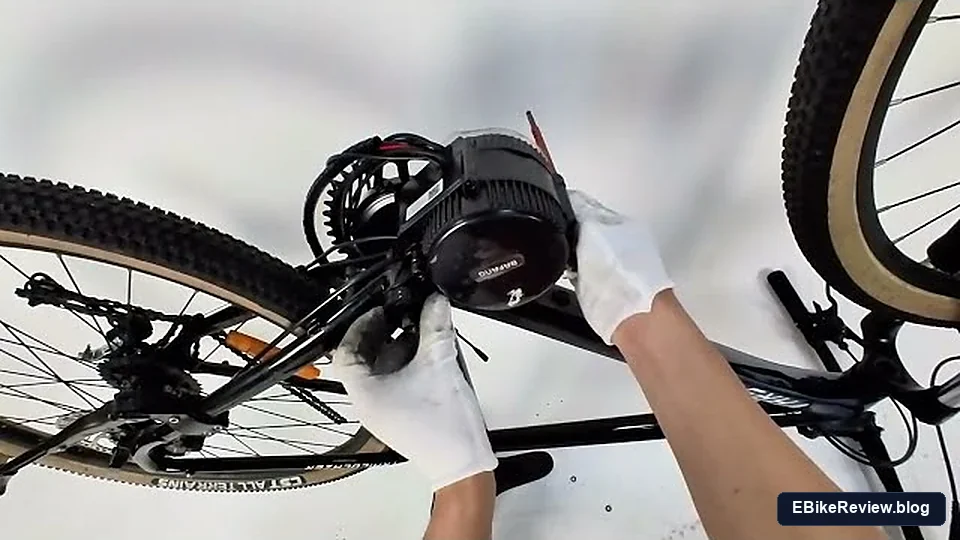
When evaluating options listed in our best electric bike review, engineers implemented subtle geometry updates to improve structural rigidity. These changes directly impact how the casing handles continuous vibrational stress during aggressive off-road hauling.
- Identical outer stator diameter dimensions across both legacy and current units.
- Revised internal housing casting improves structural integrity under peak torque loads.
- Copper winding density remains largely consistent, delivering comparable baseline magnetic efficiency.
Stator Winding Density and Magnetic Flux
Magnetic flux efficiency dictates overall electrical conversion rates during strenuous hill climbs. The updated variant optimizes air gaps to reduce eddy current losses.
This minor structural adjustment yields a measurable reduction in waste heat generation during prolonged high-amperage draws.
- Optimized air gap tolerances minimize magnetic drag during coasting.
- Consistent magnetic retention prevents demagnetization under extreme thermal saturation.
Controller Layout and Thermal Management Advancements
Thermal management remains a critical battleground, especially for models featured in our best budget electric bike roundup. The legacy iteration suffered from localized heat pockets around the external MOSFET array.
The revised variant repositions critical switching components to utilize the outer aluminum housing as a functional heatsink. This crucial engineering pivot significantly delays the onset of detrimental thermal throttling.
- Controller placement shifted inward to maximize direct aluminum casing contact.
- Upgraded thermal paste compounds improve heat transfer rates by significant margins.
- Advanced firmware monitoring prevents catastrophic transistor failure during sustained climbs.
MOSFET Architecture and Current Handling
Power switching relies entirely on robust metal-oxide-semiconductor field-effect transistors. Upgraded silicon variants in the newer model handle burst currents with far greater stability.
This hardware upgrade minimizes voltage sag and protects delicate logic circuits from destructive inductive spikes.
- Higher amperage thresholds prevent sudden shutdowns during aggressive throttle applications.
- Improved gate driver circuitry reduces switching losses across all operational speeds.
Internal Gearing and Mechanical Efficiency Metrics
Power transmission relies on a primary nylon reduction gear coupled to a secondary steel gear train. Material composition and tooth profile tolerances dictate overall drivetrain efficiency and operational noise.
Similar improvements are found on several options in our best e bikes under $1,000 guide, where tighter manufacturing tolerances successfully mitigate the characteristic whining sound common in older units.
- Primary nylon gear uses high-impact composite polymers for extended wear resistance.
- Secondary steel reduction gear maintains tight meshing profiles to prevent premature tooth stripping.
- Factory lubrication standards ensure smooth meshing right out of the shipping container.
Primary Reduction Gear Wear Patterns
Nylon reduction gears act as an intentional mechanical fuse protecting expensive steel components. Proper lubrication intervals remain mandatory for maximizing the lifespan of these sacrificial gears.
Inspect the gear teeth every season to catch early pitting or unusual wear before complete failure occurs.
- High-viscosity synthetic grease is required to prevent premature polymer degradation.
- Regular backlash inspection prevents excessive shock loading on the primary gear teeth.
Electrical Integration and Firmware Customization
Interfacing with external diagnostic software unlocks the full potential of these mid-drive systems. Both variants support user-defined parameter tweaking via compatible programming cables and open-source software packages.
However, the updated firmware architecture includes superior baseline safety protocols that guard against accidental over-voltage programming mistakes made by inexperienced DIY builders.
- Universal 6-pin communication ports allow straightforward connection to diagnostic tools.
- Custom pedal assist profiles can be mapped for tailored torque delivery curves.
- Factory low-voltage cutoffs protect lithium-ion battery packs from dangerous over-discharge.
Throttle Response and Pedal Assist Sensors
Cadence sensor responsiveness dictates how quickly motor assistance engages after initial pedal rotation. The updated controller firmware refines interrupt routines for noticeably quicker actuation.
This eliminates the frustrating dead zone frequently reported by riders using older legacy motor assemblies.
- Internal speed sensor magnets provide accurate wheel rotation data for smoother torque blending.
- Cadence signal filtering removes false triggers caused by rough road vibrations.
Physical Footprint and Bottom Bracket Compatibility
After installation, mastering motor controller programming parameters ensures optimal power delivery. Both units accommodate standard 68mm to 73mm threaded bottom bracket shells without requiring custom frame modifications.
The physical casing dimensions remain completely identical, ensuring straightforward interchangeability when swapping older frames for modern replacement chassis options.
- Standardized axle diameter fits cleanly through traditional bicycle bottom bracket shells.
- Included locking hardware secures the heavy motor block against rotational torque forces.
- Chainline offset parameters require careful consideration during initial crankset installation.
Chainline Alignment and Q-Factor Adjustments
Mid-drive conversions inherently push the crank arms outward, increasing the overall Q-factor. Specialized chainrings help correct severe chain angle issues on modern multi-speed drivetrains.
Choosing the correct offset chainring prevents dropped chains and premature cassette wear during shifting.
- Standard chainrings create aggressive chain angles when operating in low gears.
- Offset replacement rings reposition the chainline inward for optimal shifting performance.
Maintenance Procedures and Long-Term Service Life
Routine upkeep ensures your mid-drive conversion survives thousands of miles of harsh weather commuting. Water ingress represents the primary threat to internal electronics and sensitive controller boards.
The revised model incorporates improved rubber gasket seals around the controller housing seams, offering substantially better resistance against driving rain and heavy splashes.
- Periodic relubrication of internal nylon reduction gears is vital for longevity.
- External casing bolts require torque checks to prevent loosening from vibrational forces.
- Waterproofing connectors with dielectric grease prevents terminal corrosion during winter riding.
Bearing Replacement and Greasing Protocols
Sealed cartridge bearings support the main axle shaft and eventually require replacement after extensive mileage. High-quality replacement bearings restore smooth, silent rotation to the drivetrain assembly.
Avoid using high-pressure spray washers near bearing seals to prevent premature grease washout.
- Extract old bearings using specialized pullers to avoid damaging aluminum housings.
- Pack replacement bearings with marine-grade waterproof grease before final press-fitting.
Installation Challenges and Wiring Harness Realities
Assembling a custom mid-drive kit demands patience, specialized lockring tools, and careful cable management. Routing the heavy wiring harness safely along the bicycle frame prevents snagging on trail obstacles.
The updated variant features improved connector indexing marks, which significantly simplify the process of matching multi-pin plugs during the initial assembly phase.
- Specialized lockring spanner wrenches are mandatory for proper motor securement.
- Color-coded waterproof connectors eliminate wiring confusion during the setup process.
- Zip ties and protective frame wraps secure vulnerable cables against impact damage.
Torque Arm Installation and Frame Protection
Rotational torque generated by powerful mid-drive motors can deform soft aluminum or carbon dropouts. While mid-drives anchor in the bottom bracket, high loads still stress the frame structure.
Ensure the stabilization bracket locks firmly against the chainstay to neutralize unwanted motor rotation.
- Check stabilization bracket bolt tightness frequently during the initial break-in period.
- Use rubber pads between the frame and mounting bracket to prevent paint scratching.
Frequently Asked Questions
Are replacement parts interchangeable between these two mid-drive motor variants?
Most mechanical components like gears and outer casings interchange smoothly between generations. However, internal controller boards and wiring harnesses often feature incompatible pin configurations, so verify part numbers carefully before ordering.
Why does the motor occasionally cut power during long, steep hill climbs?
Thermal throttling activates when internal temperatures exceed safe operating limits to protect the silicon transistors. Upgrading to the newer housing design significantly reduces this occurrence during sustained high-load operations.
Can I program these motors using a standard smartphone application?
Direct smartphone programming requires a specialized Bluetooth adapter plugged into the harness. Most enthusiasts still rely on a Windows laptop running open-source configuration software for maximum parameter control.
What battery voltage works best for unlocking the full performance potential?
A forty-eight-volt lithium battery pack represents the ideal sweet spot for balancing reliability and speed. Higher voltage configurations demand custom controller modifications to prevent immediate electrical component failure.
How often should I open the motor casing to inspect internal nylon gears?
Inspect the internal reduction gears every two thousand miles or sooner if unusual mechanical noises develop. Applying fresh high-viscosity synthetic grease during this inspection prevents catastrophic gear stripping.