Bafang 48V vs. 52V: Technical Breakdown and System Analysis
Choosing between a 48V and 52V Bafang setup involves weighing nominal voltage output against thermal limits, controller compatibility, and overall system longevity. Understanding these core engineering metrics ensures optimal drivetrain performance.

Select the 48V configuration for standard commuting and maximum controller reliability. Choose the 52V setup when you need sustained torque, higher voltage sag resistance, and slightly faster top speeds under heavy loads.
Compare all top models in our Best Electric Bike: Top Commuter Picks for 2026.
Side-by-Side Breakdown
| Criteria | Bafang 48V | 52V | Edge |
|---|---|---|---|
| Peak Performance & Output | Standard acceleration curve with moderate top-end speed limits. | Enhanced acceleration and slightly higher sustained top speed. | 52V |
| Duty Cycle & Consistency | Prone to noticeable voltage sag during prolonged heavy climbs. | Maintains higher voltage under load for consistent power delivery. | 52V |
| Operating Noise & Vibration | Standard operational hum with minimal electronic noise interference. | Similar acoustic profile with minor controller switching frequency warmth. | Tie |
| Portability & Footprint | Slightly lighter battery pack with standard 13S form factor. | Heavier 14S cell arrangement requiring slightly larger frame space. | Bafang 48V |
| Maintenance & Service Life | Broad controller compatibility and proven long-term component durability. | Higher electrical stress on stock MOSFETs requires careful monitoring. | Bafang 48V |
| Power Requirements | Standard charger availability and balanced power draw characteristics. | Requires a dedicated matching charger and cautious storage practices. | Bafang 48V |
| Best Ideal Use-Case | Daily urban commuting, flat terrain, and reliable range optimization. | Cargo hauling, steep hill climbing, and aggressive trail riding. | 52V |
Electrical Architecture and Nominal Voltage Fundamentals
The fundamental difference between these two systems lies in their cell group configuration. A standard forty-eight-volt setup uses thirteen series lithium-ion groups, whereas a fifty-two-volt battery relies on fourteen series groups for higher potential energy.
This fourteenth group increases the fully charged state from fifty-four point six volts up to nearly fifty-eight point eight volts. That higher threshold translates into improved acceleration curves and reduced thermal stress during heavy throttle applications.
Engineers must evaluate how this elevated potential interacts with legacy speed controllers. Exceeding MOSFET voltage ratings can lead to catastrophic hardware failure if proper headroom is not maintained throughout the circuit design.
- Thirteen series configuration versus fourteen series cell arrangements.
- Higher resting voltage improves initial throttle response efficiency.
- Requires strict adherence to controller component voltage thresholds.
Cell Chemistry and Series Group Design
Lithium-ion cells dictate how efficiently power converts into kinetic energy under load. Many affordable models featured in our guide to e bikes under 1000 utilize robust series configurations for stable communication.
Internal resistance drops slightly when utilizing fourteen groups, improving current flow stability. This chemical efficiency reduces localized heat accumulation during extended climbs and aggressive urban commuting sessions.
- Series count directly affects internal resistance metrics.
- Thermal management improves with optimized cell grouping.
Performance Metrics and Real-World Power Output
Real-world testing reveals distinct performance advantages when pushing power through mid-drive motors. The fifty-two-volt system delivers a more sustained torque curve, maintaining higher RPMs under steep inclines where forty-eight-volt setups typically begin to sag.
Voltage sag represents a critical bottleneck for high-drain applications like cargo hauling or trail riding. By starting at a higher baseline potential, the higher voltage battery mitigates severe voltage drops under heavy acceleration.
Efficiency gains become particularly noticeable when riding against heavy headwinds or navigating loose terrain. The motor draws fewer total amps for the same mechanical output, preserving overall electrical system health.
- Sustained torque delivery under heavy mechanical resistance.
- Reduced amperage draw lowers thermal fatigue in copper windings.
- Noticeable speed advantage during sustained full-throttle climbs.
Torque Delivery Under Load
Mid-drive motors multiply torque through the drivetrain, amplifying any electrical inefficiencies. Fine-tuning your setup using our bafang motor programming guide helps optimize efficiency and prevents overheating under heavy loads.
Riders notice an immediate difference in throttle punch when accelerating from a complete stop on an inclined grade, making the heavier voltage option ideal for hilly environments.
- Drivetrain amplification of electrical power curves.
- Enhanced throttle punch on steep incline starts.
Controller Compatibility and Thermal Management
Stock controllers shipped with mid-drive kits are meticulously engineered to handle specific operational parameters. Introducing a higher voltage input pushes these factory speed controllers closer to their absolute thermal and electrical design limits.
Thermal dissipation relies heavily on external ambient temperatures and controller mounting locations within the frame triangle. Extra voltage inherently generates more switching heat inside the controller housing during prolonged high-speed runs.
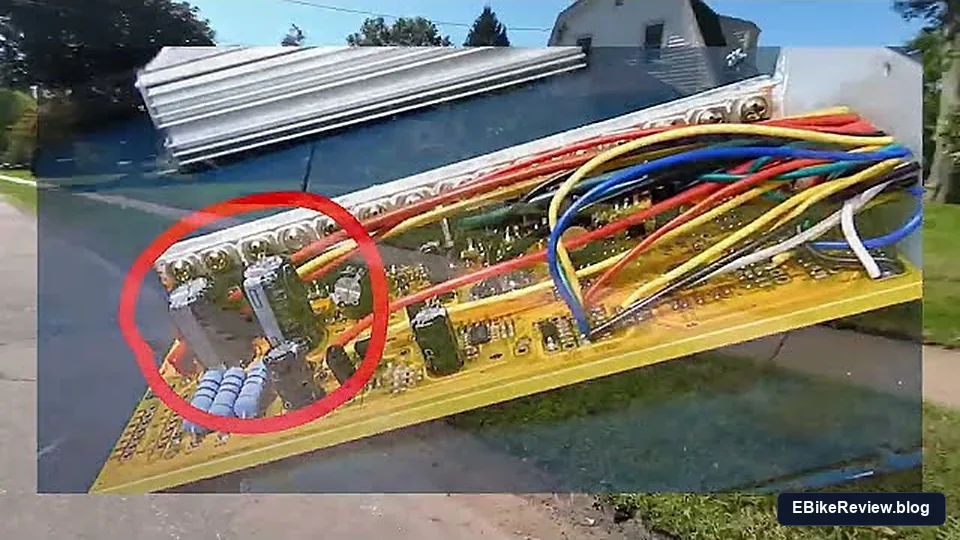
Upgrading requires careful verification of capacitor ratings and field-effect transistor thresholds to prevent premature component degradation. Ignoring these hardware limits often results in burned circuit boards and sudden power loss.
- Factory controllers operate closer to maximum thermal limits.
- Switching heat increases during prolonged high-speed sessions.
- Capacitor voltage ratings must exceed peak system voltage.
Thermal Stress and Component Longevity
Heat represents the primary enemy of electric bicycle electronics, degrading solder joints over time. Proper heatsink design is essential, a feature we prioritize when testing options in our best electric bike roundup.
Monitoring core controller temperatures helps prevent sudden thermal throttling events that interrupt your ride and degrade internal semiconductor lifespan across multiple riding seasons.
- Semiconductor lifespan tied directly to operating temperatures.
- Thermal throttling protects hardware during extreme stress.
Efficiency, Range, and Energy Consumption Dynamics
Range calculations depend heavily on watt-hour capacity rather than voltage alone, yet efficiency varies between configurations. Operating at a higher voltage allows the system to pull fewer amps for identical wattage outputs.
Lower current draw translates directly into reduced resistive heating within the battery interconnects and wiring harnesses. This minor reduction in thermal loss preserves usable energy that would otherwise be wasted.
Commuters prioritizing maximum mileage often find that balanced power delivery yields predictable battery depletion rates. You can compare affordable commuter models within our best budget electric bike selection for optimal performance.
- Watt-hour capacity determines absolute travel distance limits.
- Lower current draw reduces resistive wiring harness losses.
- Predictable depletion rates aid in long-distance route planning.
Watt-Hour Calculations and Capacity
Calculating total energy storage requires multiplying the nominal voltage by the amp-hour rating of the pack. Comparing packs with identical watt-hour ratings reveals subtle efficiency differences during actual use.
The higher voltage pack maintains a more stable output voltage throughout the discharge cycle, keeping your display readings accurate and preventing sudden voltage drops near zero.
- Energy storage equals voltage multiplied by amp-hours.
- Stable discharge voltage prevents premature low-voltage cutoffs.
Component Durability and Long-Term Service Life
Long-term durability hinges on how well the entire electrical ecosystem handles mechanical vibration and environmental exposure. Higher voltage systems experience slightly accelerated wear on drivetrain components due to increased torque.
Chain wear, cassette tooth degradation, and freehub stress all increase when putting down extra power consistently. Routine maintenance schedules must be adjusted to account for these heightened mechanical loads.
Battery cell degradation also varies based on charge cycles and maximum storage voltages. Using dedicated smart chargers helps extend the operational lifespan of both battery configurations significantly.
- Accelerated drivetrain wear from increased motor torque.
- Routine maintenance intervals require frequent adjustment.
- Smart chargers protect cell longevity across all voltages.
Drivetrain Wear and Maintenance Cycles
Mid-drive motors channel all generated power directly through the bicycle chain and gears. Higher power outputs demand heavy-duty chains and steel chainrings to prevent premature tooth stripping under load.
Inspecting your drivetrain components regularly ensures you catch wear patterns before they compromise your entire gear cluster during a remote backcountry excursion.
- Steel chainrings resist wear better under heavy torque.
- Regular inspections prevent catastrophic drivetrain failures.
Weight, Physical Footprint, and Frame Integration
Physical integration involves balancing battery weight distribution against the bicycle frame geometry for optimal handling. The extra cell group in a larger battery pack adds a minor amount of weight and length.
Mounting a larger battery securely within the frame triangle requires robust mounting brackets that can withstand severe off-road vibration. Secure fastening prevents battery rattle and terminal connection fretting over time.
Handling characteristics change slightly with altered center of gravity positions, making frame sizing and battery placement critical considerations for custom builds.
- Additional cell group adds minor weight and length.
- Robust mounting brackets prevent off-road vibration damage.
- Center of gravity shifts impact overall handling dynamics.
Frame Geometry and Battery Placement
Balancing front and rear weight distribution keeps the bicycle stable during high-speed cornering and technical descents. Proper frame integration ensures the battery remains protected from direct impact forces.
Checking clearance inside smaller frame sizes is essential before purchasing a larger battery pack that might interfere with rear shock placement or water bottle mounts.
- Weight distribution affects high-speed cornering stability.
- Frame clearance checks prevent mechanical interference issues.
Practical Workload Selection for Daily Riders
Selecting the right system depends entirely on your specific daily riding requirements and environmental conditions. Riders tackling flat urban streets benefit from the simplicity and proven reliability of standard setups.
Conversely, adventure riders and commuters facing steep mountain grades will appreciate the extra performance headroom provided by the elevated voltage configuration during demanding tasks.
Weighing your performance priorities against maintenance willingness ensures you invest in an electric bicycle setup that delivers lasting satisfaction and dependable daily transportation.
- Urban commuters thrive on simple, reliable hardware.
- Mountain riders benefit from enhanced climbing headroom.
- Match your workload requirements to proper system specifications.
Matching Hardware to Your Commute
Analyzing your route topography helps determine whether you need extra torque or standard efficiency. Avoiding mismatched components saves money and prevents unexpected mechanical breakdowns on busy roadways.
Consulting technical specifications and community build logs provides valuable insights into how specific motors and batteries perform under real-world commuting workloads over time.
- Route topography dictates necessary motor and battery specs.
- Community build logs offer real-world performance insights.
Frequently Asked Questions
Will a fifty-two-volt battery damage my stock forty-eight-volt Bafang mid-drive motor?
Most modern Bafang controllers and internal motor windings are heavily over-engineered to handle the slight voltage increase without immediate catastrophic failure.
However, you must carefully verify your specific controller MOSFET ratings and capacitor voltage thresholds before upgrading to prevent permanent thermal degradation and costly electrical system failure over time.
Do I need a special charger when switching to a higher voltage battery pack?
Yes, charging a fourteen-series configuration requires a dedicated charger calibrated to output the correct maximum voltage of fifty-eight point eight volts.
Using an incorrect charger will either undercharge your battery severely or create a serious fire hazard by overcharging the lithium cells beyond safe chemical limits.
How much real-world range difference will I notice between these two system options?
Absolute travel distance depends primarily on total watt-hour capacity rather than nominal voltage differences alone.
If both battery packs share an identical amp-hour rating, the higher voltage pack will deliver a tiny increase in overall efficiency and slightly better range performance under heavy loads.
Is the increase in torque and top speed noticeable during normal daily commuting?
Riders typically experience a sharper initial throttle response and slightly faster acceleration curves when utilizing the higher voltage configuration.
On flat terrain, top speed differences remain minimal because speed is largely restricted by motor RPM winding limits and programmed controller speed limit boundaries.
Are higher voltage setups more difficult to install inside standard bicycle frame triangles?
The fourteen-series battery casing is marginally longer and heavier than a standard thirteen-series pack, requiring careful measurement of your frame space.
Ensuring proper mounting bracket alignment prevents annoying battery rattle and protects your electrical terminals from destructive vibration damage during rough off-road riding.